
How innovators challenge the rules in creative industries
Innovation in creative industries rarely succeeds on merit alone. It must earn legitimacy, navigate institutional resistance, and find its place within cultural systems, often before society even knows it likes it. On June 9 2025, researchers from around the world gathered at the Stockholm School of Economics to unpack these processes in detail.

During a paper development workshop (PDW) for a forthcoming special issue of the Journal of Product Innovation Management, participants examined topics ranging from independent filmmaking and virtual reality to artificial intelligence, music streaming, and design. Together, the papers revealed how legitimacy, gatekeeping, and changing evaluative systems shape what counts as innovation.
Hosted by the Initiative on Art and Innovation at the House of Innovation, the workshop brought together researchers from Europe, Asia, and North America to discuss early-stage work on radical innovation in creative industries.
Co-convened by Roberto Verganti, Professor and Josefsson Family Chair at the House of Innovation (SSE), and Gerda Gemser, Professor and Chair at the University of Melbourne, and co-editor of the Journal of Product Innovation Management (JPIM).
The event provided a forum for researchers to workshop ideas, challenge assumptions, and advance the conversation around radical innovation in creative industries.
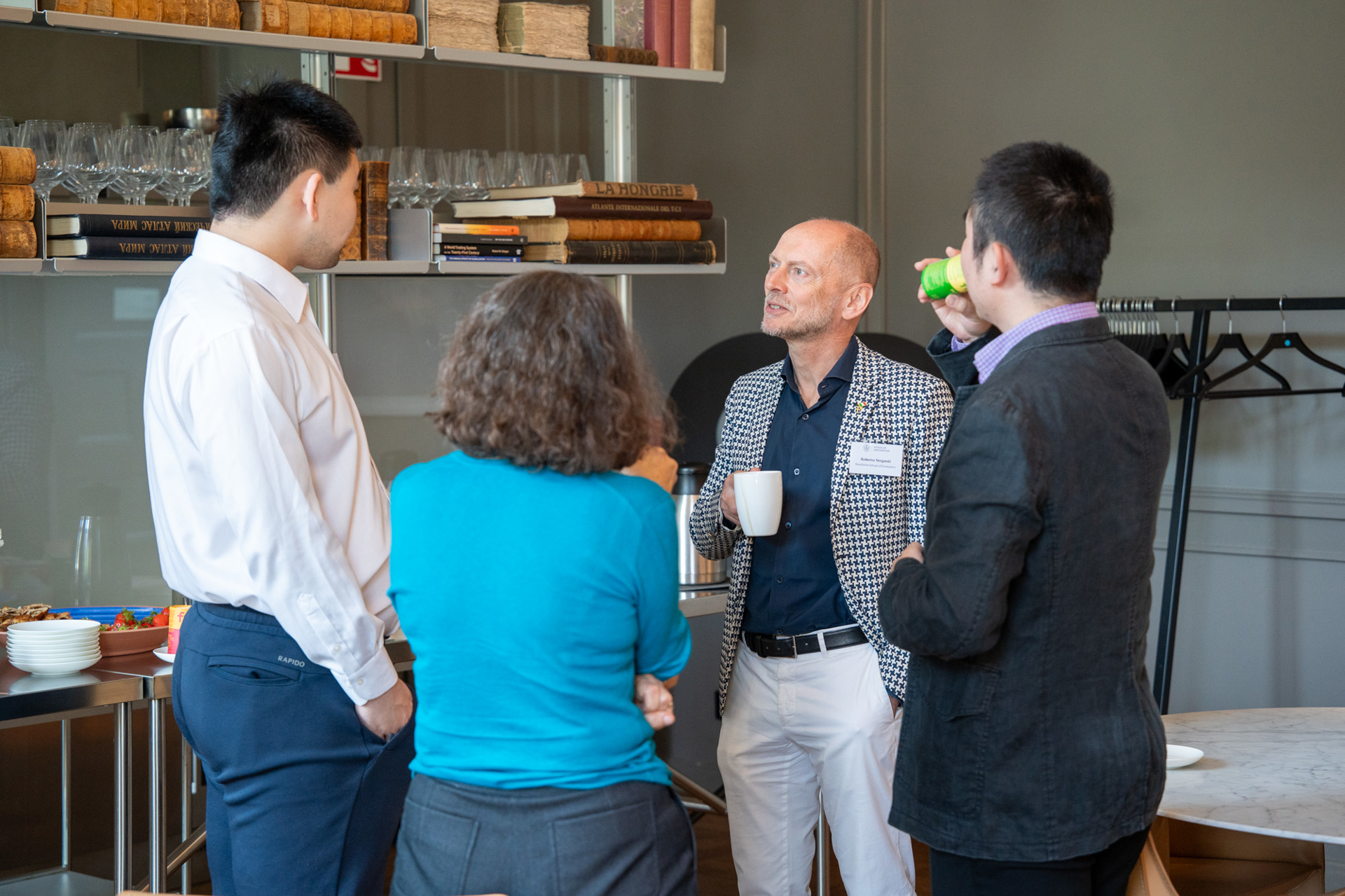
Professor Roberto Verganti welcomed scholars from all over the world to the Stockholm School of Economics. Photograph: Majlin Skjetne
Papers presented
The full-day workshop included eleven project presentations.
- Yutian Ren and Zhongyuan Sun presented on outsider legitimacy in Japanese independent film.
- Sihem Ben Mahmoud-Jouini examined innovation strategies in immersive VR expeditions.
- Sebastiano Delre analysed Spotify data to study musical novelty and streaming success.
- Samira Shihab explored framing contests around AI actors in film and entertainment.
- Yuki Miyazawa traced the mainstreaming of vocaloid music in Japan.
- Nikolay Slivkin examined how entertainment media shapes consumer ambivalence toward virtual reality.
- Karinna Grant presented on digital collective ownership in preloved luxury fashion.
- Anna Rylander Eklund made the case for art-based creativity as a driver of meaningful innovation.
- Stefan Breet investigated how music festivals legitimize atypical genre combinations.
- Dequn Teng and Chen Ye examined how sector-active investors acting as institutional gatekeepers enable radical creative ventures to gain market acceptance
- Sylvain Bureau explored humor as a mechanism of radical innovation.
Below is a glimpse into some of the ideas and tensions that animated the discussion.
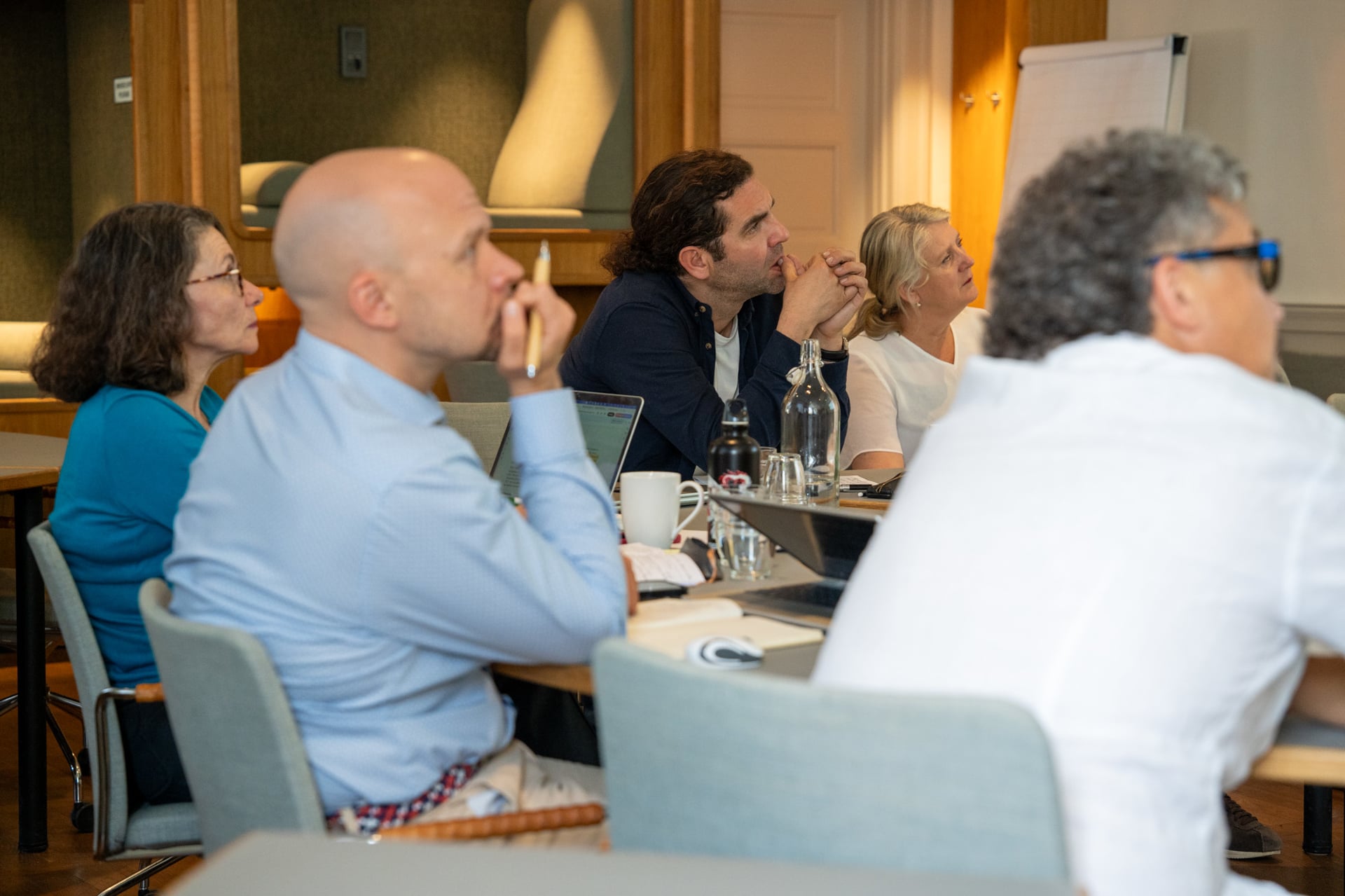
The topics ranged from independent filmmaking and virtual reality to artificial intelligence, music streaming, and design. Photograph: Majlin Skjetne
How innovators gain legitimacy
The day opened with a paper by Yutian Ren and Zhongyuan Sun examining how outsiders (filmmakers working outside the institutional mainstream) gain legitimacy in creative industries, using Japan's independent pink film sector as a case study spanning six decades.
The central tension the researchers identified runs through the entire history of creative innovation: outsiders are valuable precisely because they are unconstrained by existing assumptions, but that same position denies them the institutional credibility they need to get their work recognized.
The researchers proposed a multilevel model showing how legitimacy accumulates across micro, meso, and macro levels simultaneously, through individual agency, audience alignment, and responses to external shocks such as changing censorship laws or international festival recognition.
A key insight from the discussion was that legitimacy does not always follow a linear path from margin to mainstream. Recognition can be partial, delayed, or withdrawn. Some directors gained critical acclaim while their work remained censored domestically.
Others found legitimacy within niche networks that never connected to the mainstream at all. The outcome, the researchers argued, is better understood as fragmented and reversible than as a steady progression.

Associate Professor Sihem Ben Mahmoud-Jouini showed how VR technology allows users to travel through time. Photograph: Majlin Skjetne
Building trust in new creative categories
Sihem Ben Mahmoud-Jouini presented a case study of a contemporary company offering immersive VR expeditions, placing visitors inside the Louvre, on the Giza Plateau, or inside Notre-Dame during its restoration.
She framed the company's journey as a case study in how radical innovation diffuses through creative industries when a product departs fundamentally from existing category conventions.
What made the discussion particularly productive was the question of what, exactly, was being legitimized. Was it the VR technology itself? The experience format? The company's specific product?
During the discussion a broader methodological question surfaced that hovered over much of the day: when researchers study radical innovation in creative industries, are they studying the diffusion of a technology, the creation of a new category, or the scaling of a single firm?
Ben Mahmoud-Jouini identified four types of legitimation working in parallel (content, institutional, user-educational, and economic) and argued that these operated in a coordinated sequence over time, each creating conditions for the next.
A critical enabling moment was Notre-Dame. Working with one of the world's most recognized cultural landmarks gave the company credibility it could carry forward into subsequent partnerships.
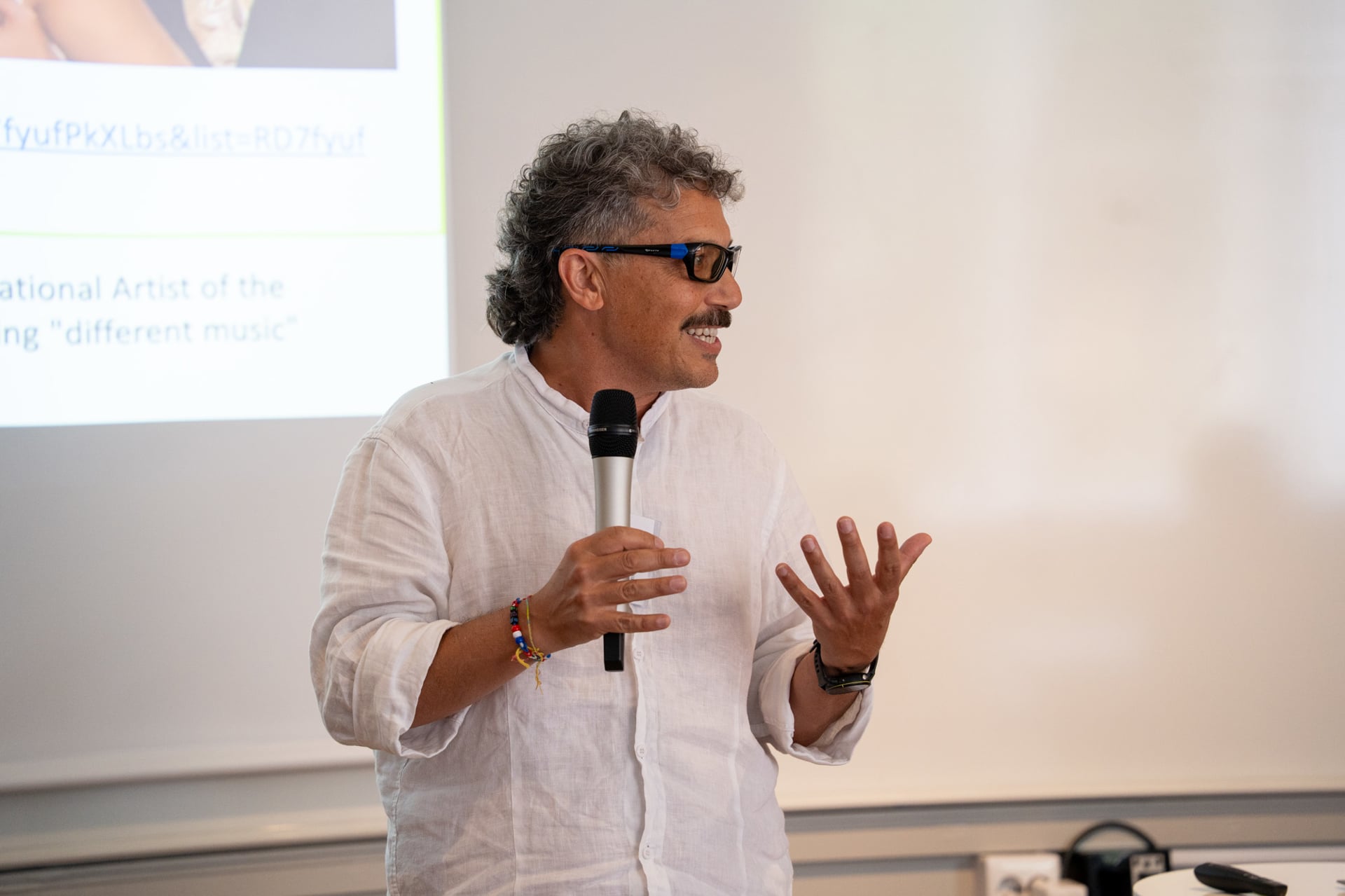
Associate Professor Sebastiano Delre presented surprising numbers from music giant Spotify. Photograph: Majlin Skjetne
Standing out in the right place
One of the day's most empirically grounded papers brought Spotify data to bear on a deceptively simple question: does musical novelty help or hurt an artist's streaming performance? Sebastiano Delre presented the paper.
The literature offers contradictory answers. Delre proposed that part of the confusion stems from conflating two distinct types of novelty: distance from the overall market and distance from an artist's immediate neighbors, those working in a similar sound or genre space.
The findings were clear. Being too different from the broader market tends to reduce streams. But differentiating yourself from your closest neighbors tends to increase them, and this effect is strongest when the artist is not yet widely popular.
The implication is both counterintuitive and practically useful: for emerging artists, the competitive arena that matters most is not only the entire music market, but the smaller cluster of artists doing something similar. Standing out there, while remaining legible to the broader market, appears to be the sweet spot.
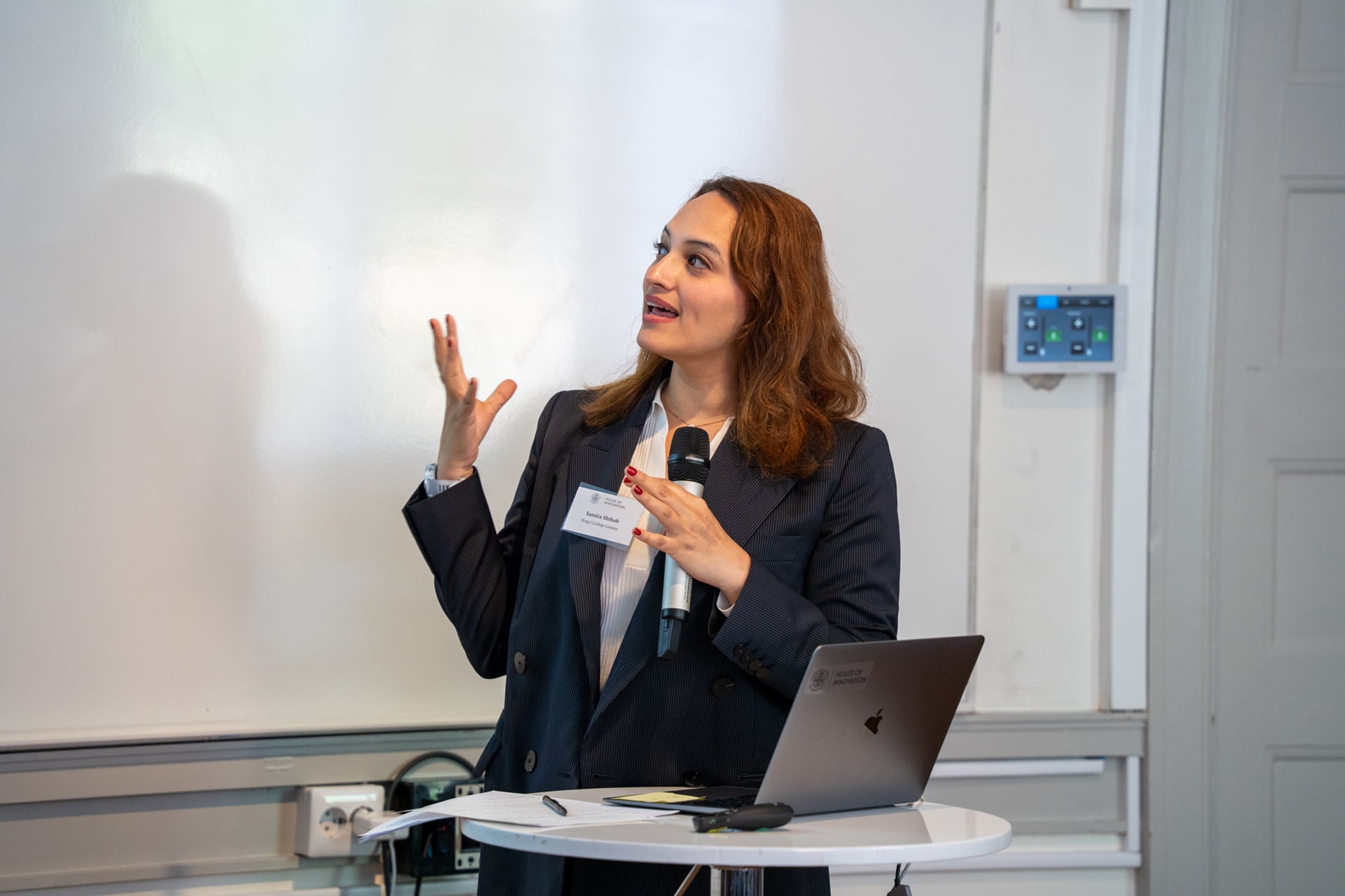
PhD student Samira Shihab presented one of two papers on how AI shapes creative industries. Photograph: Majlin Skjetne
AI actors and vocal synthesis
Two papers examined creative industries being actively reshaped by artificial intelligence, one looking at AI actors in film and the other at AI-generated vocal synthesis in Japanese music.
The paper on AI actors was presented by Samira Shihab. She and her co-authors have been tracking the emergence of fully synthetic AI performers since 2023, conducting interviews across studios, unions, independent filmmakers, voice actors, and regulators. The core argument is that what looks like a debate about technology is actually a battle over meaning, competing frames through which different stakeholders define what AI actors are: creative tools, labor replacements, intellectual property, or legal risks.
The discussion surfaced a pattern several participants recognized from their own work: incumbents who resist a new technology often understand it perfectly well. The resistance is strategic rather than cognitive. Unions do not oppose AI actors because they fail to grasp the technology; they oppose them because they understand exactly what the technology would do to their members' livelihoods.
The vocaloid paper, presented by Yuki Miyazawa, approached AI from a different angle, examining how a stigmatized, machine-generated music category in Japan gradually moved from underground networks to mainstream platforms and, in doing so, changed not just what music sounds like, but how music is evaluated.
Miyazawa found that a key mechanism was what the research team called "carriers": producers who stopped using Vocaloid technology but brought its aesthetic sensibility into mainstream work, expanding the evaluative frame from within.
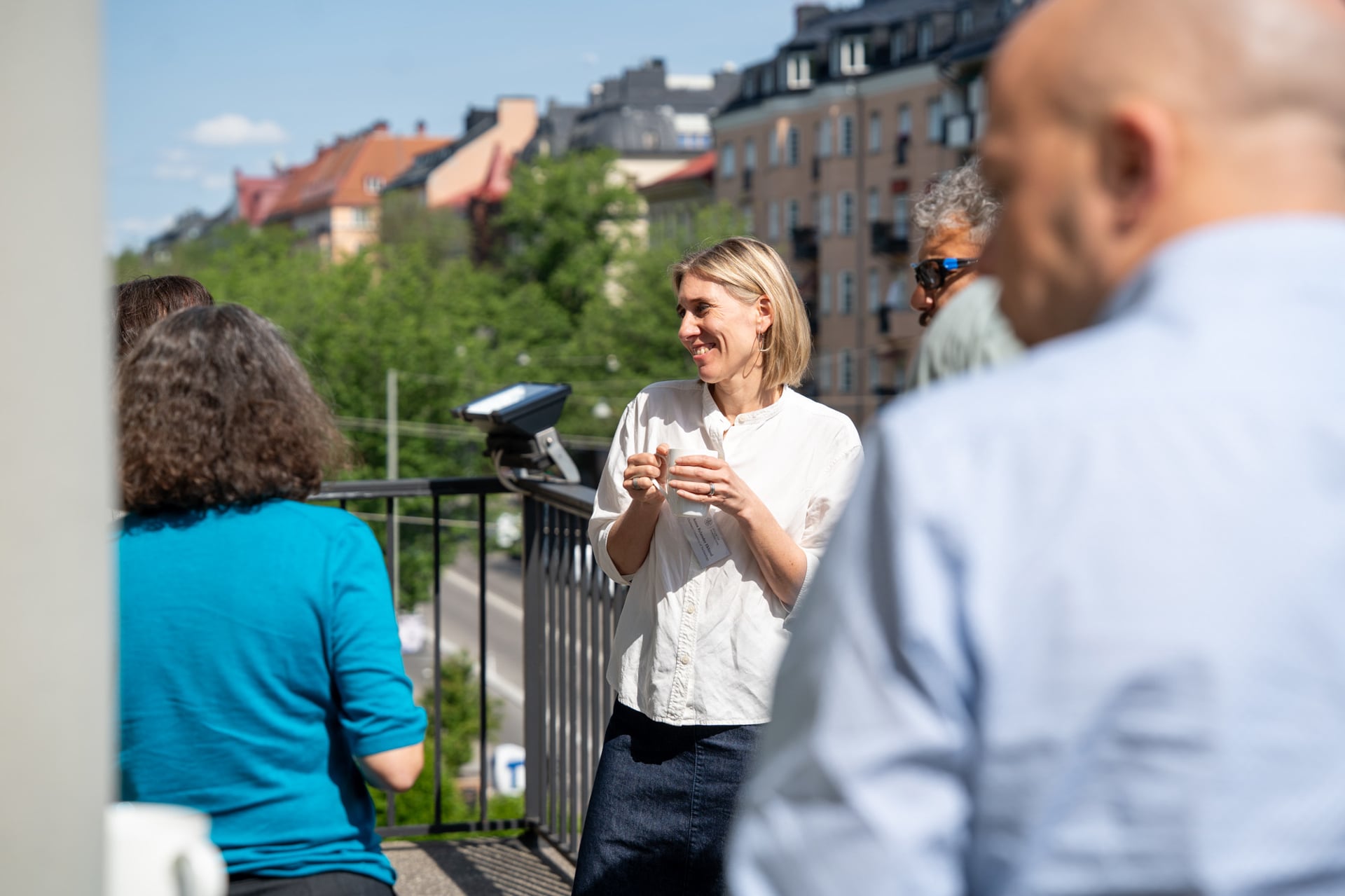
The full-day itinerary included Swedish "fika" breaks on the balcony at Sveavägen 65. Photograph: Majlin Skjetne
Creativity, meaning, and organizational gatekeepers
Anna Rylander Eklund’s paper was the most philosophical and, for several participants, especially relevant to their own experiences. She returned to a case study of a Swedish design agency originally conducted in 2009, rereading the data through a new lens drawn from pragmatist aesthetics and practitioner literature.
She argued that the kind of creativity practiced by art-trained designers (embodied, relational, and meaning-making) is increasingly being squeezed out of organizations largely because the people now acting as gatekeepers inside large companies lack the sensibility to recognize or support it.
The paper prompted an animated exchange, reflecting on whether the challenge lies in organizational design, in training managers to develop aesthetic judgment, or in other factors yet to be unveiled.
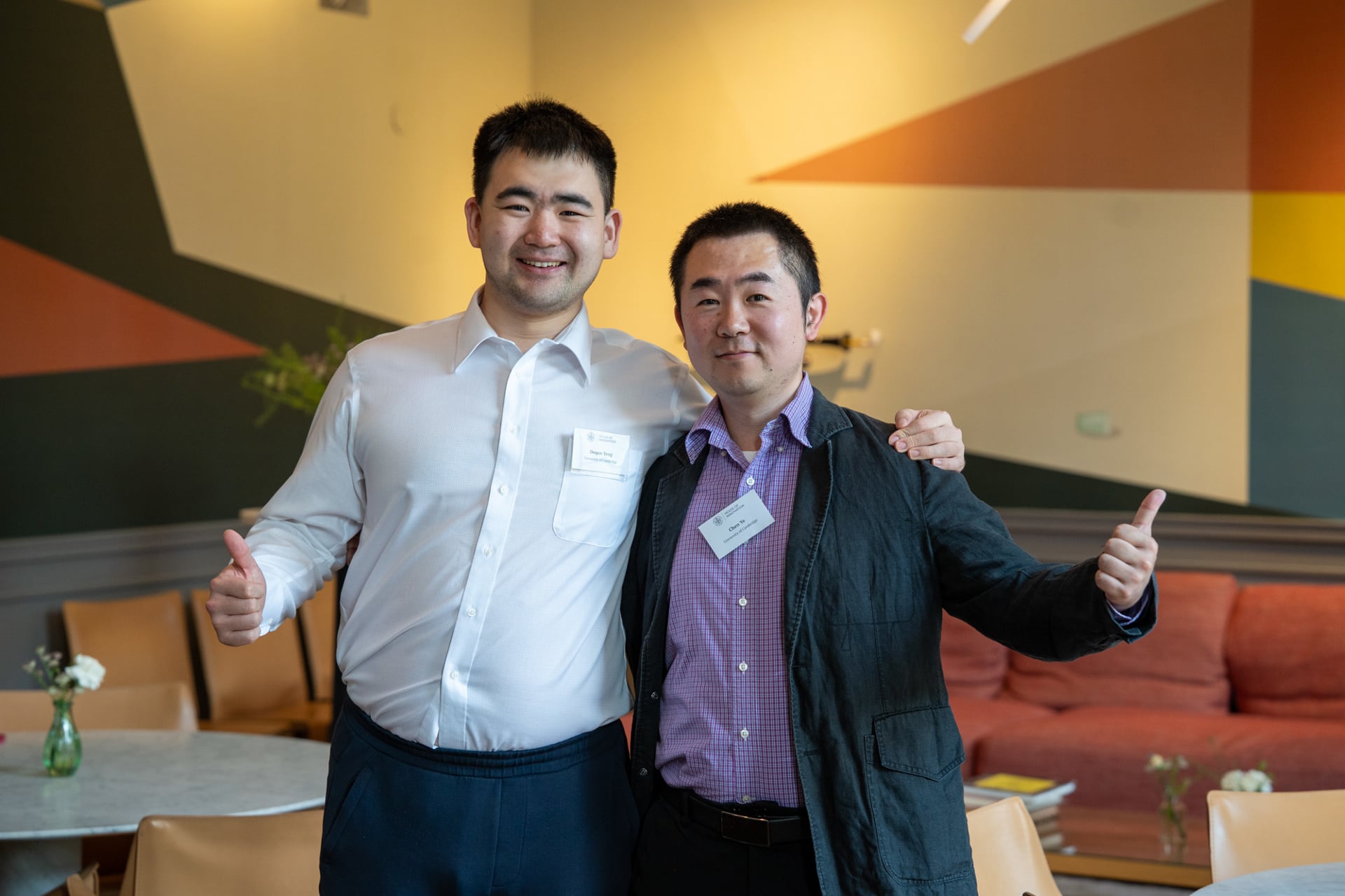
PhD students Dequn Teng and Chen Ye in the Heckscher-Ohlin room at Sveavägen 65. Photograph: Majlin Skjetne
Legitimacy, intermediaries, and radical change
Across eleven papers and a full day of debate, several key themes emerged.
The question of legitimacy ran through almost every session, as the contested, dynamic, and often political process it is. Who gets to decide what counts as valid creative work? How does that change over time, across geographies, and across institutional contexts?
The role of intermediaries such as festivals, curators, investors, platforms, and audiences repeatedly emerged as a site of both gatekeeping and enabling. Events, in particular, appeared as under-theorized actors in the legitimation of radical innovation: not just passive venues, but active shapers of what gets heard, seen, and taken seriously.
Running beneath all of the discussions was a broader question about what radical actually means in creative industries. Is it a reconfiguration of the evaluative system? The creation of a new category, or is it dealing with how creativity is experienced?
In addition to theory, the answer matters for the creators, platforms, and institutions trying to make sense of what is genuinely new in a world changing faster than existing frameworks can keep up.


