What makes leadership teams successful in elite sport?
At this year’s Swedish Olympic Academy Forum, researchers and elite sport practitioners explored how trust, strong relationships, clear goals and continuous learning contribute to successful leadership teams.

Representatives from the Swedish Olympic Committee joined coaches, support staff and leaders from Swedish elite sport at the Stockholm School of Economics to exchange knowledge and perspectives on successful leadership.
Trust as a foundation for collaboration
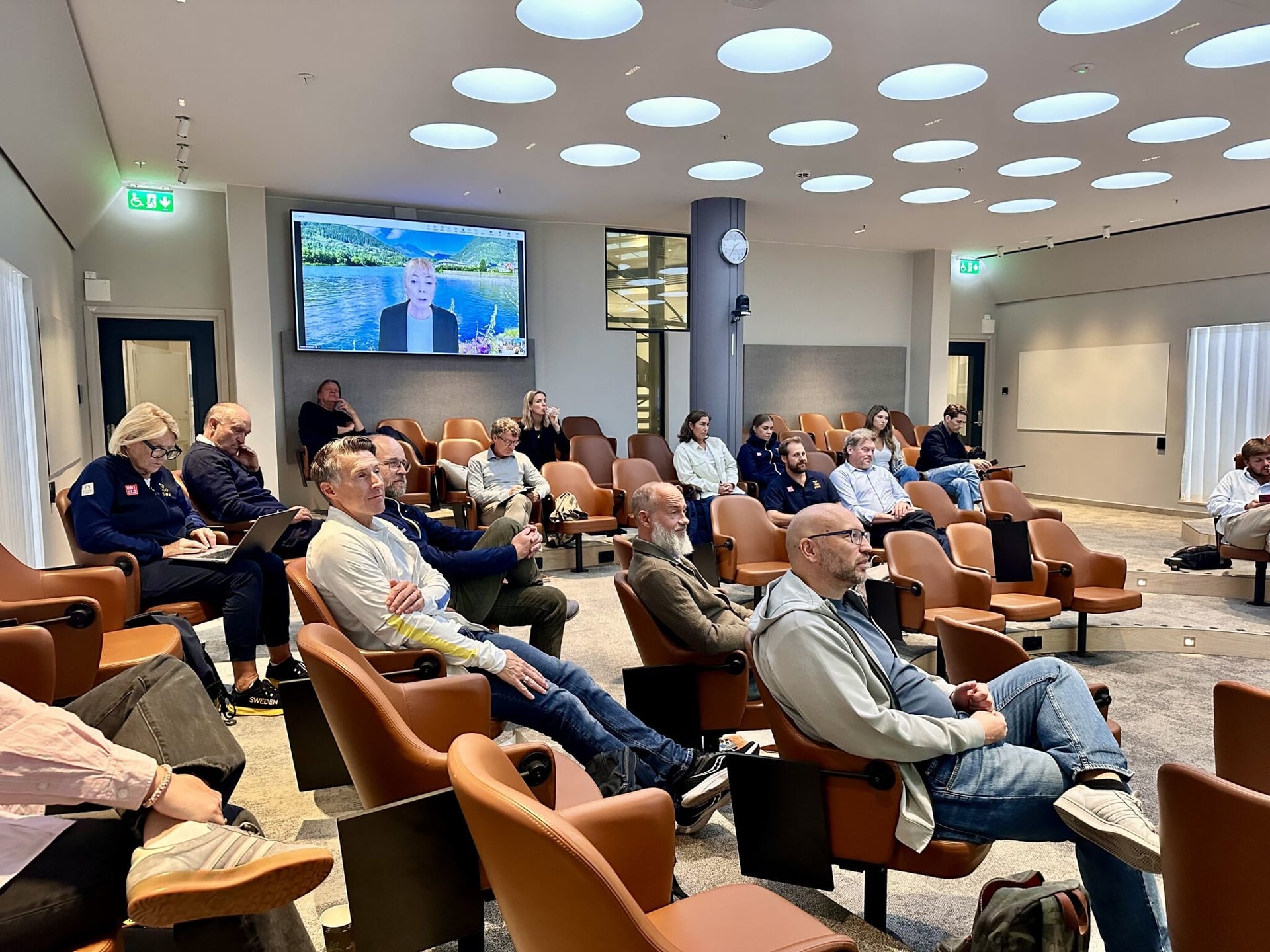
Louise Bringselius from the Stockholm School of Economics discussed how trust can strengthen collaboration, foster innovation and improve competitiveness. Her contribution highlighted the importance of creating environments in which people feel confident sharing ideas, taking responsibility and working together towards common goals.
Lasse Lychnell focused on relational leadership and the qualities required to build strong professional relationships. He emphasised presence, attentive listening and clarity, as well as the courage to show vulnerability as a leader.
Together, their perspectives demonstrated that trust is something that must be actively developed through everyday leadership practices and interactions, not simply remain as an abstract idea.
Leadership teams must practice together
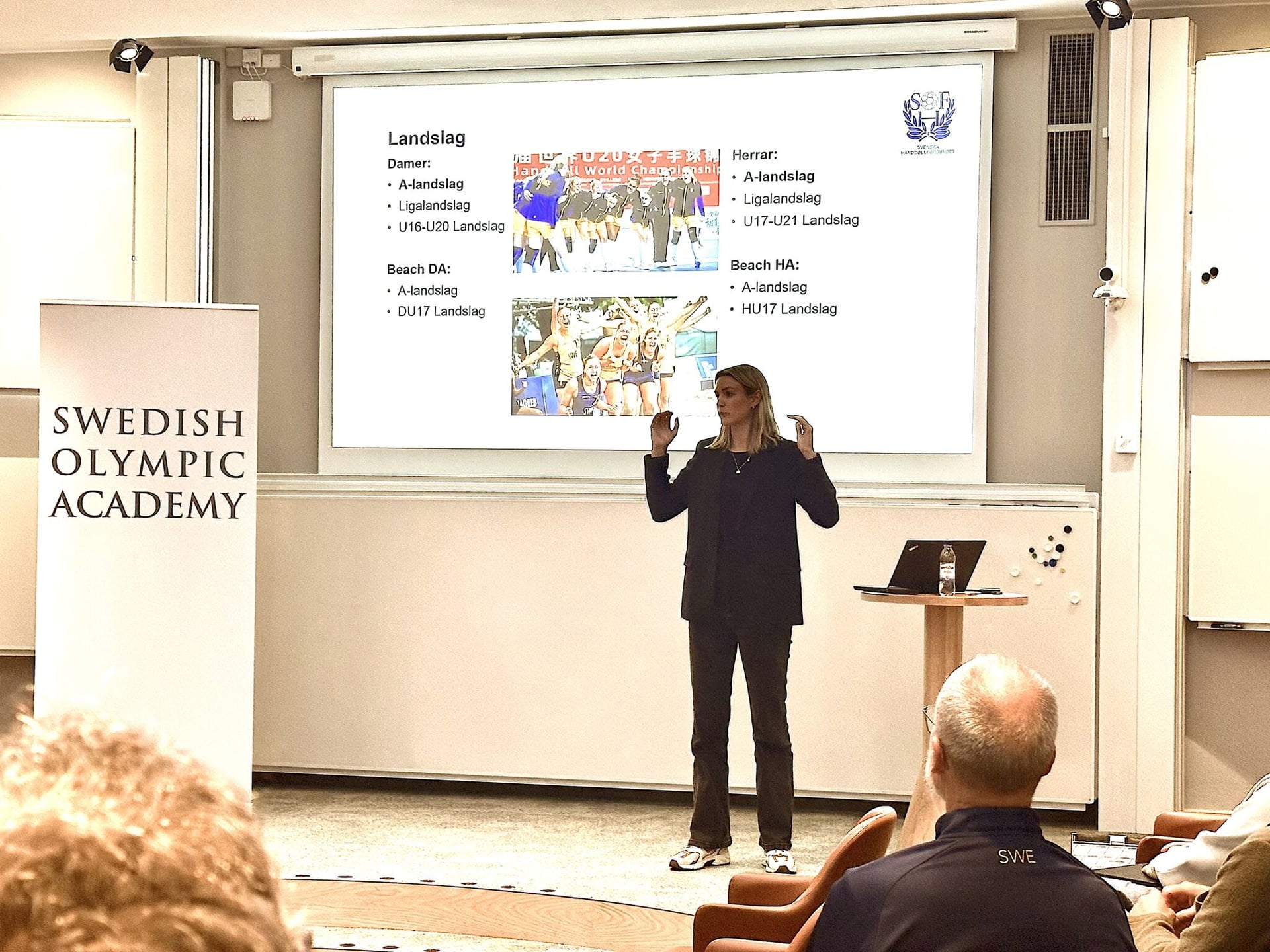
Drawing on her experience in handball, Hanna Fogelström shared insights into building leadership teams with a strong focus on development.
She stressed that leadership, like athletic performance, needs to be practiced and evaluated. Leadership teams must regularly reflect on how they work, learn from experience and identify opportunities for improvement. She also highlighted the importance of recovery and clearly defined mandates, both of which enable leaders to perform sustainably and make effective decisions.
Aligning vision, values and behaviour
Fredrik Wetterstrand offered perspectives from golf, focusing on the need to align an organisation’s vision and values with the behaviours displayed in practice.
He underlined the value of educating the entire leadership team and investing in leaders over time. He also discussed the thoughtful use of data in decision-making, recognising its value while ensuring that it supports—rather than replaces—professional judgement.
Golf also provides an interesting perspective on performance strategy. Having the courage to take an offensive approach and occasionally perform at the very highest level can sometimes be more valuable than focusing exclusively on raising the minimum level of performance.
How performance is defined shapes opportunity
The programme continued with SOA Open Friday, where additional guests joined the conversation.
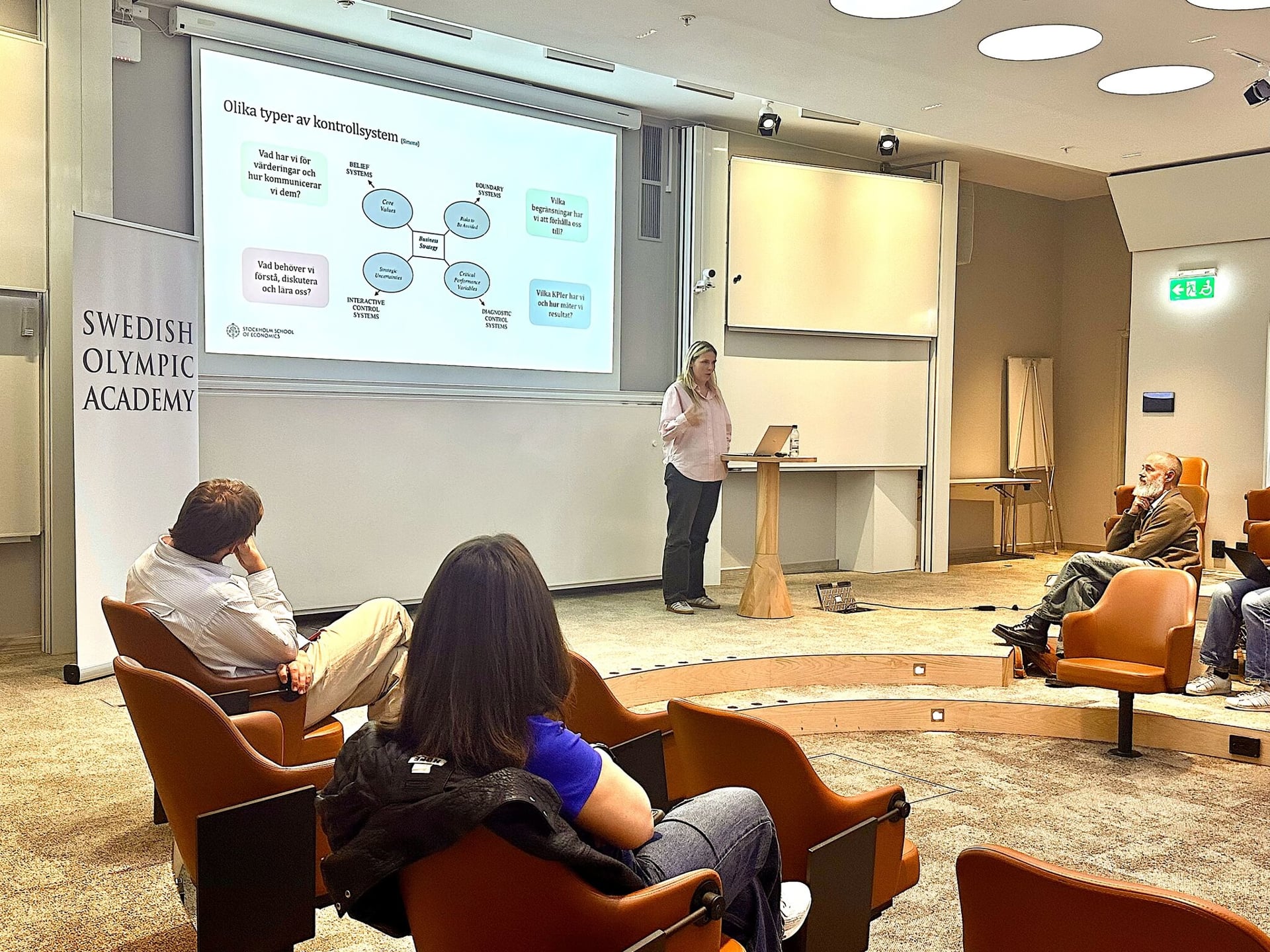
Fanny Almersson from the Center for Sports and Business at the Stockholm School of Economics examined how goals, performance measures and the allocation of resources shape our understanding of performance.
The ways in which organisations define and measure success influence not only which achievements are valued, but also who receives the resources and opportunities needed to succeed. Her contribution invited participants to consider how performance systems affect both decision-making and individual development.
The day concluded with networking and further conversations among speakers and participants.
Creating stronger environments for performance
The forum showed that successful leadership teams are built through more than just expertise alone. They depend on trust, strong relationships, shared direction and a willingness to keep learning.
Clear mandates help people take responsibility. Aligned values and behaviours turn ambition into consistent action. Reflection and evaluation make leadership a practice that can be continuously improved. Just as importantly, recovery and long-term investment enable leaders to sustain their performance.
A special thank you to Louise Bringselius, Lasse Lychnell, Hanna Fogelström, Fredrik Wetterstrand and Fanny Almersson for generously sharing their knowledge and experience. Thank you also to all the participants whose thoughtful questions, valuable perspectives and engaging conversations contributed to the event.
The Swedish Olympic Academy (SOA) is a collaborative platform involving the Swedish Olympic Committee, Karolinska Institutet, KTH Royal Institute of Technology and the Stockholm School of Economics.