
What can business schools learn from 400-year-old Baroque churches?
Churches were once deliberately redesigned to change how people learned, listened and behaved. At a seminar at the House of Innovation, art historian Anna Bortolozzi discussed how studying the Reformation and Counter-Reformation churches can provide insights into the shaping of spaces and their relationship with art and knowledge.

What does the design of a room have to do with how we learn? Quite a lot, if the history of European churches is any guide.
On October 7, the House of Innovation welcomed Anna Bortolozzi, Professor of Art History at Stockholm University, for a seminar on how religious reforms transformed the spaces in which people encountered ideas.
The seminar was the second meeting in a series exploring how art can shape knowledge creation at a business school. The initiative began with an “unconference” at SSE in May, where artists, researchers and educators came together to examine how artistic practices might challenge established ways of producing and sharing knowledge.
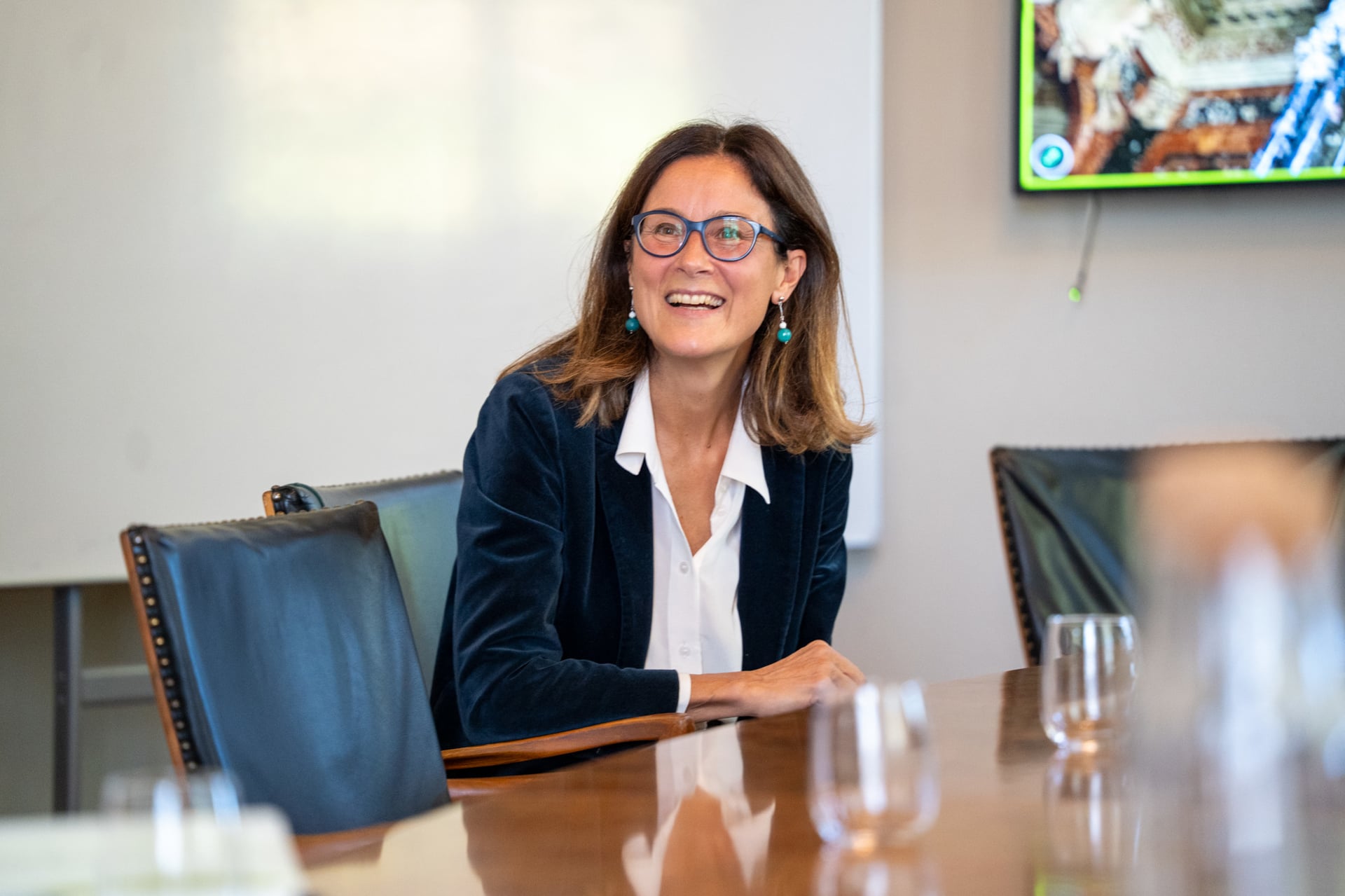
Professor Anna Bortolozzi presents how religious reforms transformed church architecture and the experience of knowledge.
Bortolozzi specialises in early modern architecture and the relationship between architecture and cultural identity. Her starting point was the Reformation and a dispute that went far beyond aesthetics: what are images for, and how should people encounter religious knowledge?
In Lutheran churches, decoration was stripped back and the spoken word moved to the centre. Pulpits became prominent, while acoustics, lighting and visibility were essential. People needed to hear the sermon and be able to read the Bible.
The Catholic response took another route. The Council of Trent defended religious images as tools for teaching and encouraging devotion, while placing their production under much tighter control.
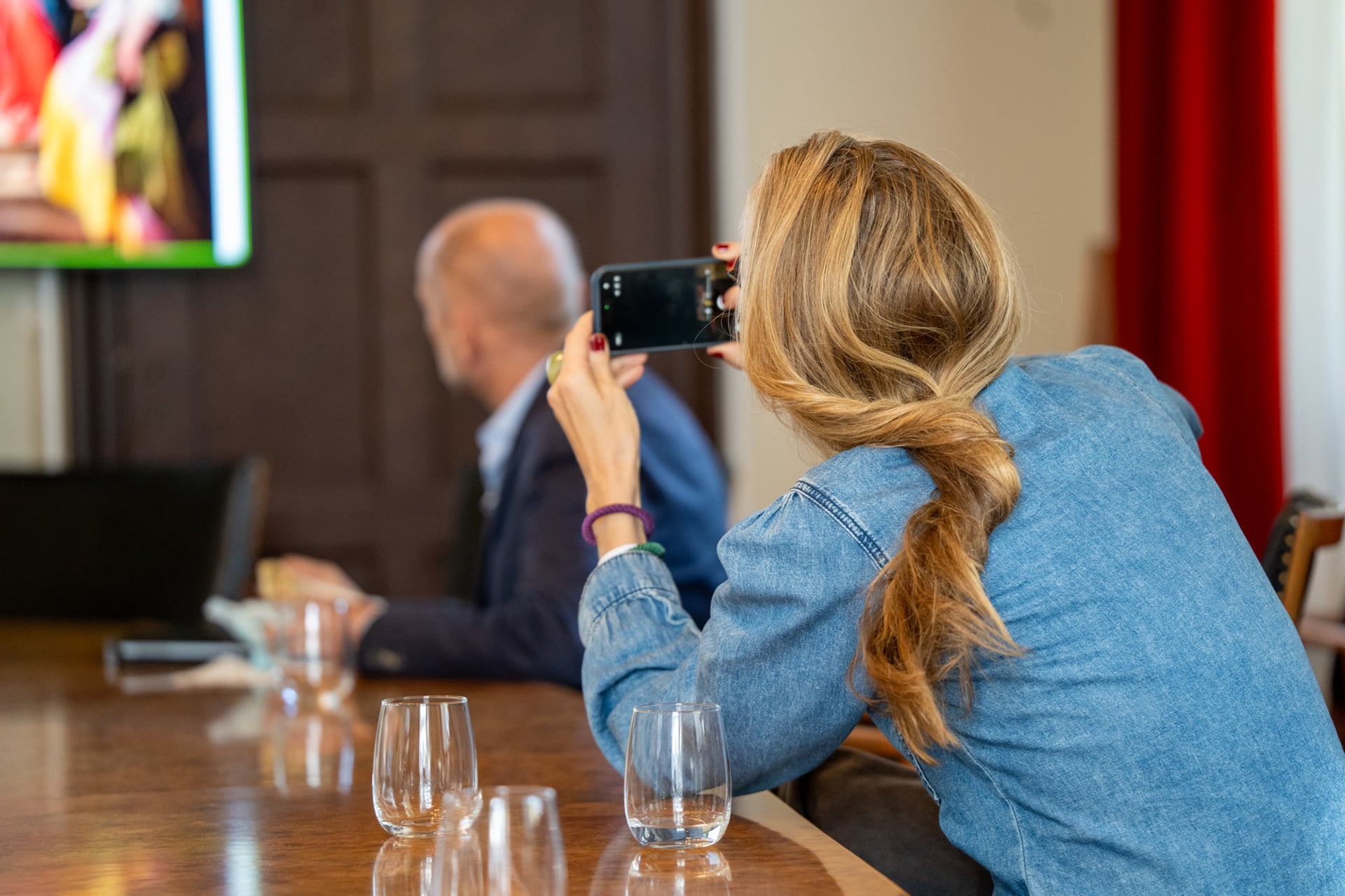
Jennie Lorisson, who recently completed her doctorate at the House of Innovation, attended the seminar.
When space directs attention
The same thinking reshaped architecture. Carlo Borromeo, Archbishop of Milan and one of the leading figures of Catholic reform, set out detailed instructions for church interiors. Worshippers should have a clear view of the high altar, while the arrangement of entrances, chapels and the nave helped regulate how people moved and behaved.
Interestingly, Bortolozzi pointed out, Catholics and Protestants were wrestling with similar design problems.
“The concern for visibility and acoustics is the same,” she said. The difference was what the architecture directed attention towards: the pulpit and the word in Lutheran churches, and the high altar in Catholic ones.
That principle can be seen in the Church of the Gesù in Rome, the mother church of the Jesuits. Its large, open nave supported visibility and preaching. Its earliest decoration was relatively restrained, reflecting the emphasis on modesty that followed the Council of Trent.
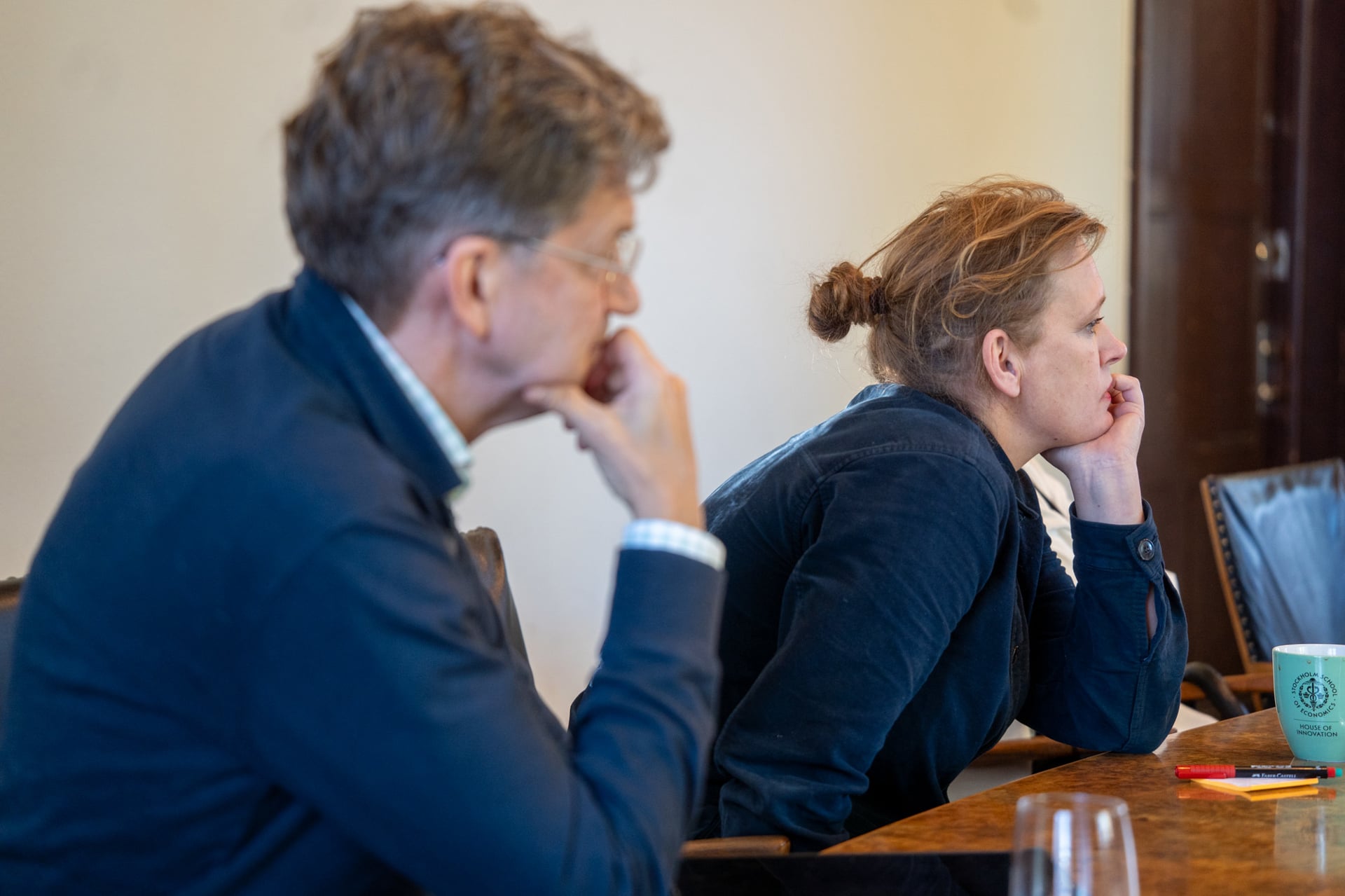
Associate Professor Pär Mårtensson and multidisciplinary creator Sahara Widoff during the seminar.
From restraint to immersion
By the late 17th century, however, Roman church interiors had become dramatically more theatrical. Gian Lorenzo Bernini’s Cornaro Chapel, with its famous Ecstasy of Saint Teresa, combined architecture, sculpture, painting and hidden light to draw visitors into the scene.
The Gesù underwent a similar transformation. Giovanni Battista Gaulli’s vast ceiling fresco appears to dissolve the boundary between the building and the heavens, while the chapel of St Ignatius, designed by the Jesuit artist Andrea Pozzo, uses precious materials, sculpture and illusion to create an immersive experience.
For Bortolozzi, this shift shows how art and architecture could do more than illustrate ideas. They could shape how those ideas were experienced.
That question brings the discussion back to SSE. If churches once used light, sound, images and architecture to influence attention and understanding, what might a university learn from treating its spaces as part of education rather than simply as containers for it?
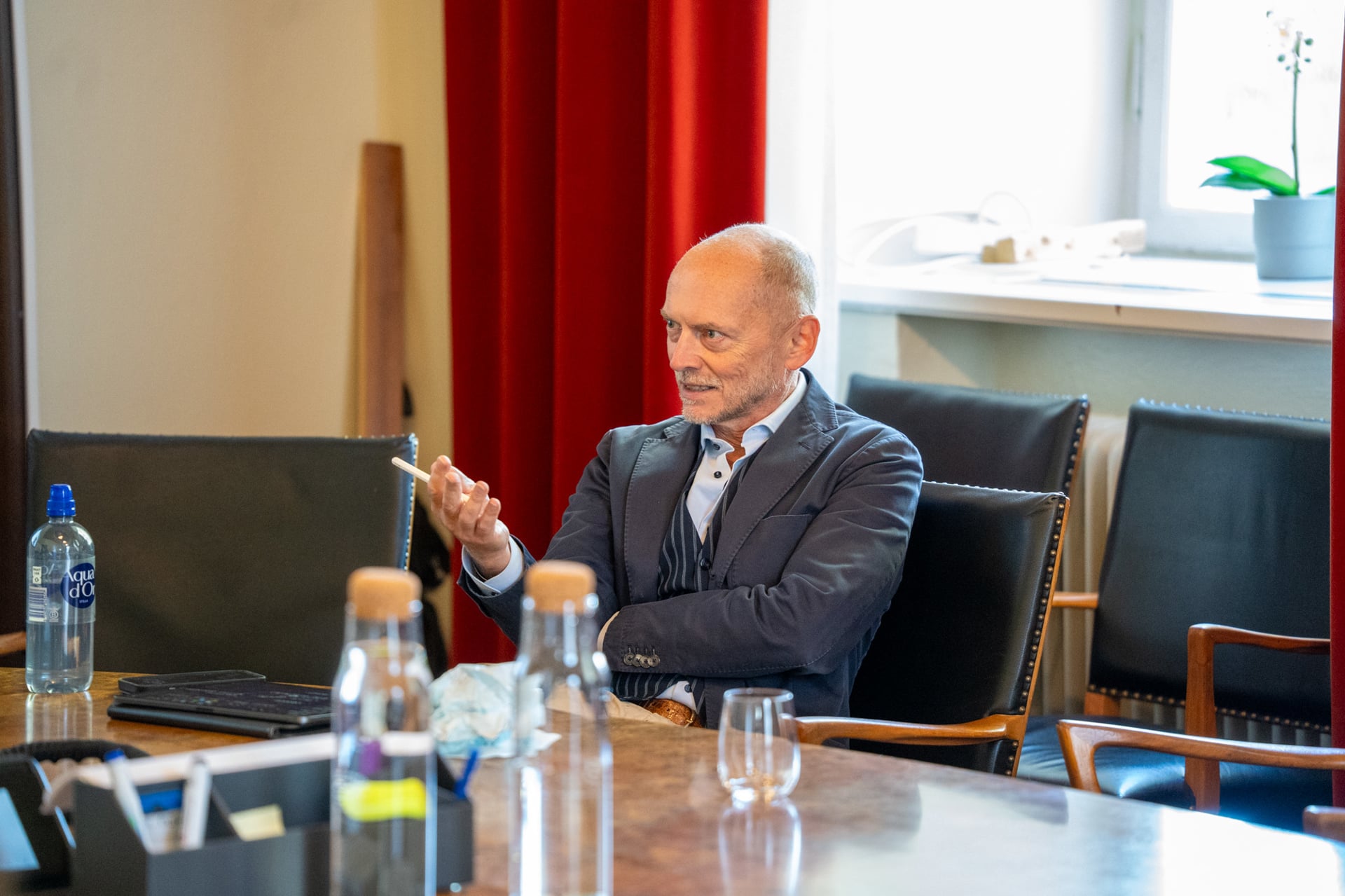
Professor Roberto Verganti, The Josefsson Family Chair in Art and Innovation, and Director of the Center for Art and Innovation at the House of Innovation.
SSE’s Art Initiative is pioneering this path, with its art classrooms, corridors, artworks, and designed furniture.
“One could see the art initiative as a modern reinterpretation of Bernini’s Bel composto, the ‘beautiful whole,’ where architecture, painting, and sculpture are inseparable in creating an experience of the sublime. A university where one also learns through the senses, immersed in ‘atmospheres of knowing,’” said Roberto Verganti, director of the Center for Art and Innovation at the House of Innovation.
Roberto’s reflection is grounded in a research project undertaken by himself, Professor Paolo Quattrone (University of Manchester), and Dr Riccardo Masiero, Affiliated Research Fellow at the Center for Art and Innovation.
The seminar continues the Center for Art and Innovation’s exploration of the central question: how art, architecture and experience might open up different ways of creating and sharing knowledge.
We thank Anna kindly for the presentation and look forward to the next session.


