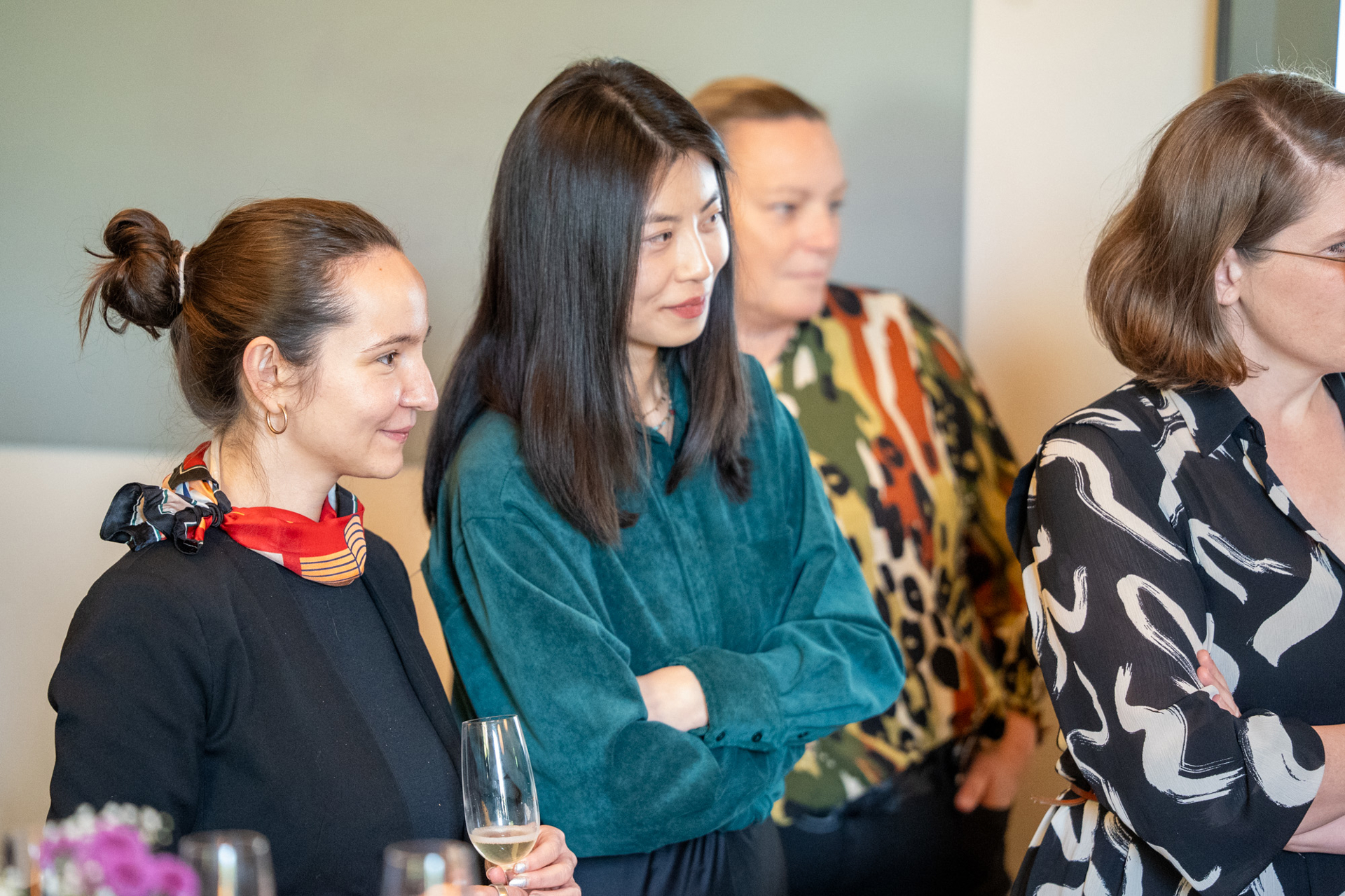
Riccardo Masiero successfully defends doctoral dissertation
On Sept. 14, 2026, Riccardo Masiero successfully defended his doctoral dissertation, “Inquiring Organizational Doubt: Perspectives on Innovation Work.” His research shows how doubt, often seen as an obstacle to action, can also help organizations question assumptions and navigate innovation and change.

The defense took place in the Lecture Hall at the House of Innovation at the Stockholm School of Economics (SSE). Professor Roberto Verganti, SSE, chaired the defense, while Professor Silviya Svejenova of Copenhagen Business School served as faculty opponent.
Svejenova praised Masiero for taking on an unconventional and difficult topic, describing the choice to study doubt as bold. She also highlighted the dissertation’s combination of conceptual development and long-term engagement with organizational practice, and the new questions it raises for future research.
“I found your work genuine. I think there was personality in it, and I think this quest of doubt is an interesting way to enter the field,” said Professor Silviya Svejenova. “It opens many opportunities for further work.”
What the thesis is about
Organizations have good reasons to want to reduce doubt. Too much of it can slow decisions, weaken commitment and make it difficult to act. But removing doubt too quickly can also mean overlooking alternatives or failing to question assumptions that no longer hold.
Masiero’s dissertation explores this tension by shifting attention from doubt as an individual feeling to something that can be shaped by the way organizations work. It asks how organizations produce, stabilize and distribute doubt – and what this means for their ability to act.
The dissertation combines conceptual research with a longitudinal ethnographic study of an innovation-focused team in a multinational, engineering-driven organization. Masiero followed an innovation transformation over several years, using observations, interviews, documents and archival material to study how doubt emerged in everyday work.
The findings show that whether doubt helps or hinders depends on how it is organized. Environments that give people room to question existing knowledge and consider alternatives can make doubt a resource for inquiry. Under other conditions, the same doubt can instead constrain action.

Practical Implications
The research shows that seemingly ordinary features of innovation work can shape how people deal with uncertainty. Visual artifacts, for example, can expose assumptions and keep questions open as they are revised and repurposed. Rather than simply documenting what a team already knows, they can help people see what remains unresolved.
Masiero also finds that organizations can question their assumptions about time itself. Managers may reconsider what moving at the “right” speed means, when it is time to act, and whether established timelines still make sense. Time is therefore not only an external constraint on innovation; ideas about timing, pace and deadlines can themselves be reconsidered.
For managers, the findings suggest that the goal should not always be to remove doubt as quickly as possible. Teams can benefit from forums where assumptions can be challenged, artifacts that make unresolved issues visible, and spaces where alternatives can be explored before a course of action becomes fixed.
The challenge is knowing when continued questioning is useful and when there is enough understanding to act. For organizations facing innovation and change, managing uncertainty may therefore be less about finding certainty and more about creating the right conditions for questioning, learning and eventually moving forward.
About the defense
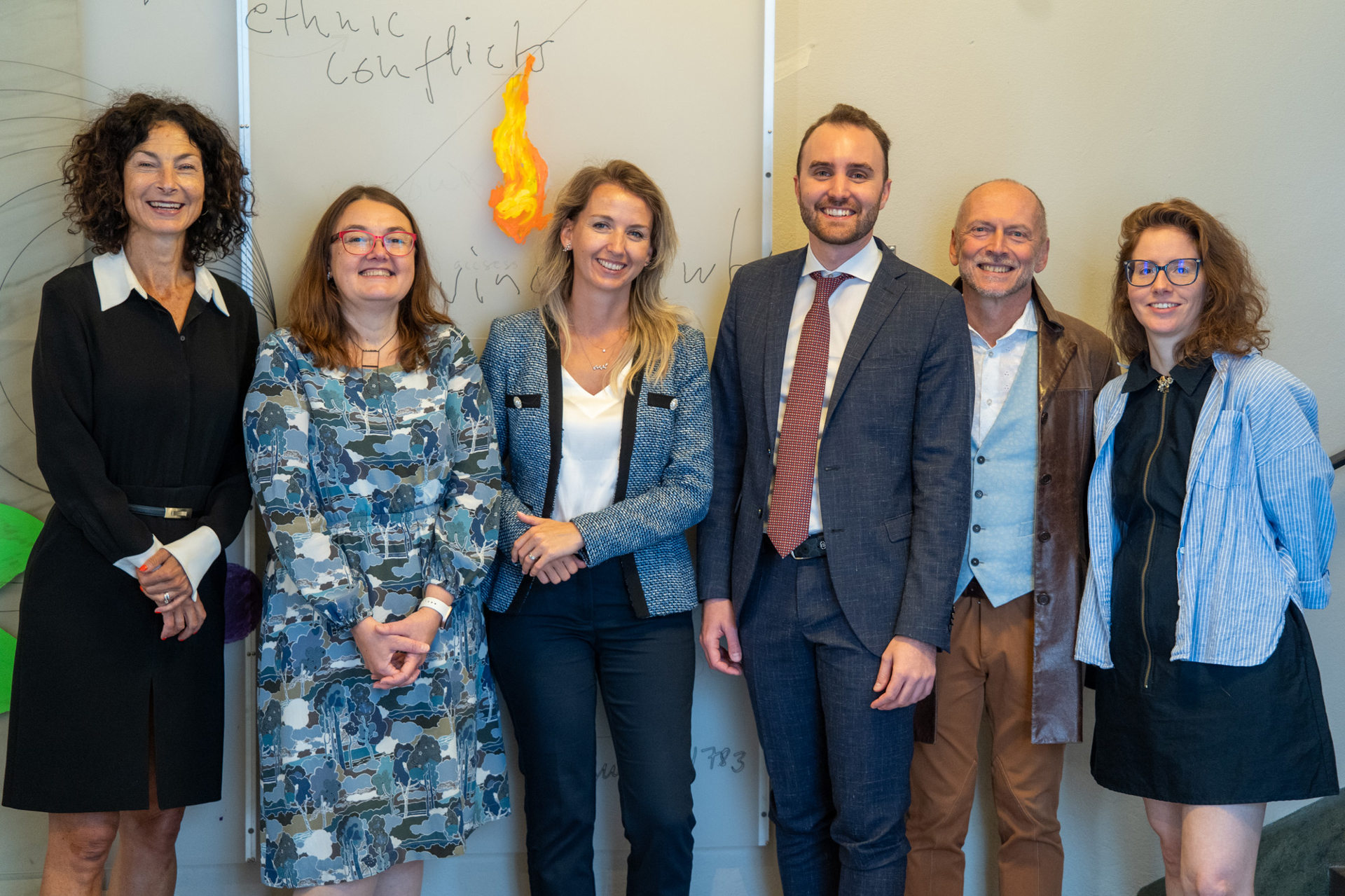
Chair of the defense: Professor Roberto Verganti, Stockholm School of Economics, Sweden
Faculty opponent: Professor Silviya Svejenova, Copenhagen Business School, Denmark
Assessment committee: Associate Professor Magdalena Cholakova, Rotterdam School of Management, the Netherlands; Professor Emma Bell, Stockholm School of Economics, Sweden; and Associate Professor Anna Essén, Stockholm School of Economics, Sweden.
Supervisors: Professor Roberto Verganti and Giada Baldessarelli.
Riccardo Masiero is a researcher at the House of Innovation at the Stockholm School of Economics. His research explores how doubt influences the organization of innovation and change processes, with a particular interest in materiality, visualizations and spaces.
Read Riccardo Masiero’s doctoral dissertation in the SSE Research Portal.
Celebratory mingle
After the defense, the assessment committee excused themselves to deliberate. They soon returned to announce that Riccardo had successfully defended his dissertation.
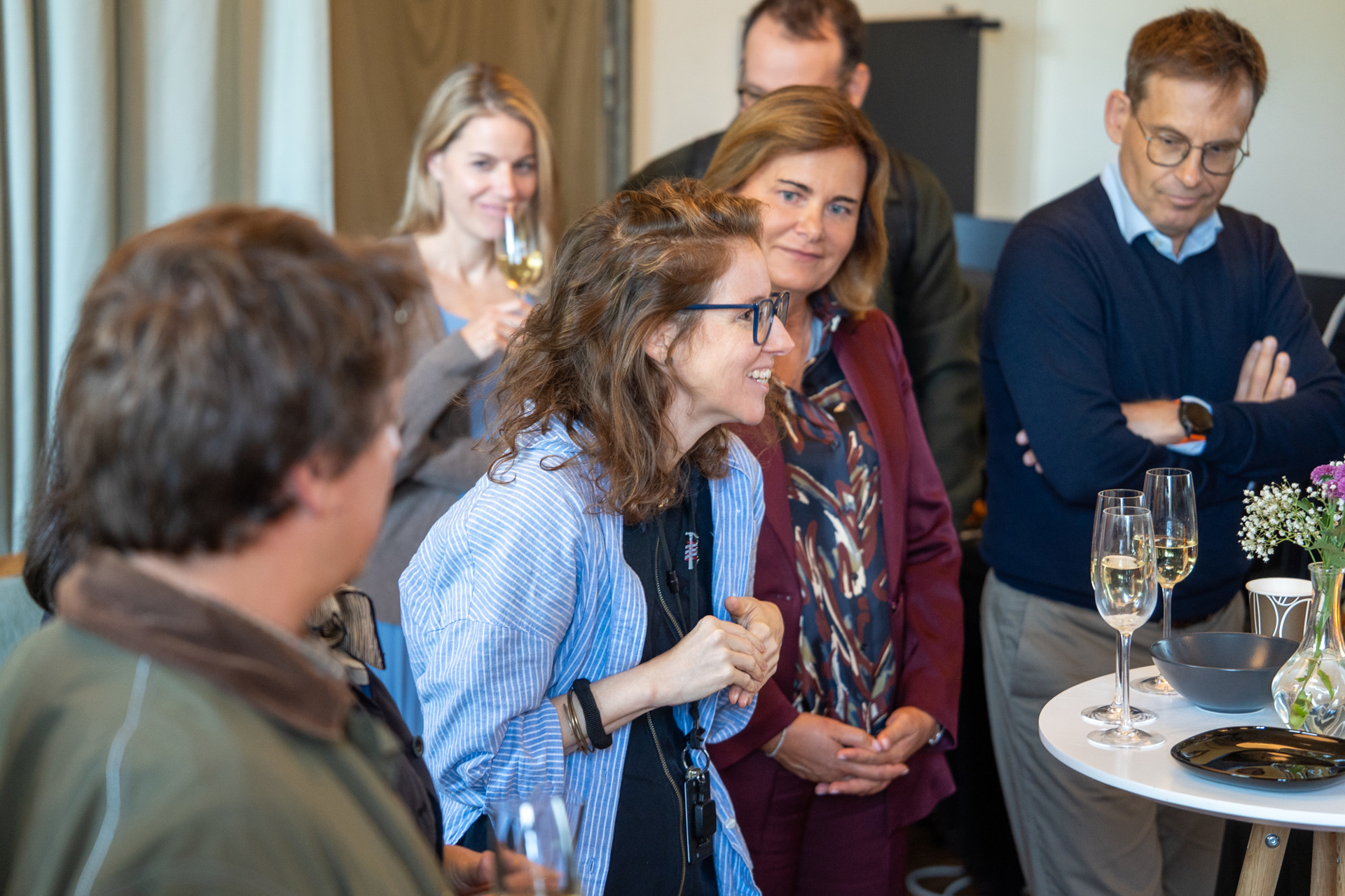
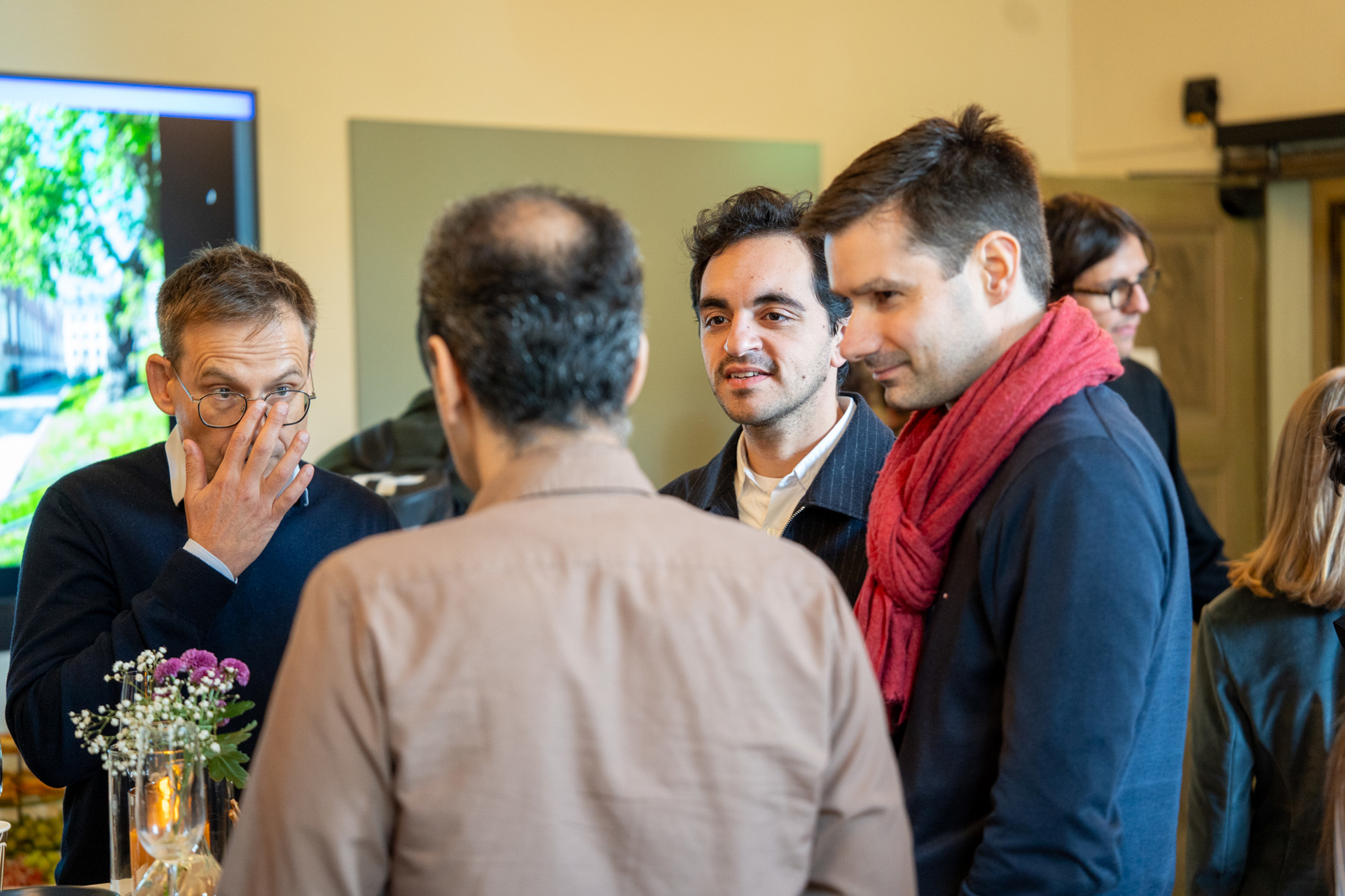
The celebration continued with a warm and lively mingle, where colleagues, friends and guests gathered to toast Riccardo’s achievement.
On behalf of everyone at SSE and the House of Innovation, congratulations, Riccardo!