Michael West
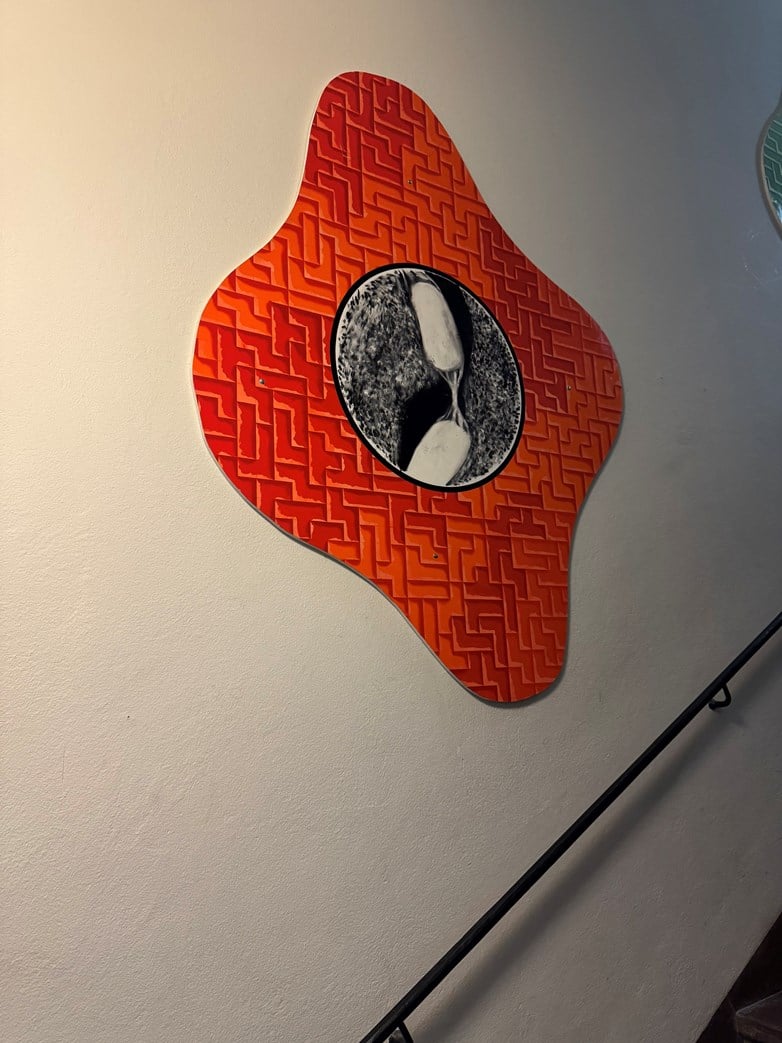
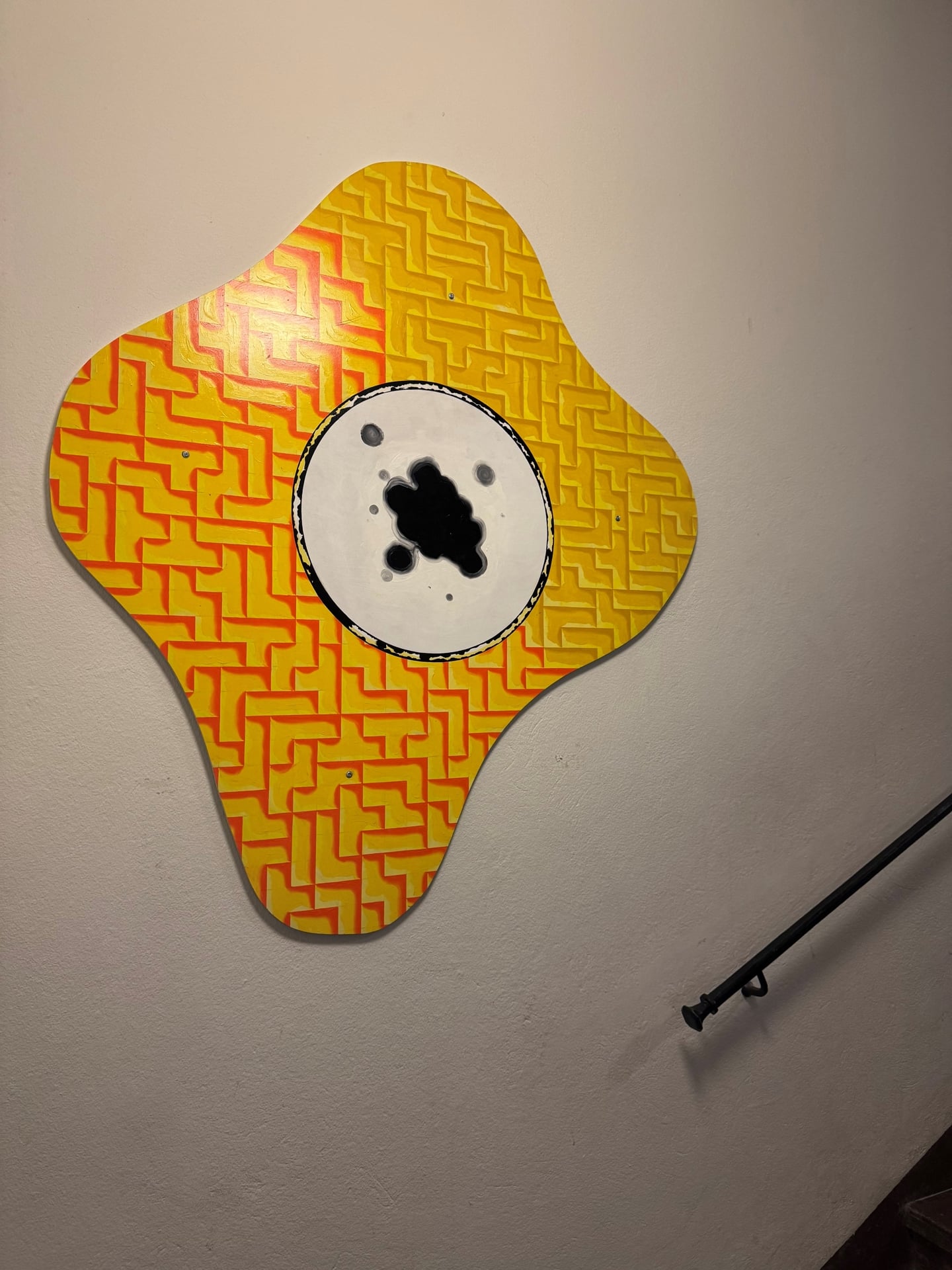
Michael West received the Maria Bonnier Dahlin Scholarship in 1993. Four of his works are currently displayed at the Stockholm School of Economics: Fågel på gren (Bird on a Tree) in the South Staircase and three untitled works from 1995 in the West Staircase.
Oil on panel
135 × 120 cm
1995

Michael West received the Maria Bonnier Dahlin Scholarship in 1993. Four of his works are currently displayed at the Stockholm School of Economics: Fågel på gren (Bird on a Tree) in the South Staircase and three untitled works from 1995 in the West Staircase.
Interview
How would you describe the work you were doing when you received the Maria Bonnier Dahlin Scholarship, and what did the scholarship mean to you?
At the time, I was studying at Mejan and working with nonfigurative painting on a larger scale. I was interested in patterns and abstraction. Receiving grants was important, but the biggest change was that galleries and gallerists began to notice my work. Göran Engström, who was also part of the scholarship jury, became my gallerist. The scholarship also brought visibility and recognition.
What discussions characterized the art scene at the time, and what was particularly important to you?
I never really felt part of any particular discussion or movement. I followed my own path, which at the time probably felt somewhat out of fashion, just as it sometimes does now. Video and conceptual art were becoming increasingly prominent and were often seen as something new. Meanwhile, I continued to focus on painting and remained interested in direct, visual forms of expression. I have always wanted artworks to speak for themselves without requiring extensive explanation.
What exhibitions, films, and books were important to you, and what music did you listen to?
I do not remember specific exhibitions or books from that period, but I listened extensively to metal bands such as Carcass, Napalm Death, Morbid Angel, Slayer, and Metallica. At the same time, I also listened to Baroque music, especially Bach and Handel.
If you were to identify a person who was particularly influential in Swedish art at the time, who would it be and why?
Art critic Lars O. Ericsson was highly influential. Art criticism carried much greater weight at the time, and reviews could have a significant impact on an artist’s visibility and career.
How would you describe the social and political climate at the time, and were there any events that particularly affected your work?
I have never been politically active, although I have always been politically aware. One event I remember clearly was the assassination of Olof Palme. I was at Club Mejan when the news arrived, and people were shocked and confused.
I also remember the economic downturn at the end of my studies, when the art market suddenly lost momentum after years of expansion. Artists of my generation entered the profession during a difficult period and had to adapt to less favorable conditions.
When you look back and compare the art world then and now, what changes stand out the most?
The art world has broadened, but in some ways also become more fragmented. Art no longer occupies the same central role in public life. At the time, there was no internet or mobile phones, and newspapers had much greater influence.
I remember visiting record stores to look for imported music and discovering new things through physical places and encounters. Around this period, I bought one of the first Macintosh computers, although I mostly used it as a word processor. I also remember when the first version of Photoshop arrived at the Academy—it felt revolutionary.
What are you working on today?
Today, I work primarily with photography and digital art. I no longer paint. Alongside my artistic work, I also work in transport and logistics.
This text is an excerpt from Samlade stipendiater!: 30 år med Maria Bonnier Dahlins stiftelse, edited by Niclas Östlind (2016). Stockholm: Bonnier Fakta.
More Michael West, Utan titel (1995, oil on panel), on display at SSE