
PO Ultvedt, Working material from Iola´s Gallery, New York
Art Initiative is screening PO Ultvedt, Working material from Iola´s Gallery, New York from 1993 on the big screen during October 2026. The screening marks the film’s premiere. Following its restoration by Filmform, we are proud to build on the PO Ultvedt exhibition at the Royal Academy of Fine Arts in Stockholm that closed on October 3.

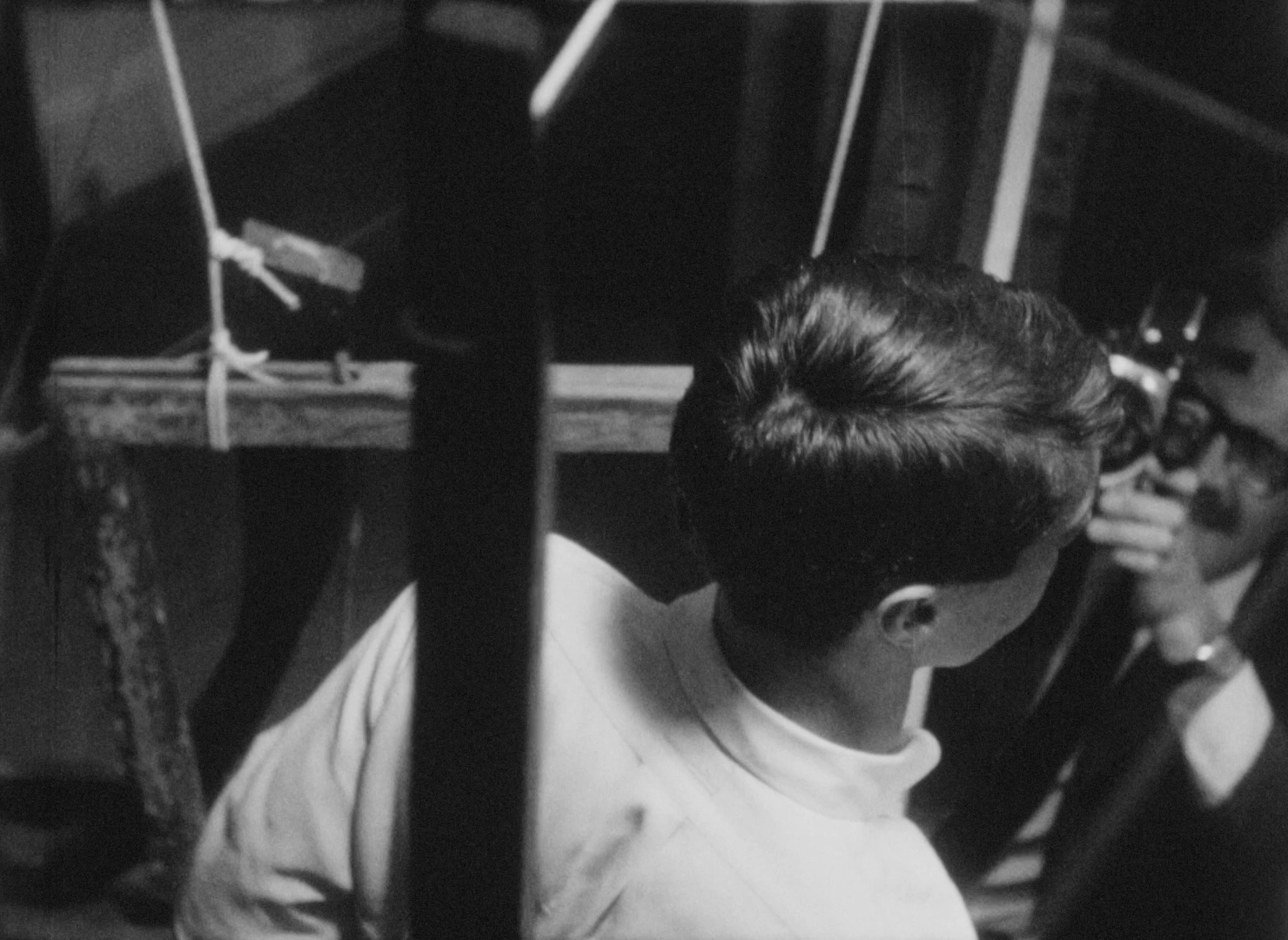
“Furniture, household utensils and musical instruments performed an absurd ballet powered by the visitor’s own movements.” This is how art critic Olle Granath described PO Ultvedt’s works Manhattan and Labyrinth — two artworks exhibited in New York in 1963 and filmed by the artist as dancer Steve Paxton moved through the installation.
Per Olof Ultvedt (1927–2006) was one of the most dynamic figures in Swedish art in the decades following the Second World War. Ultvedt set art in motion both symbolically and in a very literal sense. Best known for his kinetic sculptures (sculptures that move, can move or appear to move), he and his contemporaries challenged the notion of art as static. Ideas of originality and the relationship between viewer and artwork were loosened, and life itself was given expression through movement.
Ultvedt developed an early interest in conveying dynamism in painting and sculpture, but it was his encounter with the Swiss artist Jean Tinguely in the mid-1950s that brought about a decisive shift in his methods and approach. Tinguely inspired Ultvedt to fit his sculptures with electric motors, allowing them to operate autonomously and take on a life of their own, often with an absurd and anarchic spirit. Together with Jean Tinguely and his partner, Niki de Saint Phalle, PO Ultvedt formed a trio that collaborated on several large-scale projects. In Sweden, their collaboration culminated in the iconic exhibition Hon, en katedral (She — A Cathedral) at Moderna Museet in 1966. Internationally, Ultvedt also participated in several landmark exhibitions during the 1960s, including Dylaby and Rörelse i konsten (Movement in Art) at the Stedelijk Museum in Amsterdam, as well as the 1962 Venice Biennale. He often worked closely with Tinguely and Saint Phalle, with Moderna Museet’s legendary director Pontus Hultén serving as a key intermediary and impresario.
PO Ultvedt’s international connections extended beyond Europe. In 1963, he was invited to create an exhibition at the Alexander Iolas Gallery in New York. Across the gallery’s two floors, Ultvedt created a group of sculptures entitled Manhattan (later acquired by Moderna Museet and currently on display in its collection), alongside a bizarre maze called Labyrinth, which visitors activated through their interactions. A couple of years later, Olle Granath described Ultvedt’s New York exploits in the art journal Konstrevy: “Furniture, household utensils and musical instruments performed an absurd ballet powered by the visitor’s own movements. The normal relationships between people and objects were suspended. In some cases, visitors could see their own movements mimicked by the objects.”
The strong connection to dance and choreography in many of Ultvedt’s works is also evident in the film he began during his stay in New York. In the atrium of the Stockholm School of Economics, these film fragments are presented as a reconstructed whole. In the film, Steve Paxton — one of the pioneers of modern dance in the United States — moves through Ultvedt’s labyrinth. One sequence features a kind of choreography involving clothes attached to the body, reminiscent of Paxton’s groundbreaking solo work Flat, which he would create only a few years later. For a few seconds, at the far left of the frame, another of America’s most influential artists, Robert Rauschenberg, can also be glimpsed. Ultvedt had met Rauschenberg through Pontus Hultén during several shared exhibition projects in Sweden and Europe. In New York, Robert invited PO to create choreography on roller skates together with Carolyn Brown, a dancer with the Merce Cunningham Dance Company. The resulting work, Pelican, is now regarded as Rauschenberg’s first performance. The following year, Rauschenberg took part in the festival Five New York Evenings at Moderna Museet — an event that introduced Stockholm audiences to the latest American contemporary art and brought concepts such as the happening into Swedish public discourse.
Read about the recent PO Ultvedt exhibition at Kungliga Konstakademien here.
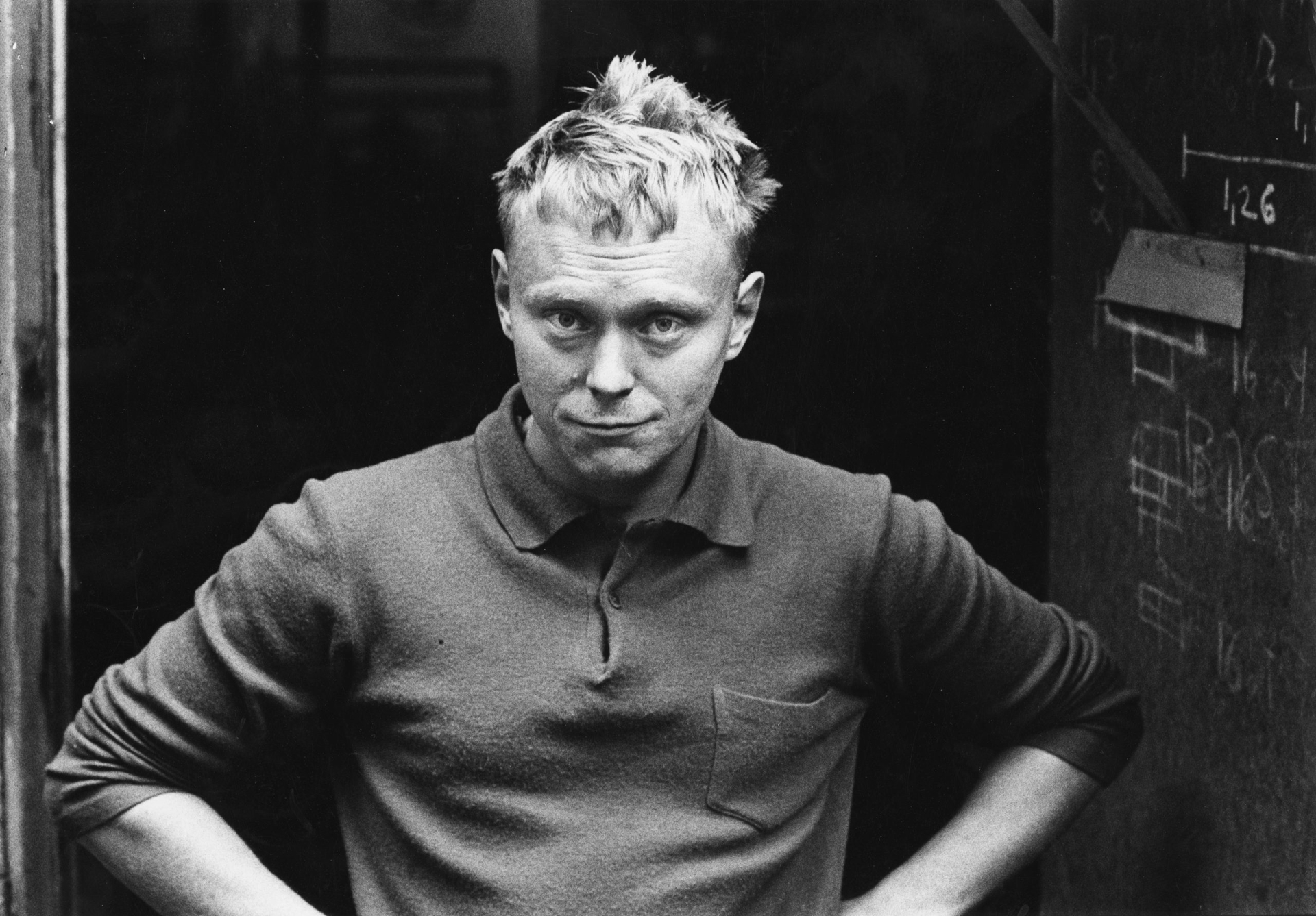
PO Ultvedt, photo by Sune Sundahl.
Lecture about the film at Konstakademien, Nov 5
On November 5, SAK (Sveriges Allmänna Konstförening) is hosting a lecture and discussion about the film and PO Ultvedt’s work in the USA.
The speaker is Annika Öhrner, Professor of Art History at Södertörn University and author of the article “Recalling Pelican: On PO Ultvedt, Robert Rauschenberg and Two ‘Ballets’.”
The event takes place in the library at Kungliga Konstakademien, Fredsgatan 12, on November 5 at 6 pm.