From Kyiv to Stockholm: A Week at the Stockholm School of Economics

I am a senior lecturer at the National University of Kyiv-Mohyla Academy and also work as an investment professional. I teach portfolio management and business valuation. When I had the chance to visit the Stockholm School of Economics through the CIVICA Ukrainian Scholar Short Visits programme, I knew it was a rare opportunity. SSE is one of the world’s top finance universities, known for its strong tradition in economic thought leadership. This is where the Heckscher-Ohlin theorem was developed, and a Nobel Prize in Economics was awarded. At the same time, the school is at the forefront of research in capital markets. For someone who works at the crossroads of practice and academia, it was hard to imagine a better match.
I was surprised by how warmly I was welcomed. During the week, I had about two dozen meaningful conversations with faculty, staff, researchers, and doctoral students. We discussed curriculum design, recent trends in the capital markets, ongoing research projects, and potential collaborations between our universities. Many of these talks flowed easily between work topics and personal stories. I was invited to a department meeting and joined fika, the traditional Swedish coffee break that is more about togetherness than coffee. These moments were genuine, not just formalities. I truly felt included in the academic community.
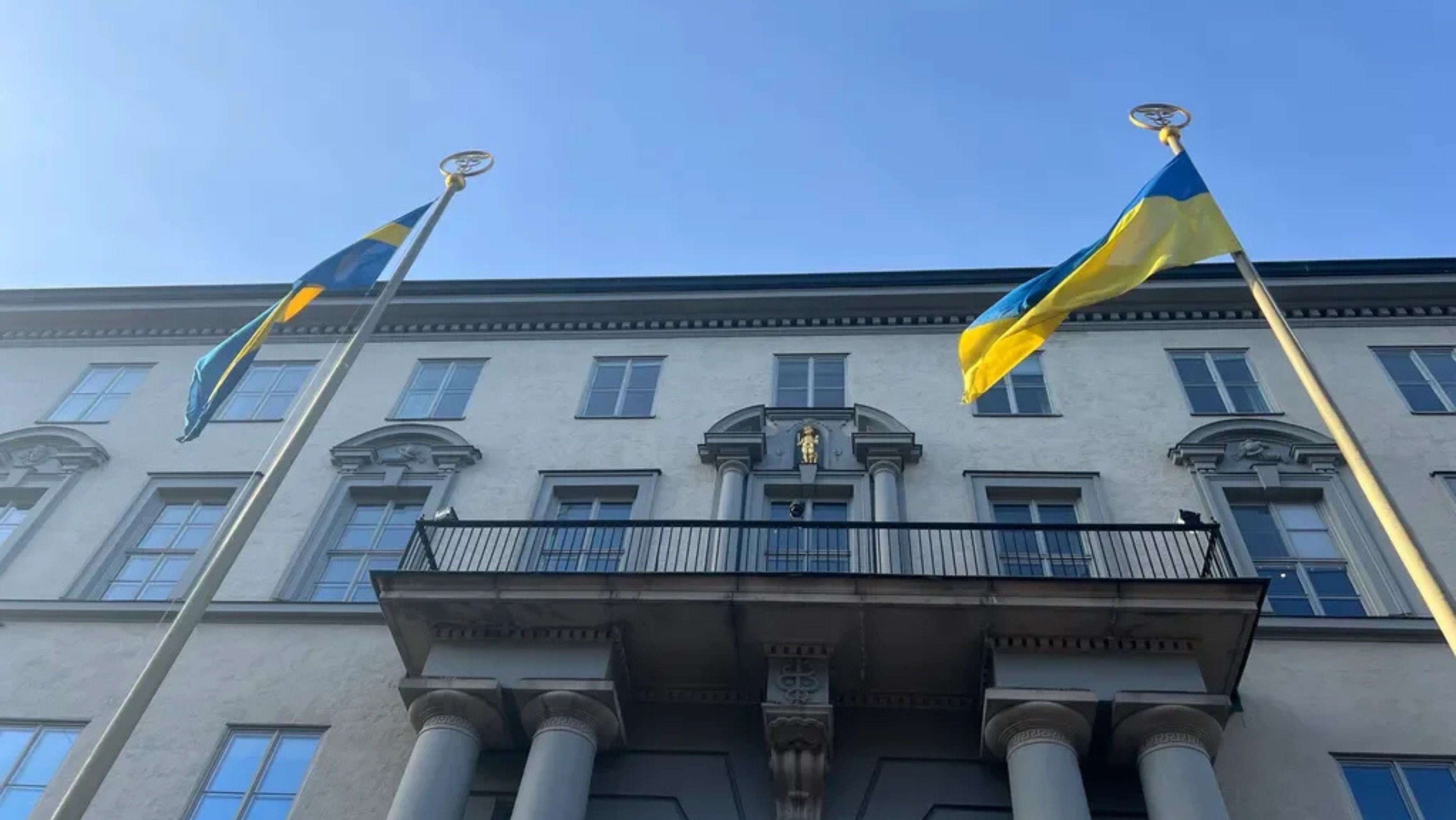
There is one moment I will never forget. The Ukrainian flag flew alongside the SSE flag at the entrance to the historic building on Sveavägen, in the center of Stockholm. I was deeply moved. The support I felt, both from the institution and from individuals, went far beyond what was required. It showed a global mindset — people who care about the world even when its problems do not affect them directly. This is not charity. It is a triumph of reason and solidarity that goes beyond borders.
I was also impressed by SSE’s Art Initiative. The school has created a permanent collection of about 150 contemporary artworks, all donated and spread throughout the campus. Some classrooms are actually art installations designed by well-known artists. The art is not just decoration; it is treated as a source of knowledge. On a guided tour, I learned how each piece connects to broader questions, such as the power of language, the ethics of measurement, the experience of war, and the meaning of cultural identity. For a business school, this is a remarkable decision. It shows that serious thinking should be rooted in human experience. It is a kind of humility that reminds us that numbers and models are not enough, and that reflection and empathy are important in education too. SSE even has a name for this approach: FREE — Fact-based, Reflective, Empathetic, and Entrepreneurial.
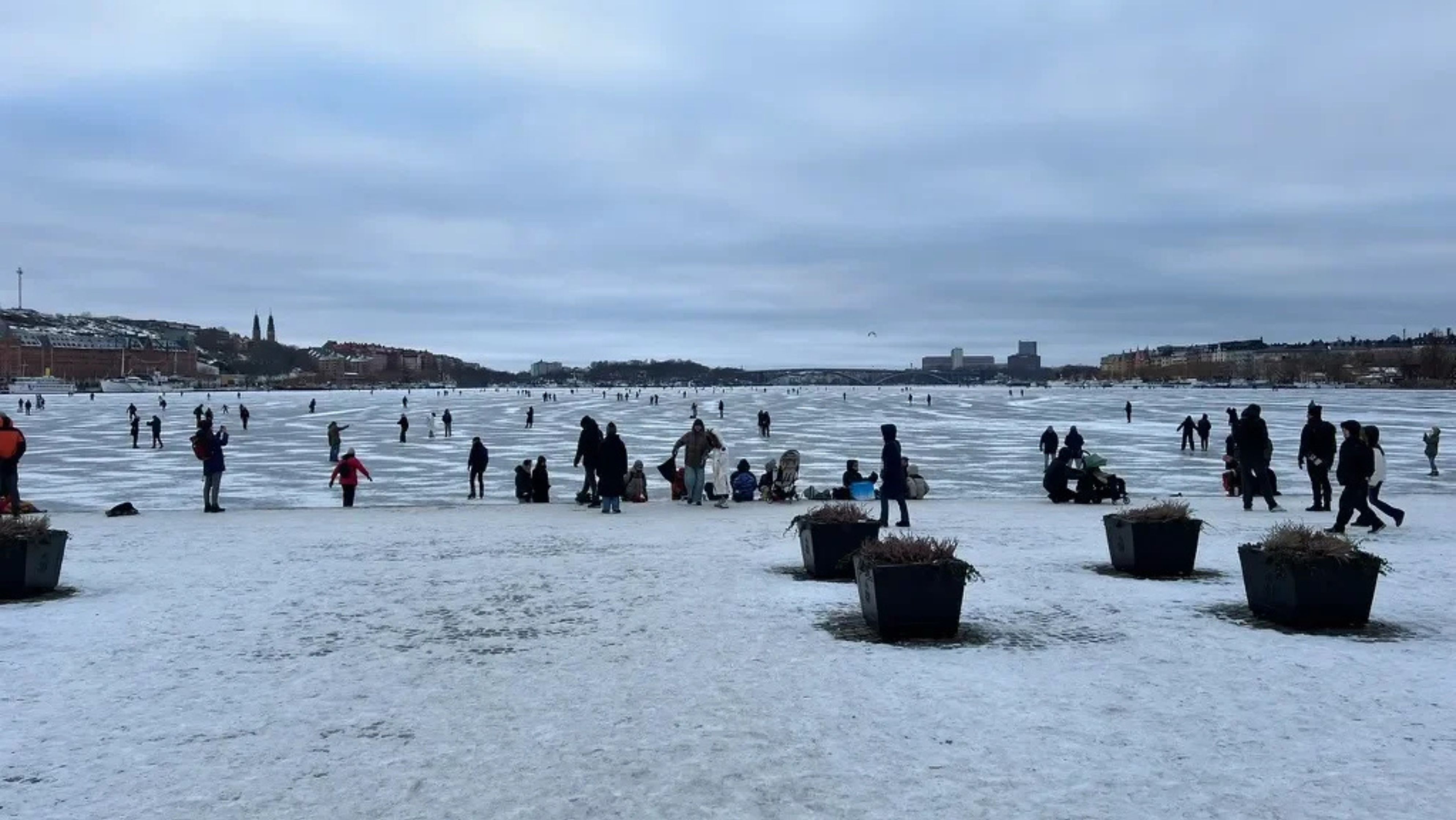
I was lucky to visit during a beautiful Scandinavian winter. The lake near Gamla stan was frozen solid. People skied and walked on it as if it were completely normal. It felt surreal and breathtaking, like witnessing a quiet miracle in everyday life.
Back home, things were very different. Ukraine was going through one of its toughest winters, with blackouts from Russian attacks, freezing temperatures, and remote work as the norm. Even so, we have already started working on joint projects between SSE and NaUKMA. A Swedish professor is set to give a guest lecture at our university. I came back with practical ideas to improve my courses. We are also discussing student and staff exchanges. These are just first steps, not the final results. There is still a lot of work to do and many people involved, but we know where we are headed.
I do not want this to sound too sentimental. I am simply grateful and hopeful. I wanted to share not just the facts of the visit, but also the atmosphere and feeling of that special week. Sweden and Ukraine have more in common than many realize: a shared history, similar values, and even the same national colors. As this collaboration grows, it will benefit both countries and all of Europe by strengthening academic, social, business, and human connections.
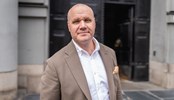
by Konstantin Yakunenko, PhD, CFA, CAIA
Senior Lecturer at the University of Kyiv-Mohyla Academy, Investment Director at Adamant Capital, Board Member and Chair of Education & CPD Committee at CFA Society Ukraine