How firms make cross-industry ideas work

Most organizations know they should look beyond their own sector for new ideas. Fewer know how to make those ideas stick. Researchers, executives, and practitioners recently gathered at the Stockholm School of Economics to examine that challenge.
The event, hosted by the House of Innovation, brought together senior practitioners from pharmaceuticals, construction, and video game development, alongside an academic framing of what research tells us about organizational learning.
The format moved deliberately from theory to practice: a research overview, a panel discussion with four industry leaders, and a hands-on workshop in which participants tested the ideas against their own organizational challenges.
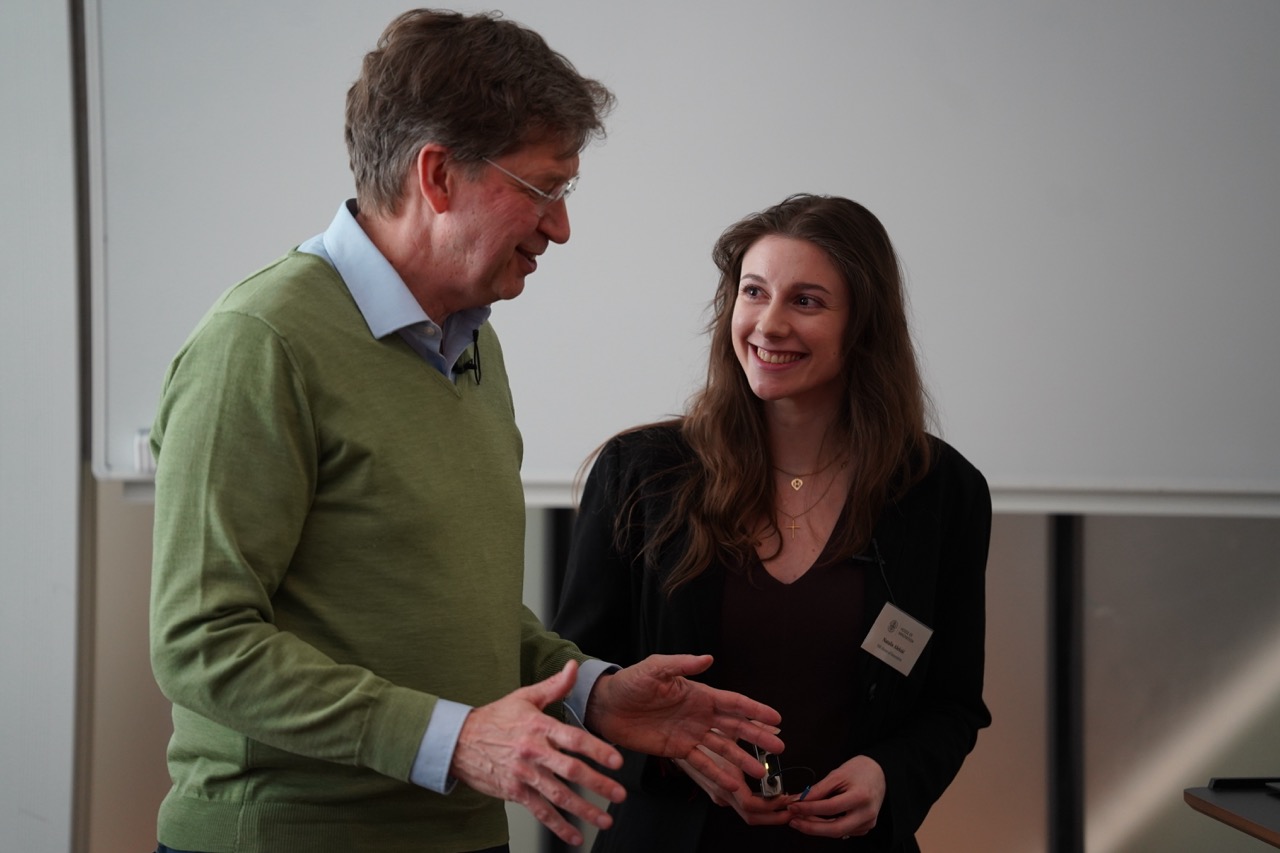
Natalie Aleksić and Pär Mårtensson opened up the session. Photo: Majlin Skjetne
What research says about organizational learning
Natalie Aleksić, PhD student at the House of Innovation, opened the session by outlining three ideas on which researchers broadly agree.
First, organizations do not learn simply because individuals learn.
Knowledge held by individuals leaves when they do, she explained, as NASA discovered when experienced engineers retired and institutional memory went with them. For learning to become organizational, it must be embedded in processes, practices, and culture.
Second, what an organization learns, or fails to learn, is not neutral. It depends on what the organization pays attention to, what it remembers, and what it chooses to ignore. Learning, in that sense, has an agenda.
Third, the harder problem for most organizations is not generating knowledge but getting that knowledge to travel where it needs to go.
“Most organizations do not struggle with generating knowledge,” Aleksić noted. “They struggle with bringing it from one team into another.”
Researchers call this the stickiness of knowledge, and it shapes whether an organization can innovate faster than its competitors.
Pär Åhlström, Vice President Degree Programs and Professor at the House of Innovation, added a note on the shape of innovation under pressure: research suggests an inverted U-curve between resource constraints and innovation output.
Too little pressure creates no urgency, too much leaves no capacity. The sweet spot, while hard to define in advance, does exist.
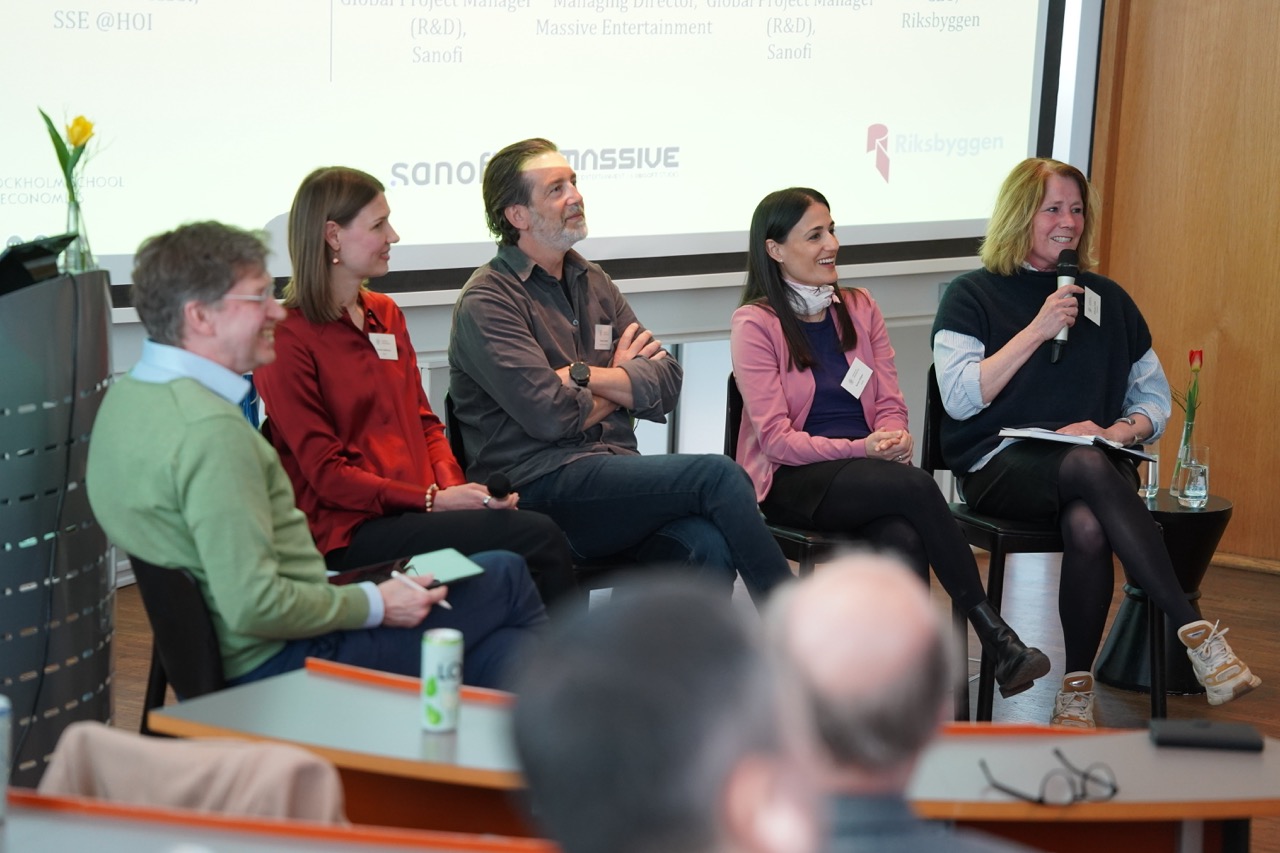
From left: Pär Mårtensson, Helena Andersson, Thomas Andrén, Soraya Hölper, and Johanna Frelin. Photo: Majlin Skjetne
Cross-industry lessons from three sectors
The panel drew on experiences from sectors that appear very different on the surface, but that had more in common than one might expect.
Helena Andersson and Soraya Hölper, global project managers at Sanofi R&D, described the company’s collaboration with Formula One team McLaren, launched in 2022 with a focus on manufacturing and supply.
The results were concrete: sensor technology borrowed from the racing context contributed to a 50 percent reduction in equipment downtime, while a pit stop-inspired approach to team changeovers cut transition times by 40 percent.
Decision-making practices from the racing environment also influenced Sanofi’s processes. What made it work, they said, was the scope.
“It was narrow in scope initially, and there were clearly defined KPIs, clear engagements, and the subject matter experts were accountable for the change.”
CEO-level sponsorship was equally important. In an organization of ~75,000 people, visible commitment from the top determined whether the initiative gained traction or faded among competing priorities.
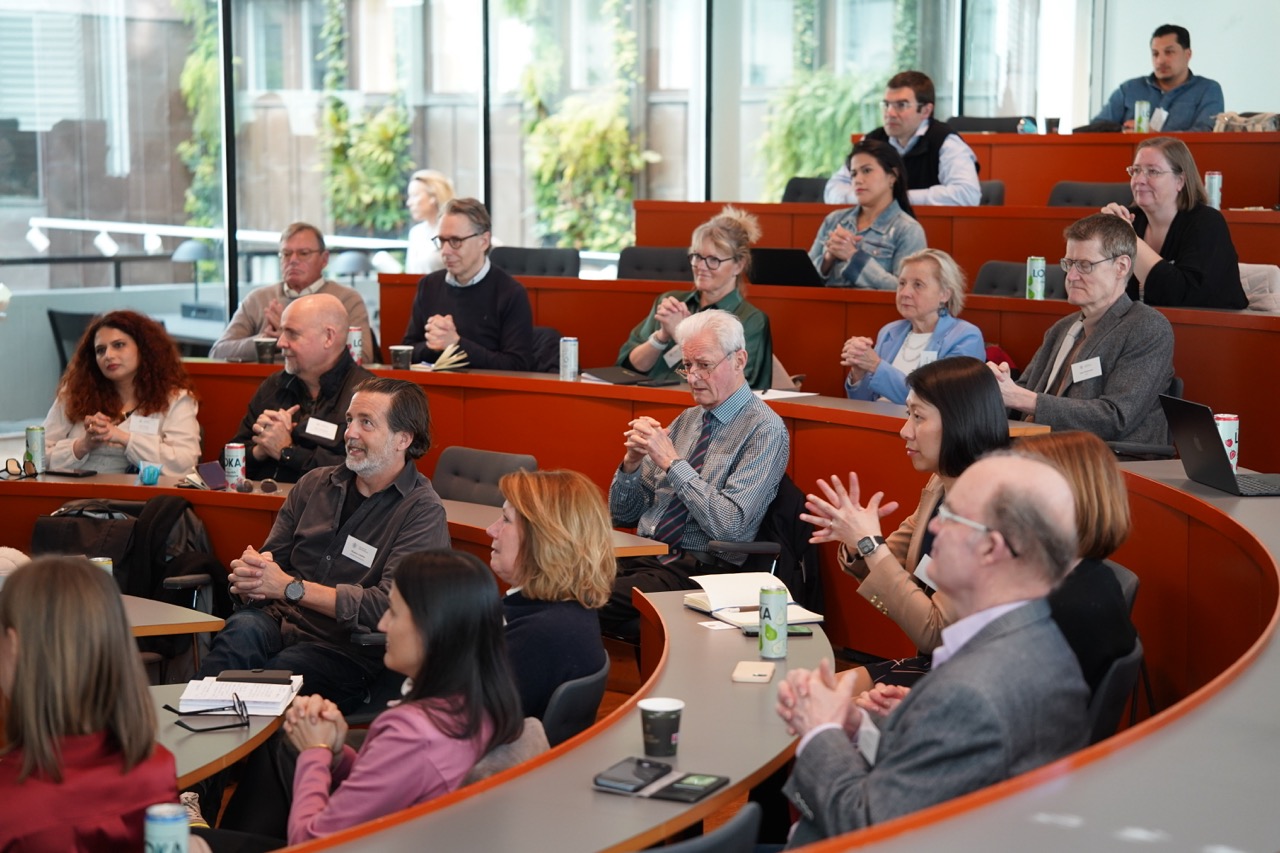
To kick off the session, Pär Mårtensson did a few simple exercises with the audience to illustrate the value of doing things differently. Photo: Majlin Skjetne
Johanna Frelin, CEO of Riksbyggen, a construction and real estate company that has operated for 86 years, described a different route to the same problem.
Rather than forming a cross-industry partnership, she brought design sprints and agile methodologies from the tech industry into internal processes. She used them to address challenges, generate a 20 percent cost reduction, and drive new business developments.
“The methodology that you can borrow from, say, the tech industry is useful in many types of problem-solving processes,” she said.
The harder challenge, she noted, is getting innovations to travel within the organization itself.
Riksbyggen built a house in Gothenburg ten years ago with roughly 80 innovations embedded in the design. Transferring those lessons to the next project remains, in her words, an ongoing effort.
Thomas Andrén, managing director of Massive Entertainment (part of Ubisoft), described how game development draws from many fields. Composers, archaeologists, military strategists, and sports psychologists all contribute to how games are built and experienced.
“We make games about the real world. We need to take learnings from everywhere.”
The production challenge, he said, is managing the transition from open exploration to disciplined execution. Massive uses a deliberate “tight frame” during production to constrain and direct creative energy. Andrén has also developed a personal method of counting innovation risks in a project. More than four or five simultaneously, he noted, is a reliable warning sign.
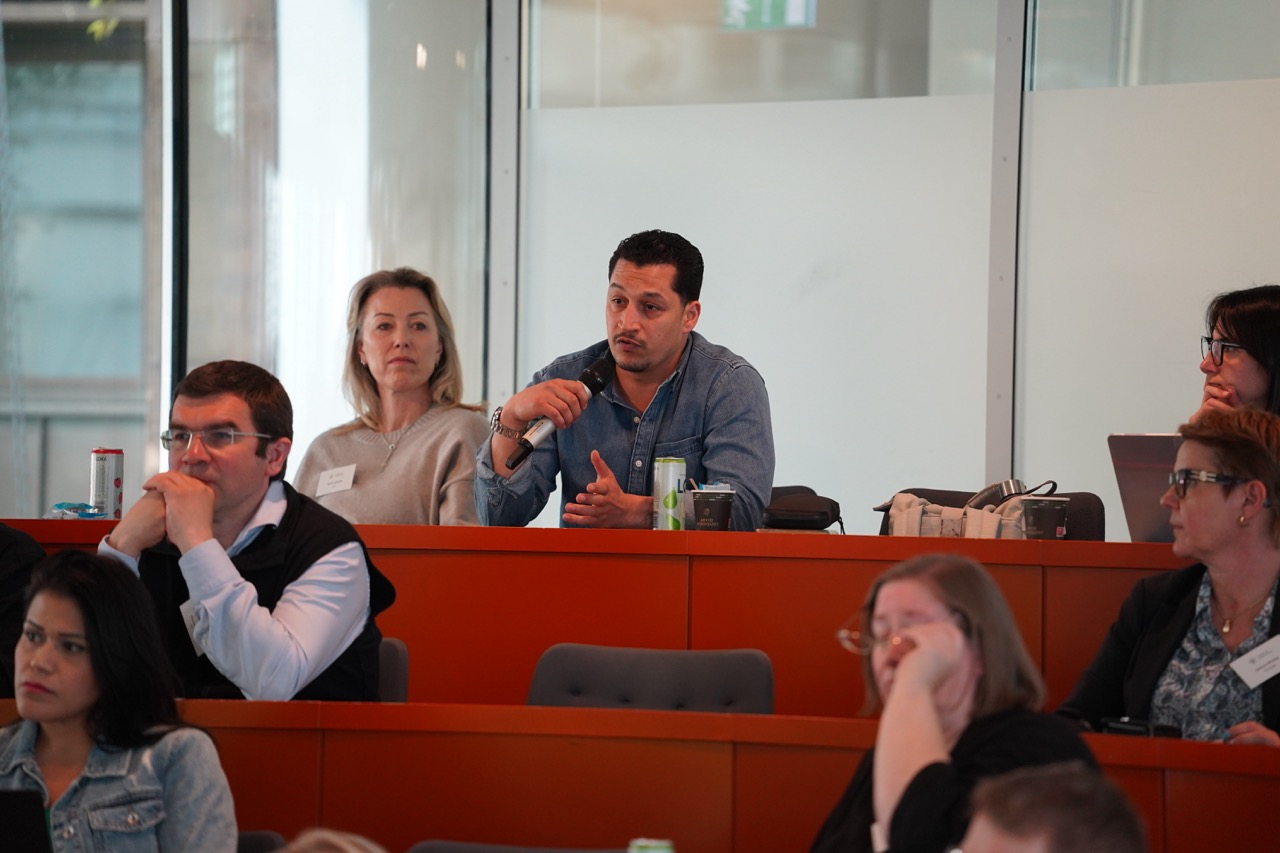
Attendees contributed to the session with questions and comments. Photo: Majlin Skjetne
Key takeaways from the workshop
In the final session, participants worked in small groups to connect the research and panel insights with their own experiences and reported back to the room. Several recurring themes emerged.
- Timing matters. A good idea adopted too early, before an organization or market is ready, often fails regardless of its merits.
- Incentive structures shape adoption. Changes that make people’s work easier tend to spread. Changes that add friction, however well-intentioned, face a steeper climb.
- Financial models determine what survives. Ideas that lack a clear path into budget cycles often stall between inspiration and implementation.
- Purpose matters more than method. One participant put it directly: understanding why a practice exists in its original context, not just how it is done, determines whether it can be adapted meaningfully or simply copied and later abandoned.

As part of the workshop, attendees were split into groups to share their experiences. Photo: Majlin Skjetne
Mårtensson closed the session with a paper-folding exercise that illustrated the same point in a more tangible way. Each participant was asked to follow his exact instructions and ended up with a differently shaped butterfly.
When organizations borrow a practice from another industry, the result will always look different from the original. This is not a failure, Mårtensson said, but an inherent part of the process.
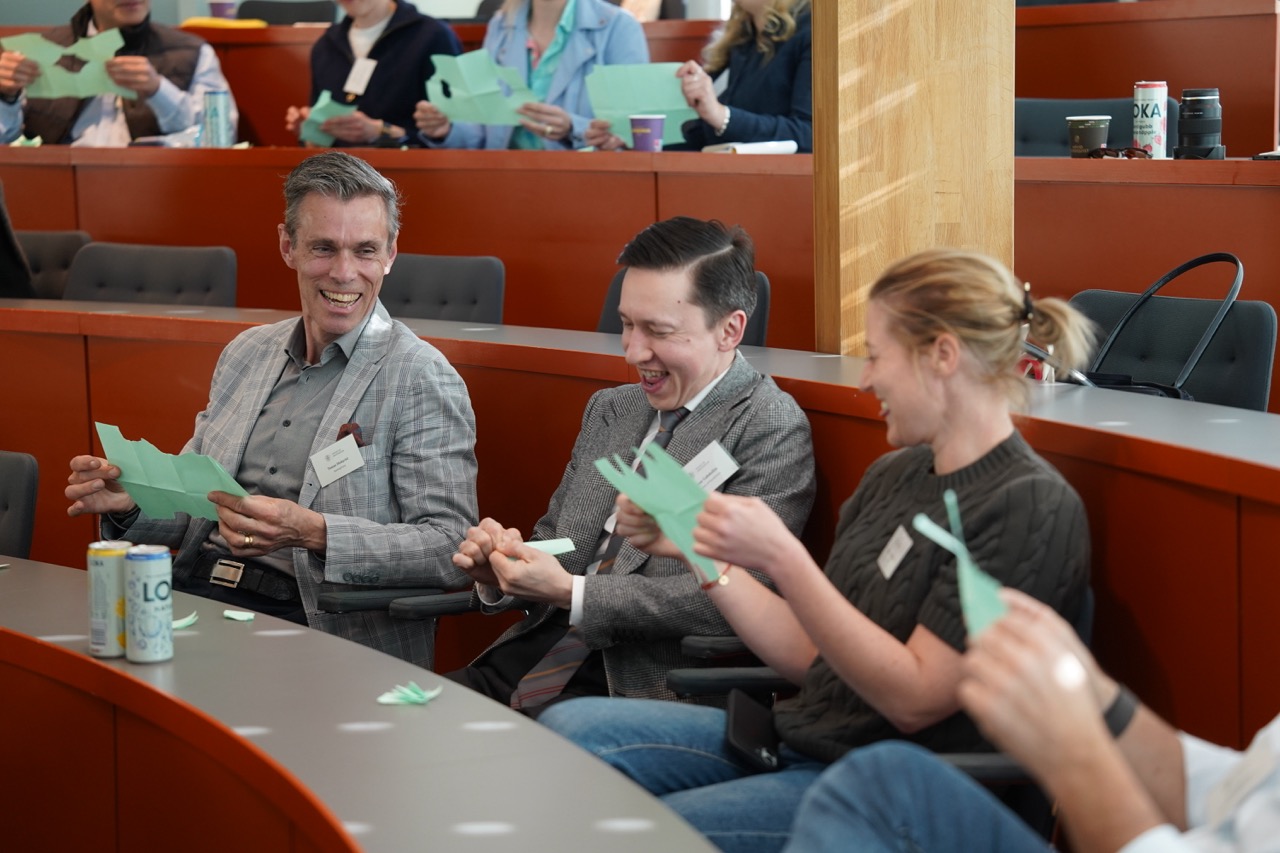
The room filled with laughter during Mårtenssons final butterfly exercise. Photo: Majlin Skjetne
Following the event, attendees gathered in the atrium to enjoy some refreshments and keep the conversations going.
Thank you to everyone who attended and shared your thoughts and ideas! We hope to welcome you all back to the Stockholm School of Economics again soon.
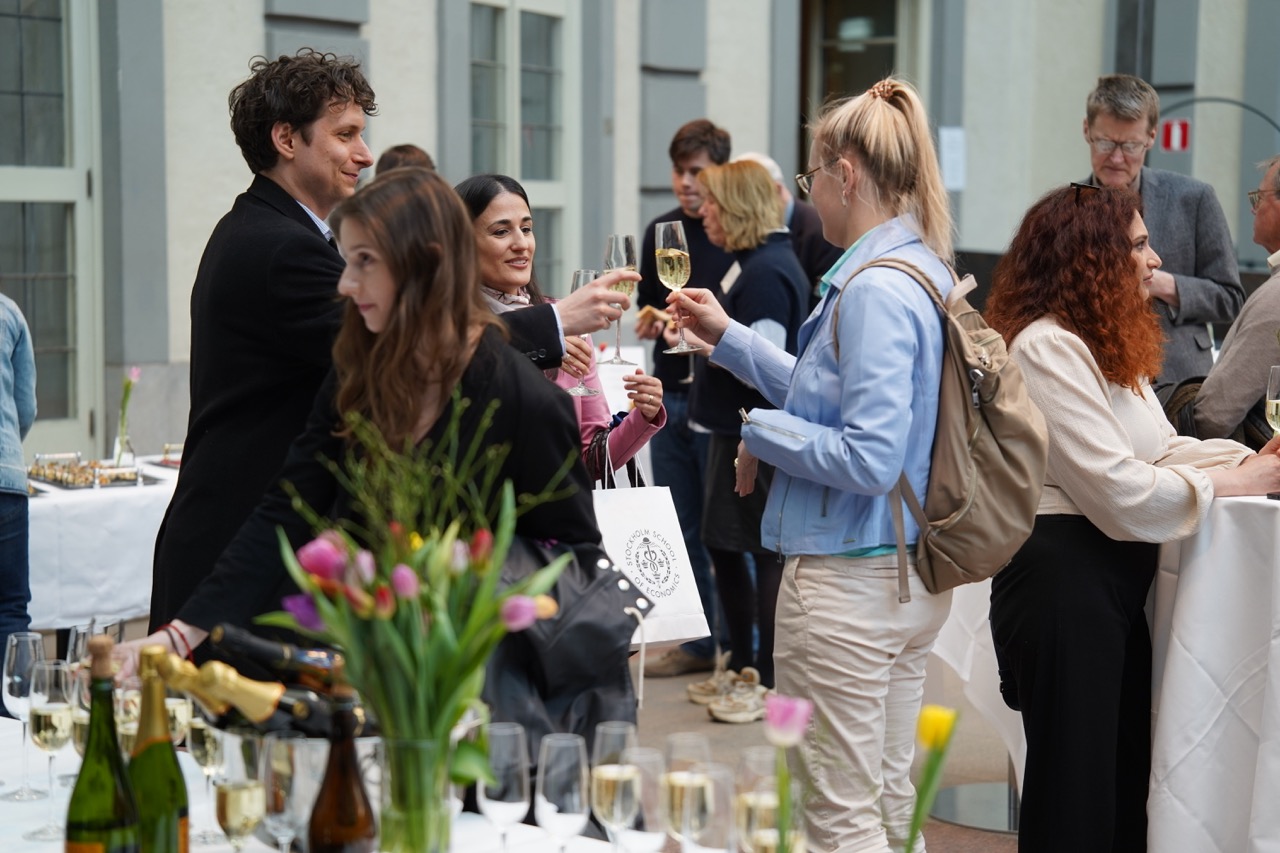
Post-event mingle in the Atrium at the Stockholm School of Economics. Photo: Majlin Skjetne