How the Hormuz crisis is affecting Sweden

On 6 May, we sat down with Constantin Blome, Professor of Supply Chain Management at the House of Innovation, to talk about what the crisis means for Sweden’s economy and how companies should respond.
“Whether you notice it or not, it affects you every time you go to the gas station or use heating,” says Blome. “It is almost like everyone is paying a war fee.”
Immediate impacts: energy, prices, and short-term buffers
The most immediate impact is higher fuel and energy prices. The effect is stronger in rural Sweden than in Stockholm, where many households rely less on fossil fuels and more on public transport or electric vehicles. So far, the issue is pricing rather than physical shortages.
“There is no stockout of oil because only 20 percent of supply is missing,” Blome says. “There is still enough oil in the world. It is more like a narrowing of supply, combined with speculation, which drives prices up.”
Sweden is relatively well prepared for short-term disruptions. European countries maintain medicine stockpiles covering up to six months of normal demand, strengthened after the COVID-19 pandemic. Strategic oil reserves also provide a buffer for critical supply.
However, these buffers have limits. Medicines with short shelf lives, such as biologics and insulin, cannot be stored in large quantities. And while energy supply may remain available, higher prices will continue to affect households and businesses.
Blome argues that the broader lesson is structural: companies can no longer rely on ultra-lean supply chains.
“The times when you can be fully lean are gone. It is just too dangerous. Companies need to hold more inventory or source within the EU. Both options increase costs.”
Delayed effects: food production and global dependencies
The impact on food will come later but may be more persistent. Fertilizer prices have already increased sharply, with some nitrogen-based products up 20–30 percent in weeks. Because spring is the peak application period, farmers facing higher costs may reduce planting or switch to less intensive crops.
This means the effects will appear with a delay. Lower yields are likely to affect harvests in autumn 2026, Bome says, with broader food price increases expected in 2027.
Sweden’s decision to cut food VAT from 12 percent to 6 percent aims to soften the effect on consumers. Blome questions its long-term impact, arguing that it reduces price signals without addressing underlying dependency.
The crisis also highlights a deeper structural issue: Europe’s reliance on global supply chains. Over decades, companies optimized for efficiency, sourcing production where it was cheapest and most reliable at the time.
“I think the biggest concern is that people underestimate how dependent we are on others,” Blome says. “If you think about everything in front of you, your computer, shoes, watch, clothes... Almost none of it would be possible without China.”
That system depends on stable geopolitics and predictable trade flows. As those conditions weaken, the risks become more visible and costly.
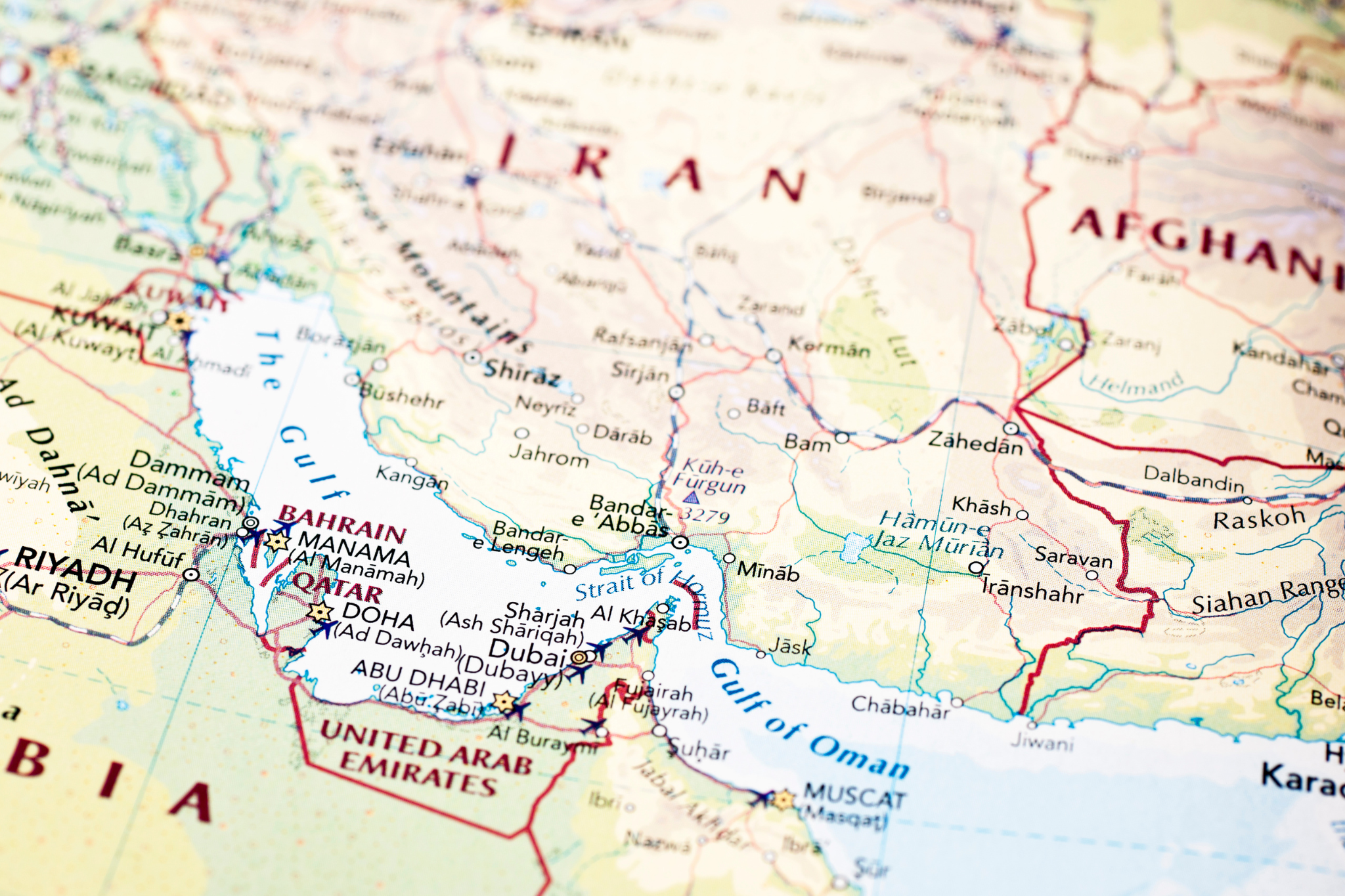
The Strait of Hormuz has been disrupted since 28 February 2026.
Coordination challenges and limited visibility
The crisis also exposes how difficult it is for Europe to respond collectively. Individual countries act quickly, but coordinated EU responses take time.
“The coordination mechanisms through the EU will take two months. Until then, it is just too late,” Blome says.
This creates a gap between reactive and proactive crisis management. Countries respond when disruption occurs, but longer-term coordination and planning often lag behind.
At the same time, there is limited visibility into how global supply chains are structured at a systemic level. Companies understand their own suppliers, and some sector-level patterns are known. But there is no comprehensive mapping of how dependencies connect across industries and countries.
“We do not fully know how things fit together,” Blome says. “And that is not very clever.”
A more uncertain future for companies
Blome’s message to Swedish companies is clear: adapt to a more uncertain and fragmented global economy.
“You have to change your supply chain networks. You need more inventory or more local sourcing. The fully lean model is no longer viable.”
This creates a trade-off. Companies can reshore production to Europe and accept higher unit costs, or continue sourcing globally while holding larger safety stocks. Both strategies increase costs compared to the pre-crisis model, but reduce vulnerability to disruption.
Looking ahead, Blome expects further shocks. A potentially severe El Niño later this year could disrupt agriculture and logistics in multiple regions at once.
“The next disruption is coming. It will be this year, for sure,” he says.
The key lesson is not limited to the Hormuz crisis. Repeated shocks continue to expose the same structural weaknesses: concentrated sourcing, low inventories, limited coordination, and slow adaptation to risk.