What can sports actually do for integration?

Sports are often highlighted as a way to address integration challenges. Discussions at a recent seminar at the Stockholm School of Economics (SSE) suggest a more nuanced picture.
The seminar, hosted by the Center for Migration and Integration Research (CMIR) and the Center for Sports and Business (CSB), brought together researchers, practitioners, and representatives from civil society and local government. A central takeaway was that integration rarely happens through targeted policies alone. Instead, it develops through repeated everyday interactions – in places where people meet, build routines, and form relationships over time.
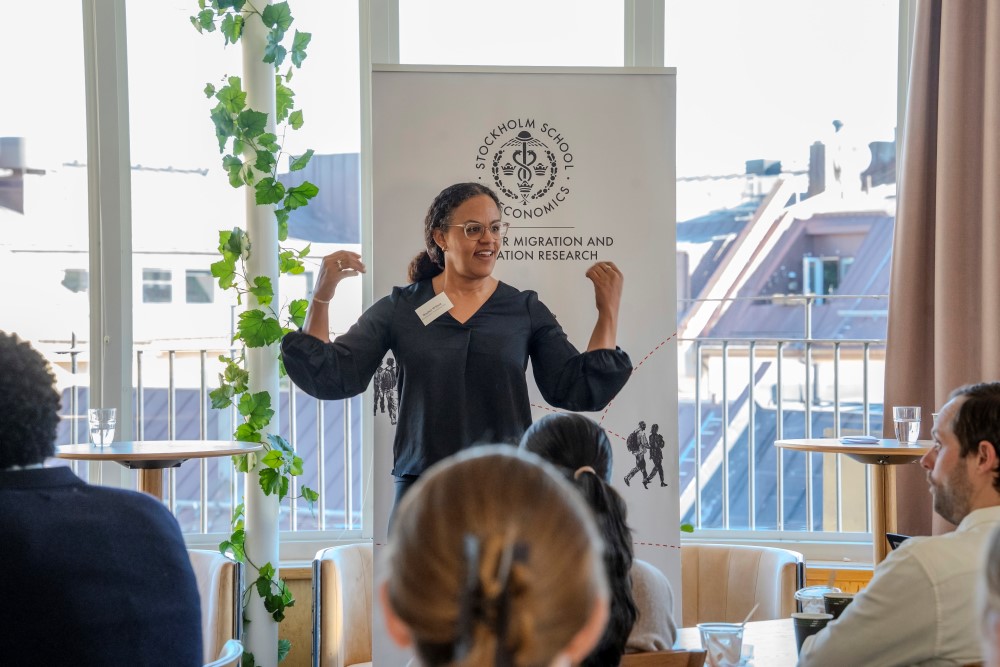
Photo: Johanna Ståhlberg
“I never woke up thinking I was going to work with integration. But looking back, that’s exactly what we were doing: creating spaces where people become part of a group,” said Rachel Wilson, who works with sports clubs and community initiatives in Sundbyberg municipality and is a member of CMIR’s reference group.
Her perspective highlights how sports clubs often function as informal social hubs. Beyond training sessions, they create space for conversations about school, work, and navigating everyday life. In this way, sports become less of a direct intervention and more a setting where integration can emerge naturally.
Access and environment shape outcomes
At the same time, research presented by Anna Laurell Nash, Executive Director of the Center for Sports and Business at the Stockholm School of Economics, shows that sports’ impact depends heavily on context.
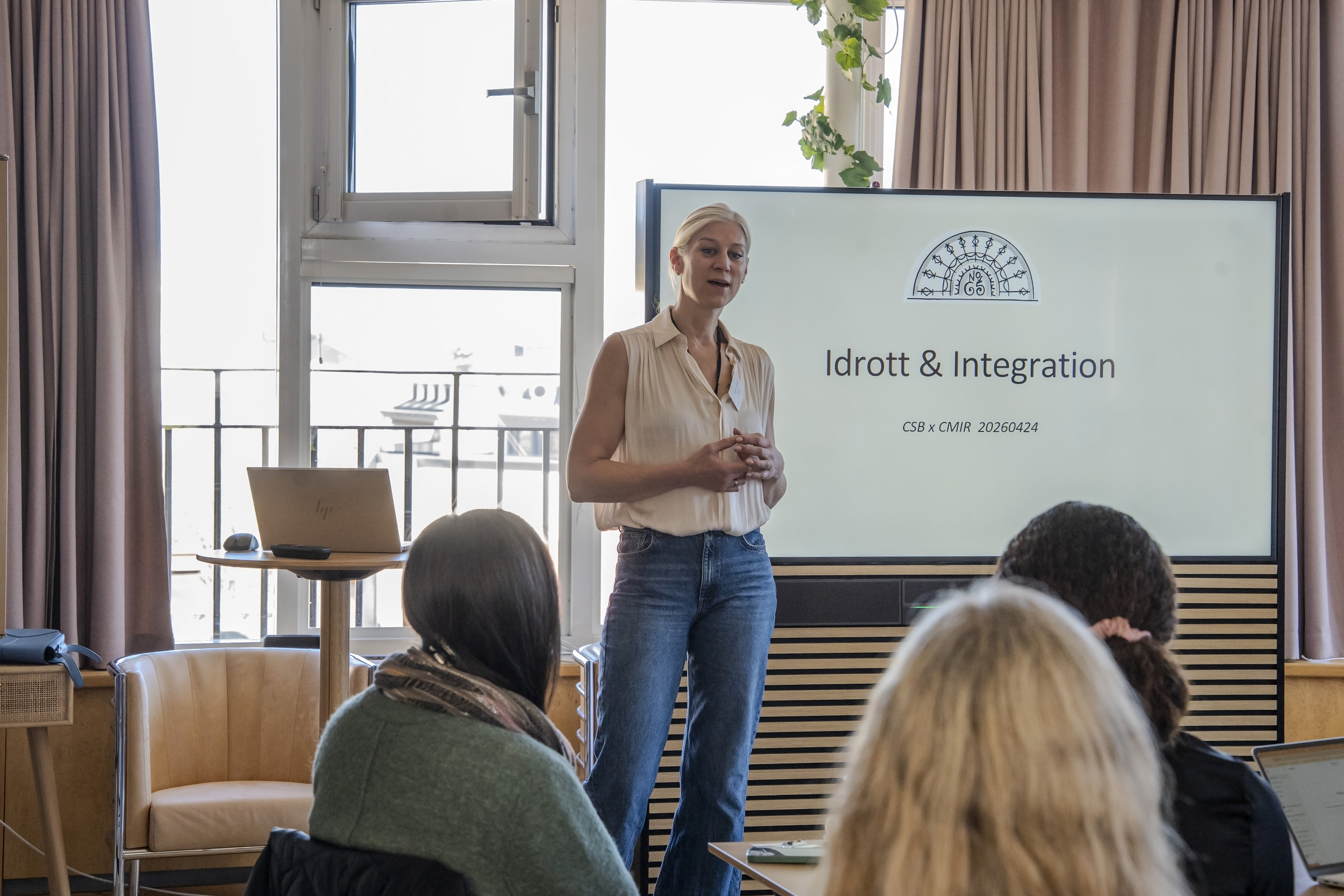
Photo: Johanna Ståhlberg
“Sports can support integration, but it depends on the environment and the norms that shape it,” she said.
While sports can lower barriers to integration and offer a relatively accessible entry point into social networks, they do not automatically lead to broader inclusion. Factors such as participation costs, residential segregation, and limited access to information affect who can take part – and who benefits.
Even within sports clubs, existing inequalities can persist. This means that increasing participation alone is not enough, and that the structure and culture of these environments also play a crucial role in shaping outcomes.
From short-term projects to long-term structures
Participants also pointed to the limits of short-term, project-based initiatives. While targeted funding can expand access in the short run, it can also lead to fragmented efforts and uncertainty over time.
Instead, the discussion highlighted the importance of strengthening existing systems – particularly Sweden’s network of voluntary sport associations. These organizations already form part of the country’s social infrastructure but require long-term support and coordination to be fully effective.
At the same time, participants noted that complementary initiatives and organizations can play an important role alongside existing structures.
For policymakers, clubs, and communities, the implication is clear: creating opportunities to participate is not enough. The environments themselves need to be inclusive, stable, and accessible over time.
If integration happens in everyday settings, it cannot be delivered through policy alone. It depends on whether and how institutions, organizations, and individuals within communities take responsibility for sustaining the spaces where those interactions can take place.


