SITE Seminar | Understanding the effect of targeted sanctions against the Russian "shadow fleet"
Working paper title: Understanding the effect of targeted sanctions against the Russian "shadow fleet"
By: Yevgeniy Golovchenko
Abstract
Western sanctions on Russia's maritime export of fossil fuels have led to the rise of the Russian "shadow fleet," a network of vessels that circumvent sanctions through covert means. There is a widespread perception that these sanctions are ineffective, partly due to the shadow fleet's role in sustaining Russian oil export. In response, states have supplemented broad maritime trade regulations with an increase in sanctions targeted against individual vessels. This analysis nuances the debate by empirically examining the effect of vessel-specific sanctions, using 94 million geolocation observations from nearly all of the world's active crude oil tankers. The findings suggest that these targeted sanctions have reduced the overall activity of sanctioned tankers: they traverse shorter distances, make fewer port visits and potentially engage less frequently in shipto-ship oil transfers, although the evidence for the latter is not conclusive. These results contribute to the literature on sanction effects by showing that targeted maritime sanctions can significantly influence behavior while building on top of non-targeted trade regulations. The findings imply that states can limit sanction evasion by investing in maritime surveillance and continuously targeting individual vessels.
Read the working paper to learn more >>
About the speaker
Interested in attending the SITE Seminar at SSE?
If you wish to attend the seminar in person, please contact site@hhs.se and follow the instructions below:
- Enter “SITE Seminar INSERT SEMINAR TITLE” in the subject line.
- State your interest in attending the seminar in person.
- Specify your affiliation
You can also join the seminar online via Zoom
If you are interested in attending the seminar online please register in the following link < here >.
SOCIAL MEDIA
Follow us on social media to get the latest updates from SITE




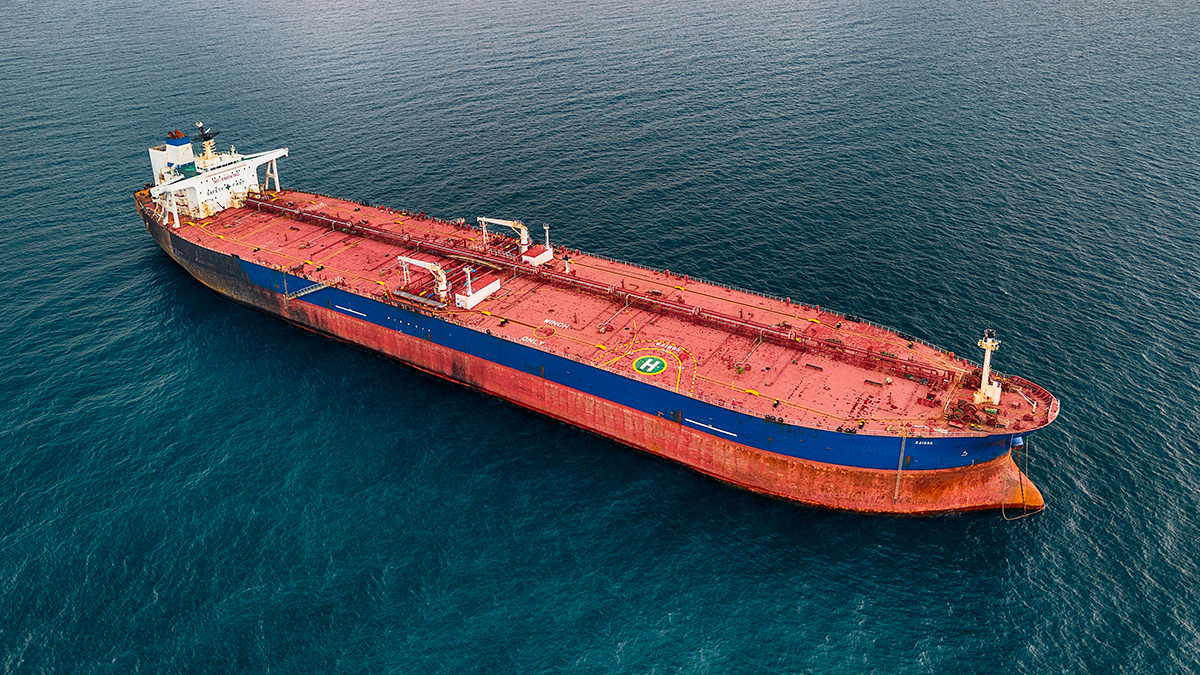
Photo: Aerial drone footage of the sanctioned Russian "shadow fleet" tanker "Kairos" near the Bulgarian Black Sea coast. Shutterstock