Insights on terrorism, resilience, and multinational corporations

How do multinational corporations adapt when violence is not just a national concern, but a highly localized threat?
That question was at the center of a seminar hosted by the Center for Security and Resilience (CfSR) at SSE, where Leandro S. Pongeluppe from the Wharton School at the University of Pennsylvania presented new research examining how terrorism affects multinational corporations (MNCs) at a fine geographic scale.
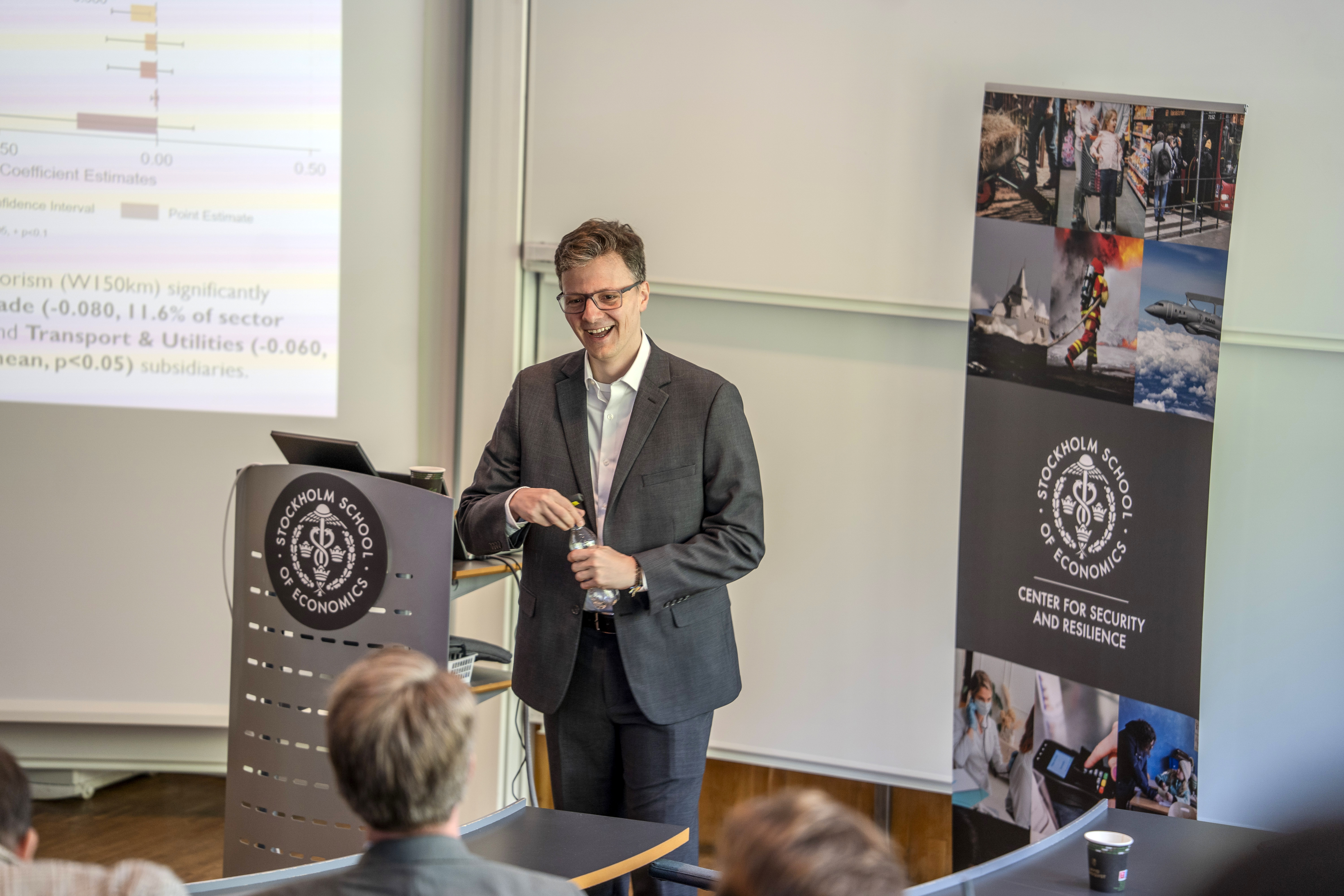
Leandro S. Pongeluppe speaking at the seminar. Photo: Johanna Ståhlberg
The research challenges the dominant assumption in management and economics literature that terrorism should primarily be understood as a country-level risk. Instead, the study approaches terrorism as a spatial phenomenon with localized but systemic consequences for global business activity.
Using geocoded grid-cell analysis, the researchers combined data from the Global Terrorism Database and LexisNexis Corporate Affiliations to examine how terrorist attacks influence where multinational corporations choose to operate. Rather than aggregating observations at the national level, the study tracked how violence affects specific locations and neighboring areas over time.
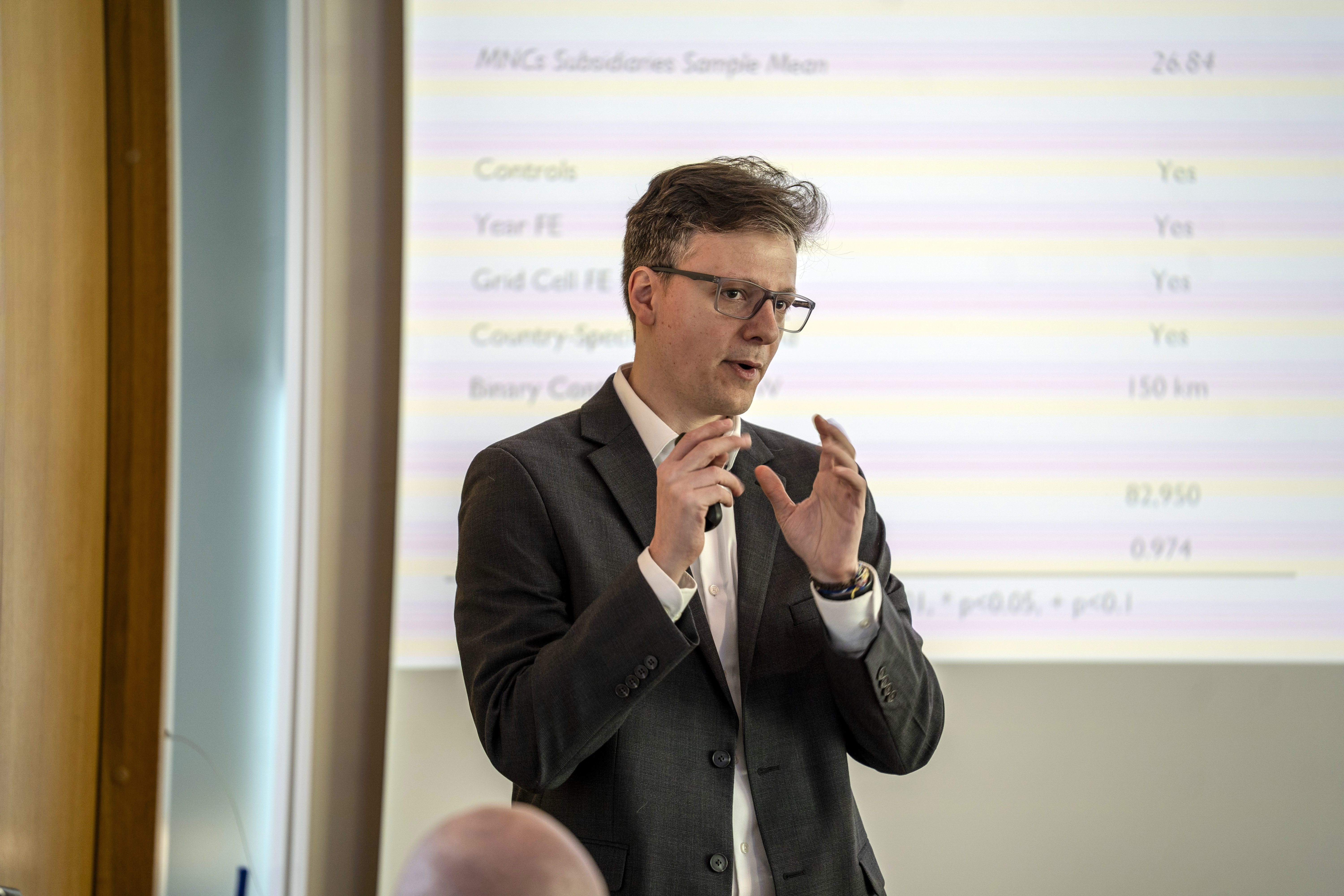
Leandro S. Pongeluppe presented research on terrorism and business resilience. Photo: Johanna Ståhlberg
The findings suggest that terrorist attacks have substantial economic consequences. On average, a single attack was associated with a reduction of approximately 889 million US dollars in multinational subsidiary sales and the loss of 816 employment positions in affected areas. The effects also extended geographically, reducing MNC activity in neighboring regions.
The seminar highlighted important differences across sectors and regions. Consumer-facing industries such as retail, services, and transportation appeared particularly vulnerable, while Europe experienced some of the strongest measurable effects. Attacks targeting civilians were identified as especially influential in driving multinational withdrawal from affected areas.

Participants attending the Center for Security and Resilience breakfast seminar at the Stockholm School of Economics on geopolitical risk and resilience. Photo: Johanna Ståhlberg
Pongeluppe also discussed how evolving forms of violence, including cyberattacks and lone-actor extremism, may challenge existing definitions and datasets. A recurring theme throughout the discussion was the gap between how research databases classify attacks and how business leaders and decision-makers perceive risk in practice.
The seminar formed part of CfSR’s broader work on resilience, security, and the intersection between geopolitical risk and organizational decision-making.
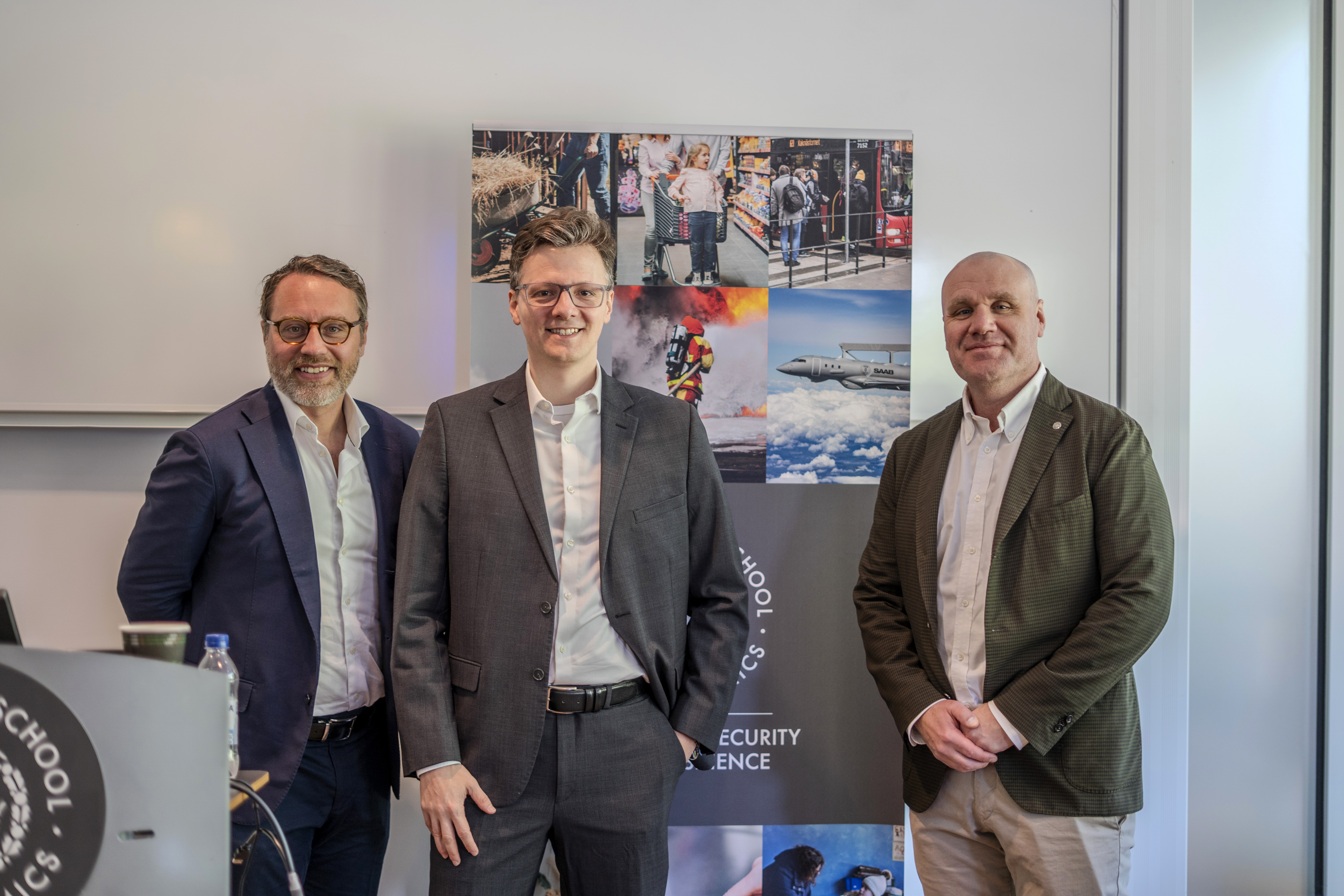
Leandro S. Pongeluppe together with Martin Carlsson Wall and Staffan Holmberg at the Center for Security and Resilience. Photo: Johanna Ståhlberg


