PhD Defense | Camille Korschun successfully defends her doctoral dissertation

Camille Korschun is the first PhD student to defend a thesis at the Stockholm School of Economics’ Center for Family Enterprise. Colleagues, friends, and family attended the event, both in person and via Zoom.
Mattias Nordqvist, director of the Center for Family Enterprise, Korschun’s supervisor, and chair of the defense, was delighted to be by her side on this important occasion.
“Camille’s work adds an important layer to how we understand family ownership beyond individual family firms. In addition to contributing with strong new ideas on the role of purpose to our research field, she has been a generous and engaged member of the Center’s community,” Nordqvist said.
Professor Miruna Radu-Lefebvre of Audencia Business School in France served as faculty opponent and engaged deeply with Korschun’s work.
Radu-Lefebvre praised the dissertation’s ambition, particularly the introduction of a new concept, “family ownership purpose,” which bridges organizational purpose and family business literature, as well as the insight that legacy can emerge from personal interests.
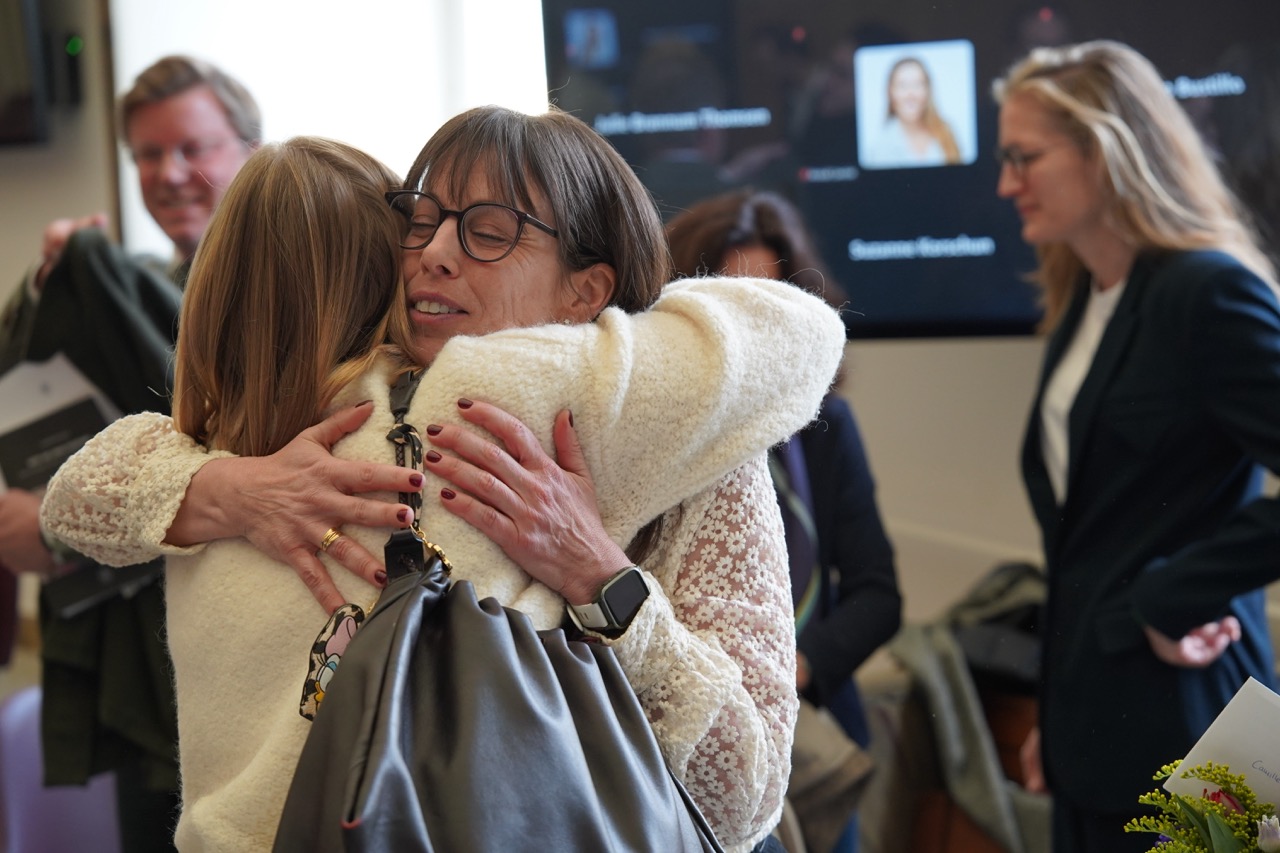 Camille Korschun successfully defended her dissertation at the Stockholm School of Economics.
What problem did this research address?
Some business families own and govern across a family-related ecosystem comprising multiple organizations, such as legacy businesses, family offices, foundations, and investment vehicles.
How they manage such ecosystems has significant consequences. Family-controlled enterprises represent up to 90 percent of businesses worldwide, and their ownership decisions shape employment, philanthropy, and economic continuity across regions and generations.
Yet what drives families to own together across these diverse entities has received surprisingly little scholarly attention. For families navigating succession, shared ownership, or the creation of new entities, this is not an abstract question. It shapes how they make decisions, resolve conflict, and define what continuity means.
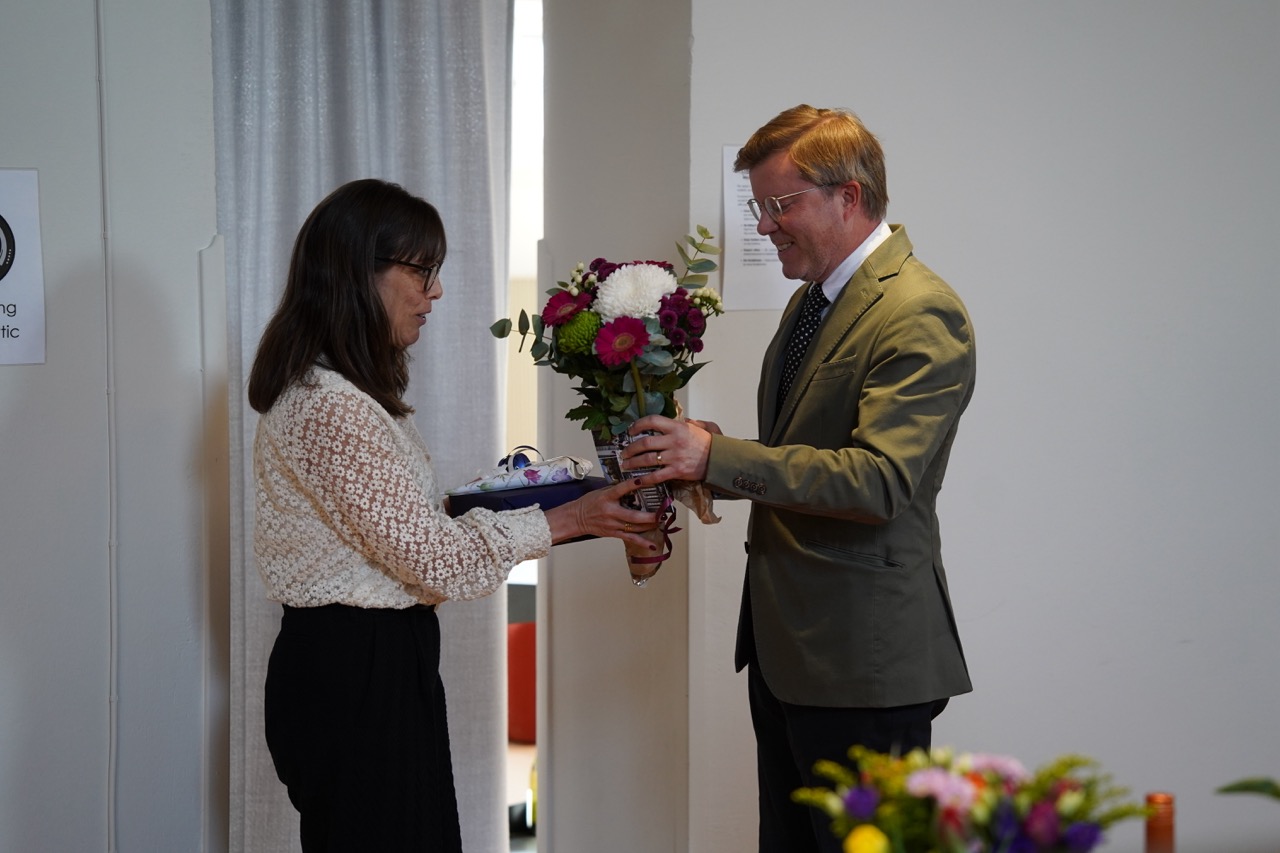 Professor Mattias Nordqvist, holder of the SEB Chair, director of the Center for Family Enterprise, and Korschun’s supervisor, congratulated her on the achievement.
Research approach
The dissertation comprises four complementary studies based on more than 80 interviews with family members and non-family executives. It examines family offices and family boundary organizations, including single family offices and family foundations.
Through this qualitative approach, Korschun identifies four pathways through which family ownership purpose develops: managing legacy imprints when creating new entities, aligning objectives among co-owners, formalizing personal interests into collective commitments, and creating supportive structures for participation across generations.
Key findings
The dissertation makes three theoretical contributions and surfaces several findings with practical relevance for business families and their advisors:
- Family ownership purpose transcends organizational continuity. It explains why business families create, develop, and manage multiple entities over time, even when individual organizations are dissolved or sold.
- Business families perceive failure relative to their own goals. The exit, sale, or closure of a family business may constitute failure for some families, but not for others.
- Legacy may start from a personal interest, like art collecting, and can develop into legacy unintentionally.
- Family boundary organizations, like family offices and family foundations, can facilitate transgenerational entrepreneurship, extending a family's influence beyond the original legacy business.
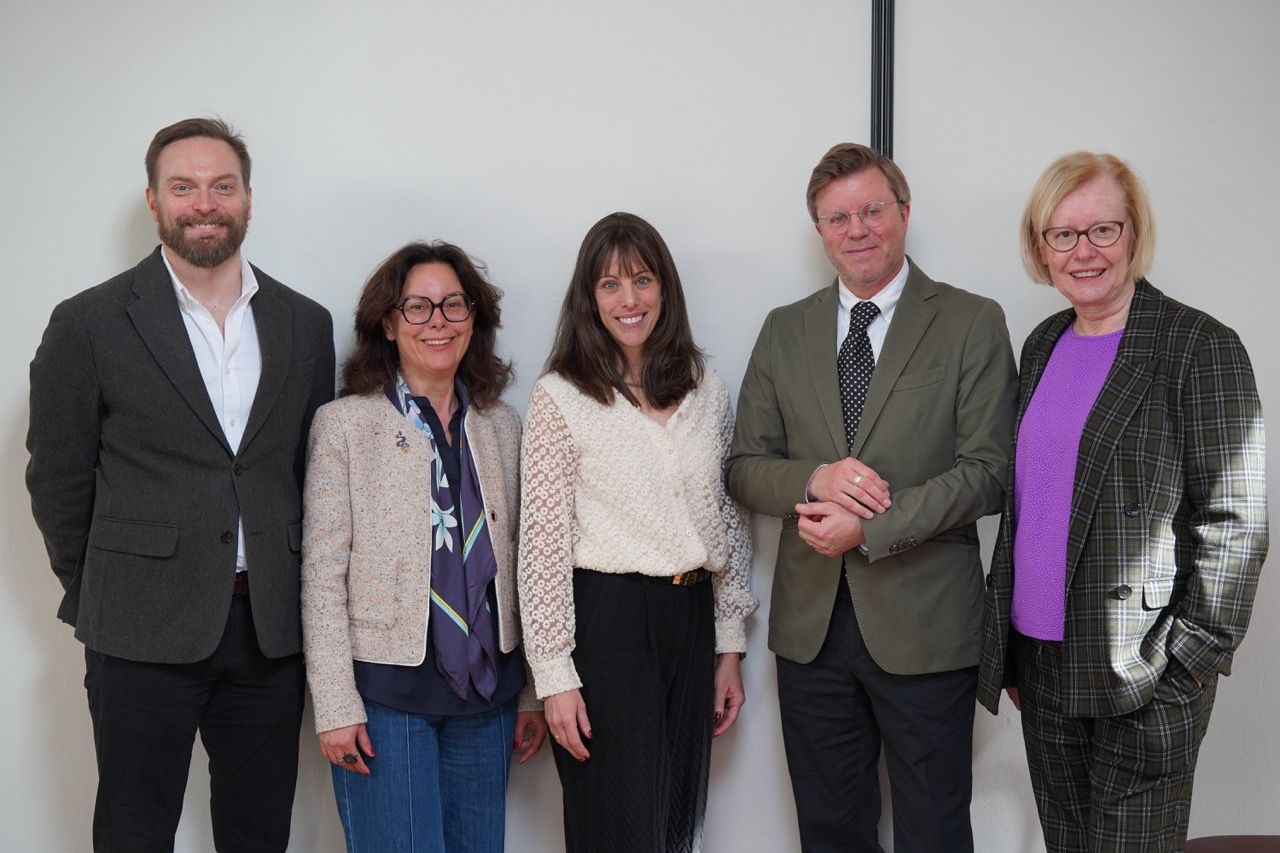 Assistant Professor Erik Wetter, Professor Miruna Radu-Lefebvre, Camille Korschun (PhD), Professor Mattias Nordqvist and Professor Anita van Gils.
Chair of the defense
Professor Mattias Nordqvist, SEB Chair in Entrepreneurship and Family Business, Director of the Center for Family Enterprise, House of Innovation, Stockholm School of Economics, Sweden
Supervisory committee
- Professor Mattias Nordqvist, Stockholm School of Economics, Sweden
- Assistant Professor Erik Wetter, Stockholm School of Economics, Sweden
- Associate Professor Giovanna Campopiano, University of Bergamo, Italy
Assessment committee
- Professor Anita van Gils, Maastricht University, Netherlands
- Associate Professor Emanuela Rondi, Politecnico di Milano, Italy
- Professor Roberto Verganti, Stockholm School of Economics, Sweden
After the defense, the assessment committee excused themselves to deliberate. They returned shortly afterward to announce that Korschun had successfully defended her dissertation.
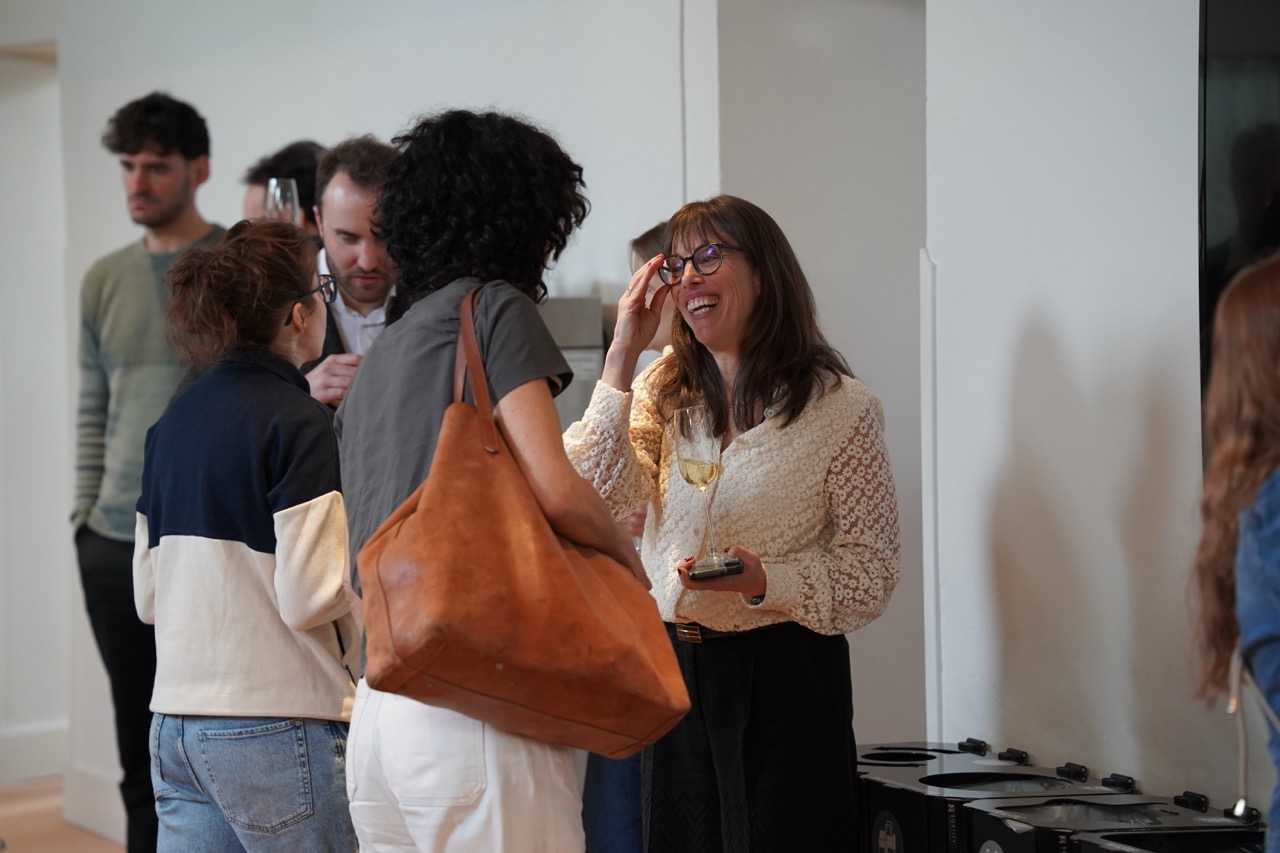 Colleagues, friends and family gathered at the House of Innovation to celebrate.
The celebration then took place in House of Innovation’s co-working space, where guests and colleagues toasted Korschun’s achievement. Professor Mattias Nordqvist, who chaired the defense and supervised Korschun’s work, gave a speech in her honor.
Fellow PhD researcher and co-author Jennie Lorisson also spoke fondly about their collaboration and friendship.
We congratulate Camille on this achievement and look forward to following her work in her new role as fellow in family philanthropy at IMD in Lausanne, Switzerland.
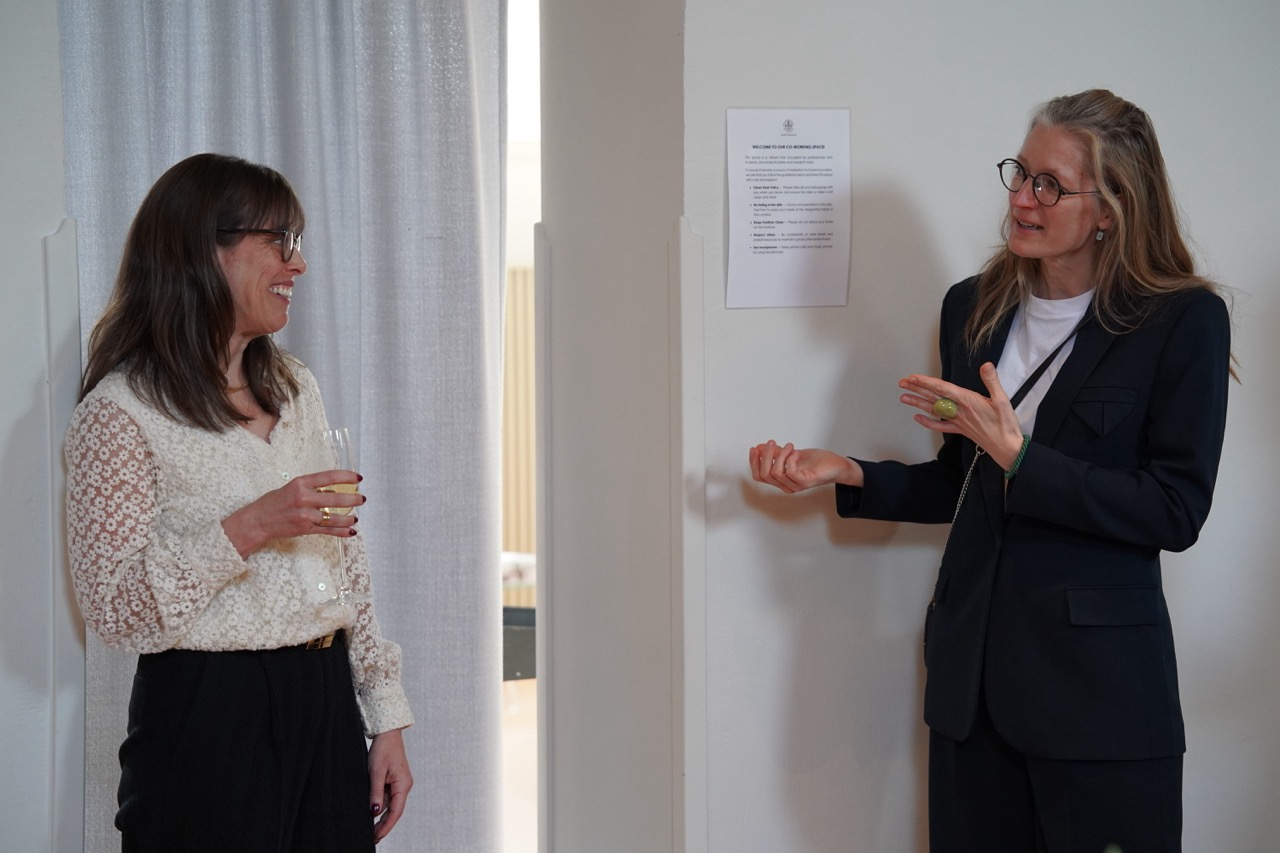 Korschun's fellow PhD researcher and co-author Jennie Lorisson gave a toast at the mingle.
About the Center for Family Enterprise
The Center for Family Enterprise (CFE) at the House of Innovation, Stockholm School of Economics, is a research center focusing on how Nordic family-owned businesses and family offices shape economies and societies.
Given that up to 90 percent of businesses worldwide are family-run, the center conducts research, education, and collaboration to better understand their long-term decision-making, entrepreneurial approach, and role in sustainable development. The center’s key ambition is to connect academia and practice to strengthen the future of family enterprises.
The center was launched in 2022 with support from SEB and five leading Nordic family offices, family enterprises, and foundations: Salenia (Salén, Sweden), Ferd (Andresen, Norway), Virala (Ehrnrooth, Finland), Topsoe (Topsøe, Denmark), and HMP Foundation (Söderström, Sweden), and is led by Professor Mattias Nordqvist.
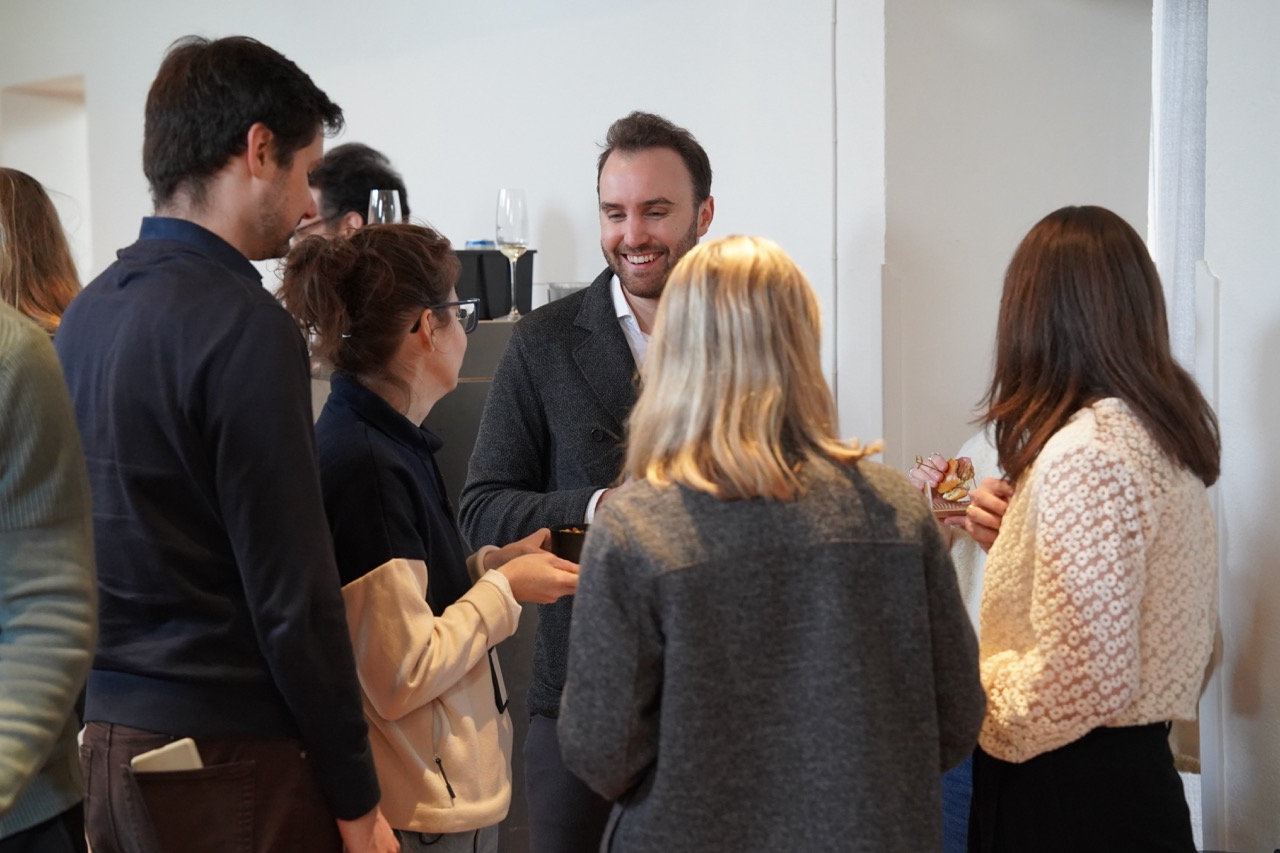 The celebrations continued in the attic with friends, family, and colleagues.