Higher Seminar in Statecraft and Strategic Communication | Niklas Nilsson
Abstract: Intelligence-based strategic communication (StratCom) involves the deliberate release of intelligence to shape perceptions, deter adversaries, foster cohesion, attribute responsibility, and reinforce credibility. Recent global developments—especially Russia’s full-scale invasion of Ukraine—have accelerated this practice, highlighting intelligence as a vital instrument of statecraft.
The use of intelligence for strategic communication is not new, as demonstrated by pivotal historical disclosures and more recent counterterrorism and counterintelligence cases. However, the unprecedented scale of declassified warnings released by the U.S. and UK in the run-up to the 2022 invasion of Ukraine reflects a shifting balance: policymakers increasingly perceive the value of intelligence-based StratCom to outweigh the potential risks attached to the practice. Russia’s intensified hybrid warfare against Europe since 2022 has further emphasized the utility of intelligence as a resource for exposing and countering threats.
In turn, the increasing view of intelligence as a communication resource is a function of the increasing complexity and interconnectedness of threats and the evolving information environment, not least in the shape of the growing open-source intelligence (OSINT) community, underlining the increasing focus of cognition and perceptions in modern warfare and conflict.
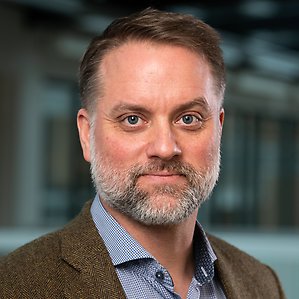
Bio: Dr Niklas Nilsson is Associate Professor in War Studies at the Department of War Studies and Centre for Societal Security, Swedish Defence University. His research interests include international politics and security, hybrid threats and hybrid warfare, intelligence, and military operations and tactics. Major recent publications include the (co-)edited volumes “Hybrid Warfare: Security and Asymmetric Conflict in International Relations” (2021, I.B. Tauris), “Advanced Land Warfare: Tactics and Operations” (2023, Oxford University Press), “Russian Warfare and Influence: States in the Intersection between the East and West” (2024, Bloomsbury Academic), and “Russia’s War in Ukraine and Modern Warfare: Strategy, Tactics, and Technology” (forthcoming 2026, Oxford University Press).