Research for equality and participation on Nobel and Human Rights Day

The Nobel Prize celebrates discoveries that expand what we know about the world. Human Rights Day reminds us that this knowledge must serve people - protecting freedoms, promoting justice, and enabling everyone to take part in society.
At the Stockholm School of Economics and the House of Governance and Public Policy (GaPP), several researchers study how systems and institutions can strengthen equality and participation. Here, we highlight three perspectives on how education, work, and democracy connect to fundamental human rights.
Education as a right: quality learning matters
Abhijeet Singh is an Associate Professor at the Department of Economics, the House of Governance and Public Policy, the KAB Center for Governance, and affiliated with the Mistra Center for Sustainable Markets (Misum). His work focuses on education, child development, and inequality in low- and middle-income countries.
Abhijeet's study “Learning More with Every Year: School Year Productivity and International Learning Divergence” (Journal of the European Economic Association, 2020) shows that learning gaps between countries are driven not only by access to school, but by how much children actually learn each year.
Equal time in school does not mean equal learning. Low-quality education systems - with weaker teaching, resources, or curricula - deepen inequality, particularly for children from disadvantaged backgrounds.
“Access to education is a fundamental right, but real equality depends on quality,” says Singh. “To make education fair, policies must focus on learning outcomes, not just enrollment numbers.”
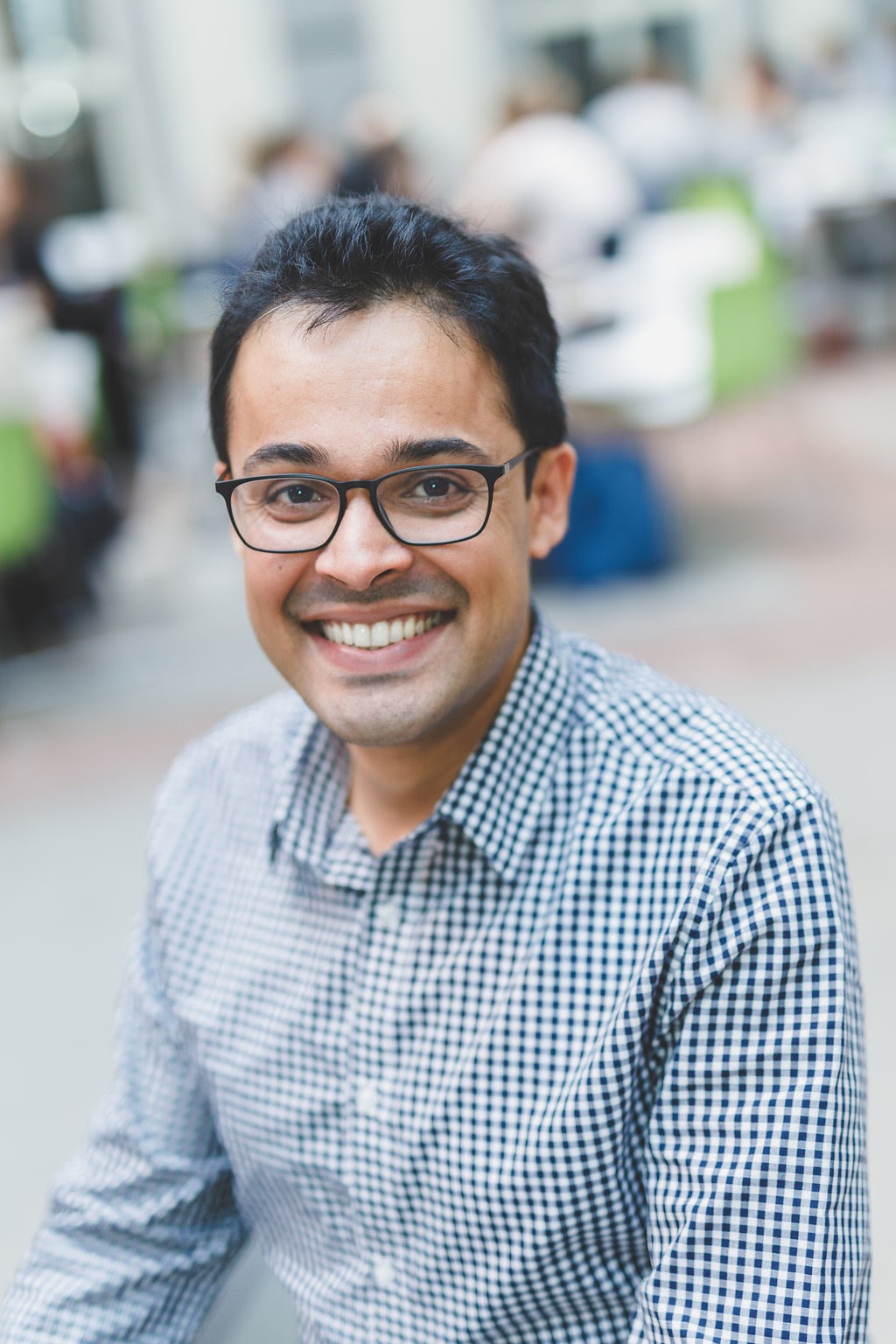
Abhijeet Singh. Photo: SSE
Fair access to work: migrant rights and discrimination in skilled labor markets
Laurence Romani, Professor at the Department of Management and Organization and Affiliated Professor at the Center for Migration and Integration Research, examines how highly skilled migrants experience exclusion in professional environments.

Laurence Romani. Photo: SSE
Her research, including the article “Underemploying Highly Skilled Migrants: An Organizational Logic Protecting Corporate ‘Normality’,” reveals how organizations often, without intending to, maintain structures that exclude highly skilled migrants from positions that match their expertise.
“Highly skilled migrants often encounter barriers rooted not in competence but in organizational norms that protect a narrow view of ‘normality’,” says Romani. “Simply put, organizations are uncomfortable with a different employee profile than what they are used to. Recognizing and dismantling these hidden logics is crucial if the right to decent, non-discriminatory work is to be realized in practice.”
Romani's findings highlight how these organizational routines can unintentionally undermine the human right to fair work. Addressing them requires not only awareness but institutional reforms that value diversity as a strength rather than a deviation from “normality.”
Democracy and participation: removing practical barriers
Jaakko Meriläinen, Associate Professor at the Department of Economics and affiliated with GaPP and the KAB Center for Governance, studies political participation and the institutional foundations of democracy.
In a recent study published in the Misum Working Paper Series (September 2025), “Engines of Empowerment: Cattle Tending, the Milking Machine, and Women in Politics,” Meriläinen and his co-authors show how simple technological innovations can expand who is able to take part in public life.
Using historical data from mid-20th-century Finland, the study shows how the introduction of the milking machine - which reduced the physical demands of dairy work, largely done by women - freed time and energy for women to enter local politics and paid employment.

Jaakko Meriläinen. Photo: Calle Börjesson
“Democratic societies have achieved extraordinary gains in wellbeing and equality, yet their ability to keep delivering these outcomes is never automatic,” says Meriläinen. “A healthy democracy rests on institutions we can trust and on political leaders who approach public life with competence, integrity, and a commitment to the common good - foundations that require constant care and renewal. Research helps us understand how these foundations are built.”
Meriläinen's work highlights a key human rights principle: participation depends on access. His research clarifies how economic, institutional, and social factors shape who can be politically active - and offers evidence that can guide efforts to build more inclusive and resilient democracies.
Research that advances human rights
At the Stockholm School of Economics, research is not only about understanding the world - it is about improving it. Whether by revealing barriers in education, work, or democratic participation, these studies show how research can support fairness, inclusion, and human dignity.
On Nobel Day and Human Rights Day, we celebrate the role of knowledge in building societies where everyone can learn, work, and participate on equal terms.
Contact:
- Abhijeet Singh: abhijeet.singh@hhs.se
- Laurence Romani: laurence.romani@hhs.se
- Jaakko Meriläinen: jaakko.merilainen@hhs.se