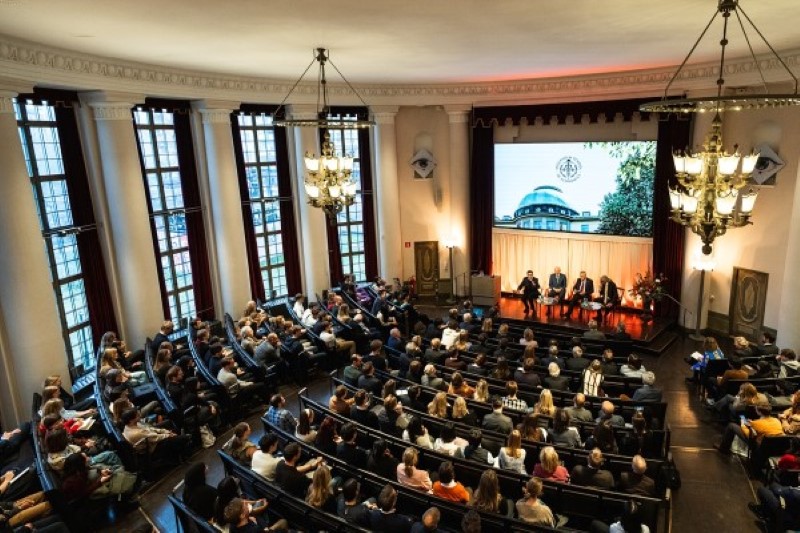
Nobel laureates discuss creative destruction and the future of growth at SSE

From left: Philippe Aghion, Peter Howitt, Joel Mokyr and Richard Friberg. Photos by Pontus Stigberg
Joel Mokyr opened with a historical perspective, reminding the audience that prosperity is a recent phenomenon.
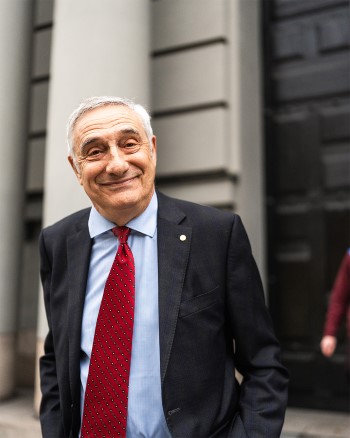
“For much of human history, people were poor, uncomfortable, and miserable,” he said. Growth only accelerated after 1800, largely because humanity began to understand why technologies worked.
“If you don’t know why something works, you can still use it, but it’s much harder to improve it,” Mokyr explained.
He illustrated this with examples from steelmaking and agriculture, where scientific breakthroughs transformed production and ended the Malthusian trap of famine.
His was that innovation thrives when knowledge deepens.
“The process of R&D depends critically on the epistemic base on which the technique is founded,” Mokyr noted, emphasizing that understanding the principles behind technology is key to sustained progress.
AI and the speed of change
Peter Howitt shifted the focus to the present, highlighting artificial intelligence as today’s most disruptive force.
“Nobody really knows in great detail what’s going to happen,” he admitted, “but we know this is a tremendously important, and potentially extremely productive and revolutionary technology.”
While AI creates new jobs and promises productivity gains, its rapid pace raises concerns. “What’s more apparent at first is the destructive potential,” Howitt noted, pointing to job displacement and social adjustment challenges.
He argued that markets alone cannot manage this transition.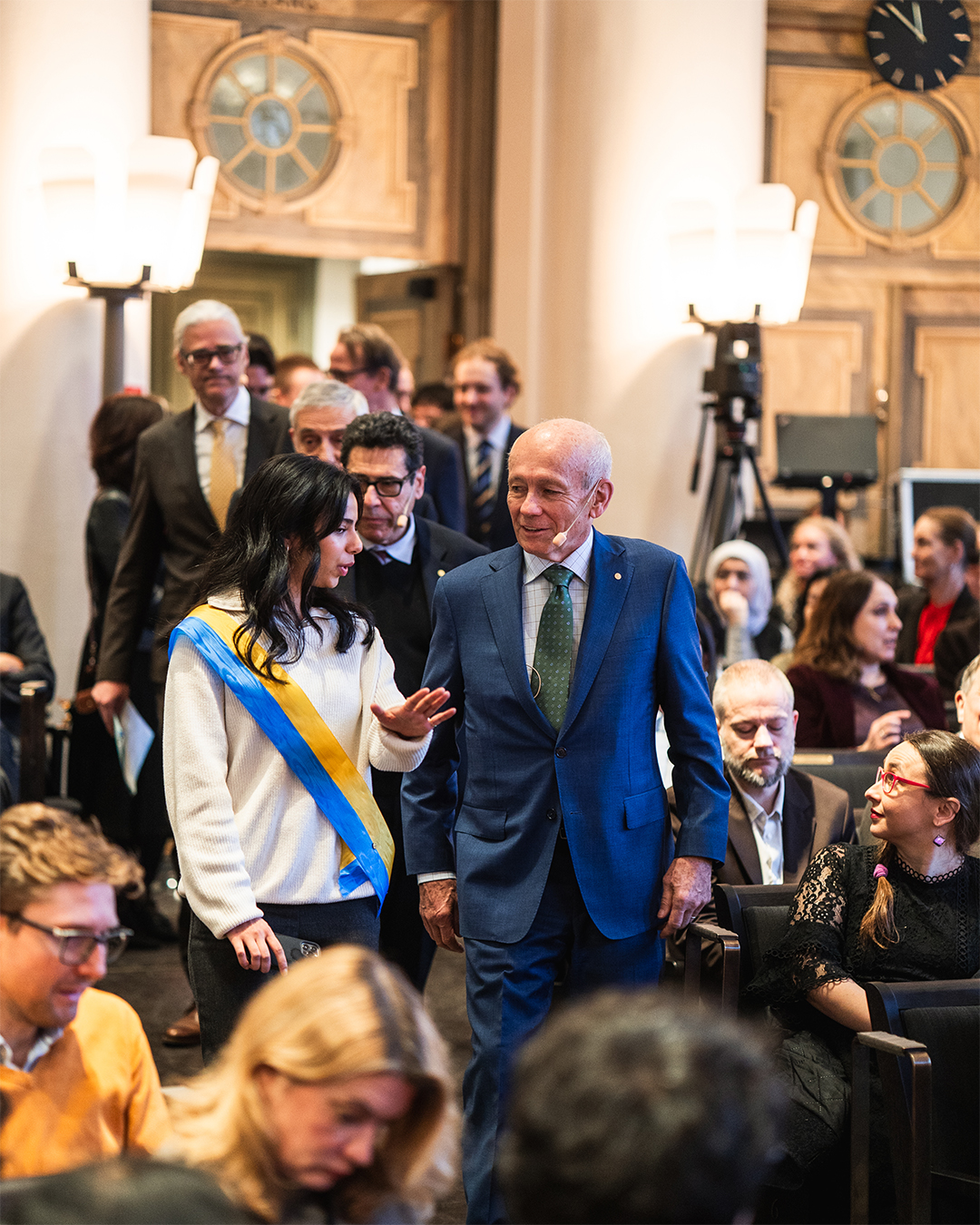
“When you’re talking about technological progress and economic growth, that’s an area where Smith’s invisible hand no longer guides us automatically into situations that benefits everybody,” he said.
Instead, Howitt called for coordinated action among government, business, and academia, similar to the U.S. model that fostered breakthroughs in computing and the internet.
“We may need something of that order to deal with the downside of this tremendous technology,” he said, underscoring the need to take care of the victims of creative destruction.
Europe’s innovation challenge
Philippe Aghion addressed Europe’s struggle to keep pace with the U.S. and China in breakthrough innovation.
“Not everywhere, Sweden is a very dynamic place, but it’s interesting to understand why the first industrial revolution happened in Europe. We were at the forefront of innovation and now we are followers,” he said.
Aghion identified several structural barriers, including fragmented markets, limited venture capital and a lack of industrial policy.
“In Europe, with a very dogmatic view of competition policy, we precluded any form of industrial policy. Now we are paying the price, and we have to reverse course,” he said.
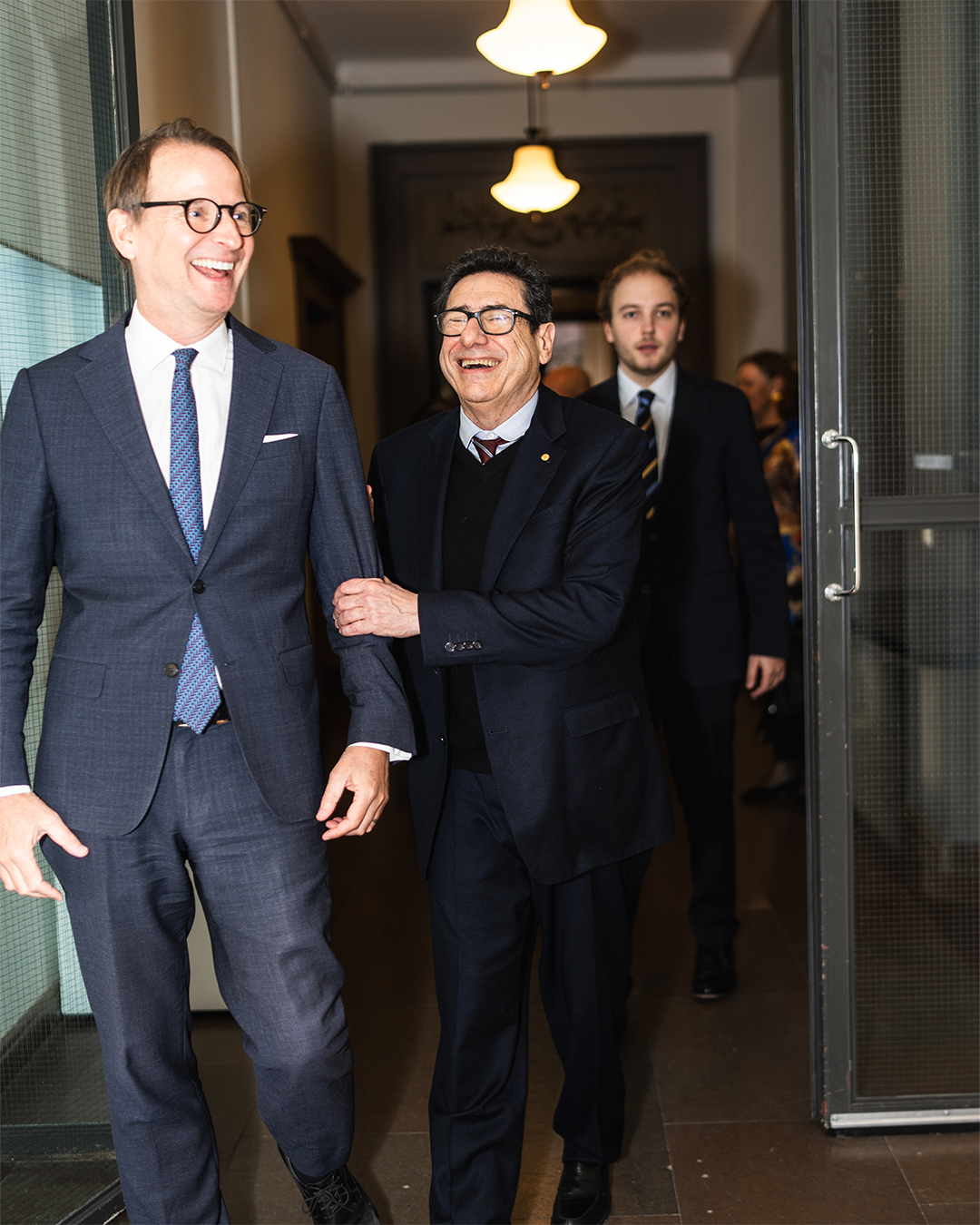
Yet Aghion said he sees opportunity in Europe’s superior social model, democratic systems and freedom, highlighting Scandinavians as pioneers.
“You know you can be innovative, inclusive and pro-green,” he said. “And that’s why people will come to us.”
Aghion advocated for strong education systems, competition policies that give new talents a chance and “flexicurity” programs like Denmark’s, which combine generous unemployment benefits with retraining.
On AI, Aghion was optimistic but cautious, calling for competition policy to be adopted to AI.
“AI is a fantastic source of growth,” he said. “But the danger is that if monopolized by a few large firms—like Google and Microsoft—then it will discourage new entry, and instead of being a growth-enhancing force, it will be a barrier to growth.”
A call for balance
The discussion closed on a note of urgency and hope. All three laureates agreed that creative destruction remains the engine of progress, but managing its social costs is essential.
As Aghion put it: “If you have competition, education and good flexicurity, we will make the best of the AI revolution. It will be one way Europe can revive.”
The three received the 2025 Sveriges Riksbank Prize in Economic Sciences in Memory of Alfred Nobel “for having explained innovation-driven economic growth.”
About the Nobel discussion at SSE
Each December, the Stockholm School of Economics welcomes the Nobel laureates in economic sciences for a conversation on their prize-winning work. The Nobel discussion has become a hallmark of the School’s calendar, offering our community a chance to engage with the ideas and insights that shape the field of economics.