
Innovation and education move to the center of Sweden's deterrence strategy

“The innovation cycle needs to move from five weeks to two hours.”
That was the stark message as the Center for Security and Resilience (CfSR) at the Stockholm School of Economics, together with McKinsey as knowledge partner, convened senior political, military and business leaders, as well as HRH Prince Daniel, at the Grand Hôtel in Stockholm this past Monday, May 4.
The proposition was clear: in an era of renewed geopolitical risk, the speed at which a country can innovate, adapt, and scale has become a core component of national security. Deterrence is no longer only a question of military capability. It is also a matter of industrial capacity, technological agility, education, and institutional trust.
The summit opened with McKinsey presenting its report, Enhancing Swedish Security through Deterrence and Prosperity. The report underlined Sweden's considerable strengths in military and civil defense-related industry, while also pointing to a significant opportunity to increase its global market share. If Sweden can sustain its innovation capacity - and make the strategic decisions required to support it - the potential prize is substantial.
McKinsey identified four priorities for realizing that opportunity:
- Link industrial strategy to capability plans
- Raise industrial ambition and focus
- Compete on innovation, unit cost, and speed
- Facilitate export as a national priority
The report's conclusion was direct: Sweden has an opportunity to expand its defense industrial base in a way that strengthens deterrence, generates high-quality employment, increases tax revenues, and builds on the country's long industrial tradition.
“There is a large opportunity for the Swedish defense industry to increase its market share,” said Gustav Bolin, Partner at McKinsey responsible for defense and energy transition. “In doing so, Sweden can create alliances, strengthen deterrence, and enhance national competitiveness.”
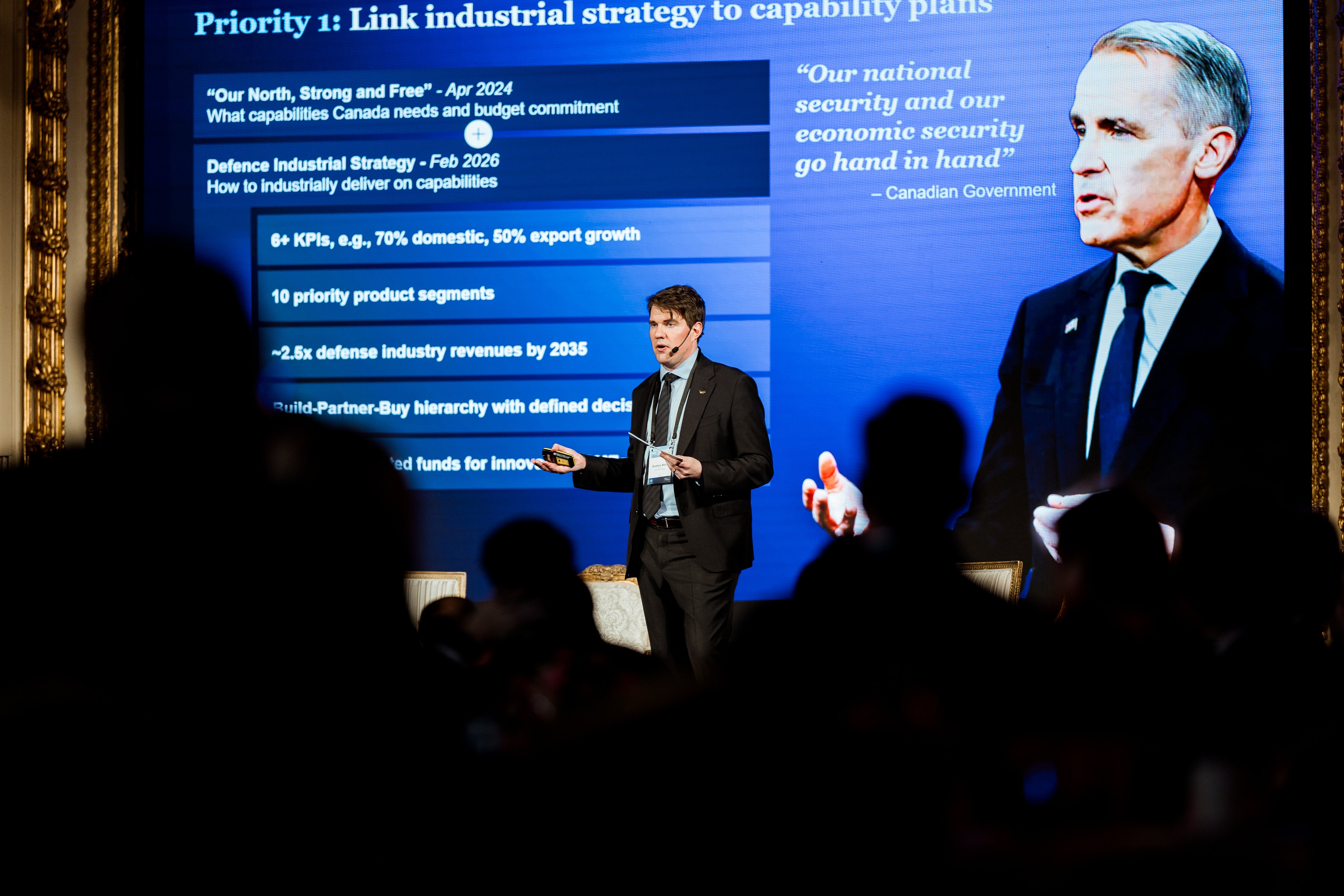
Gustav Bolin, Partner at McKinsey, during his presentation.
Relationships before bureaucracy
Across the summit's panel discussions, one theme returned repeatedly: speed requires more than new technology. It requires a different operating model.
Participants argued that Sweden needs to move from lengthy decision cycles toward much faster forms of execution. That means clearer mandates, stronger leadership, and a culture in which individuals and institutions are prepared to take responsibility for outcomes.
But speed also depends on trust. Several speakers emphasized that government, industry, academia, and the armed forces must interact in ways that are less transactional and more relational. In practice, that means replacing excessive reliance on emails, formal processes, and bureaucratic distance with direct relationships, shared understanding, and the ability to pick up the phone.
The opportunity for Swedish defense industry is therefore not only industrial. It is institutional.
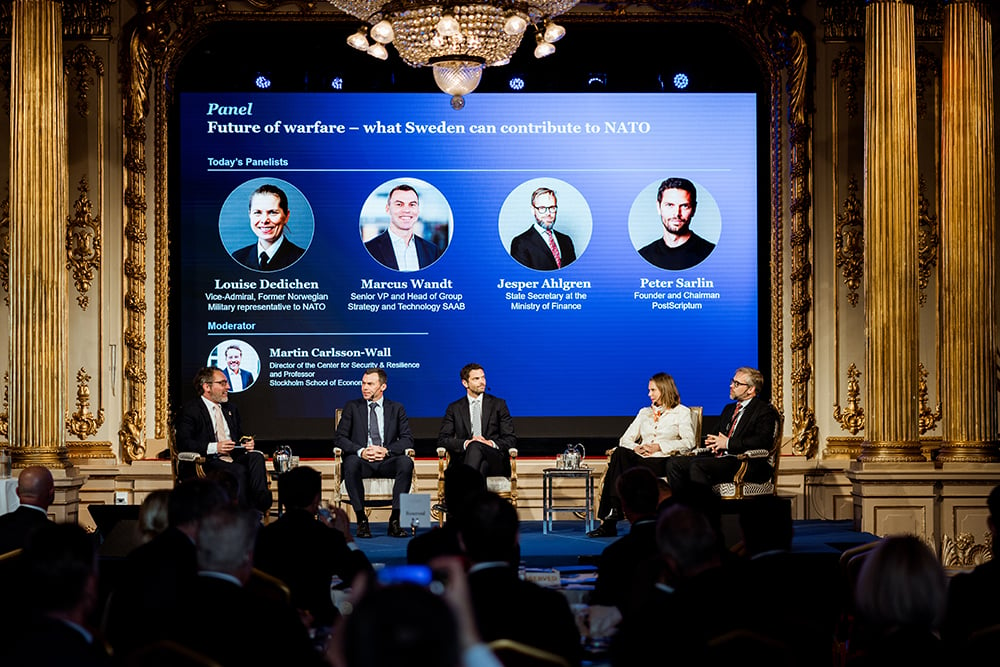
Panel discussion on security and competitiveness at the Sweden Security & Competitiveness Summit 2026 at Grand Hôtel.
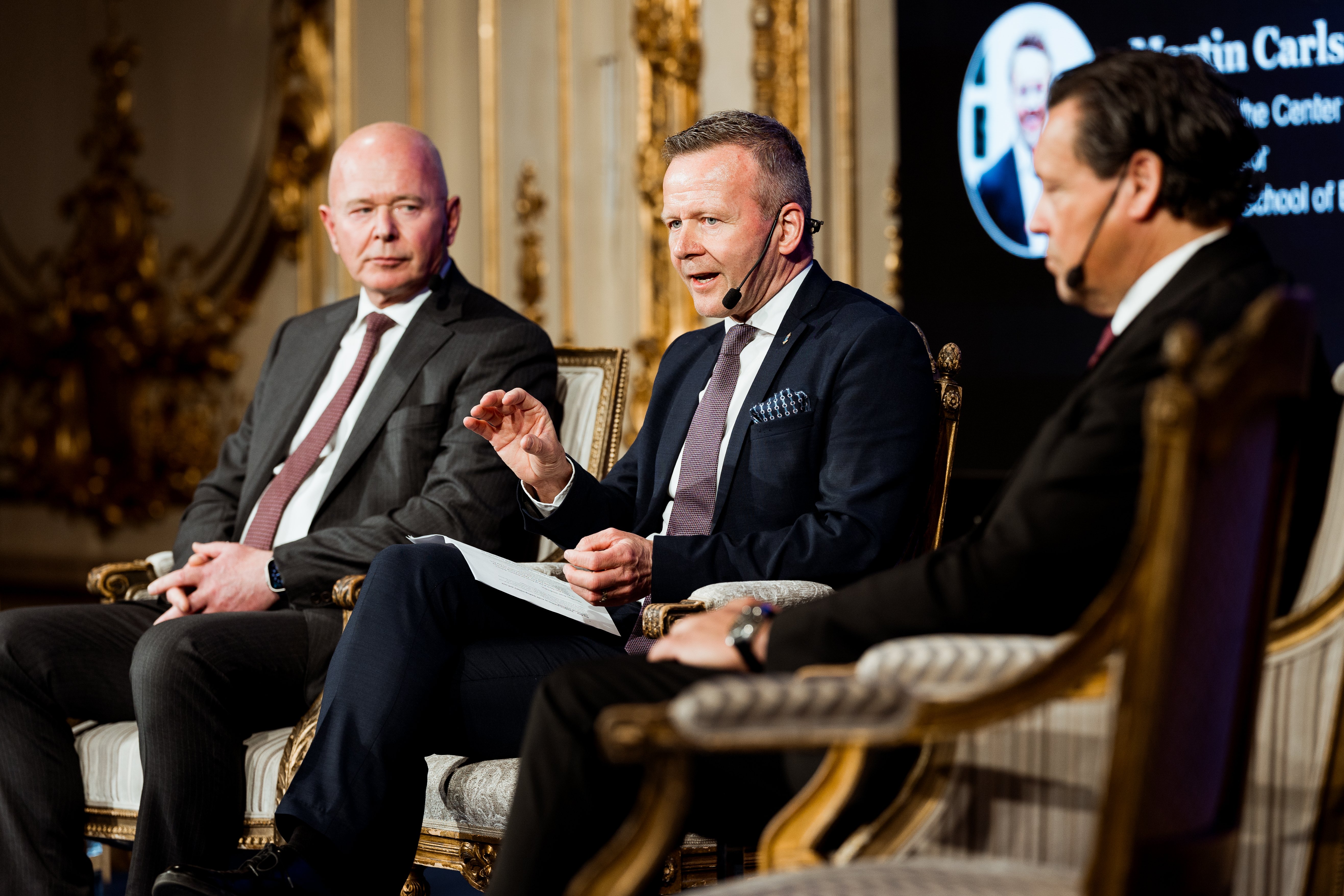
Mikael Frisell, Director General at the Swedish Civil Defence and Resilience Agency (MCF).
“The McKinsey report and the panel discussions point to the considerable potential of Sweden's defense industry,” said Professor Martin Carlsson Wall, Director of the Center for Security and Resilience at SSE. “But realizing that potential will require new structures, new ways of working, and new relationships.”
He added: “In business, there is always a balance between exploiting existing opportunities and exploring new ones. Here, Sweden needs to do both at full speed. That is a rather unique situation.”
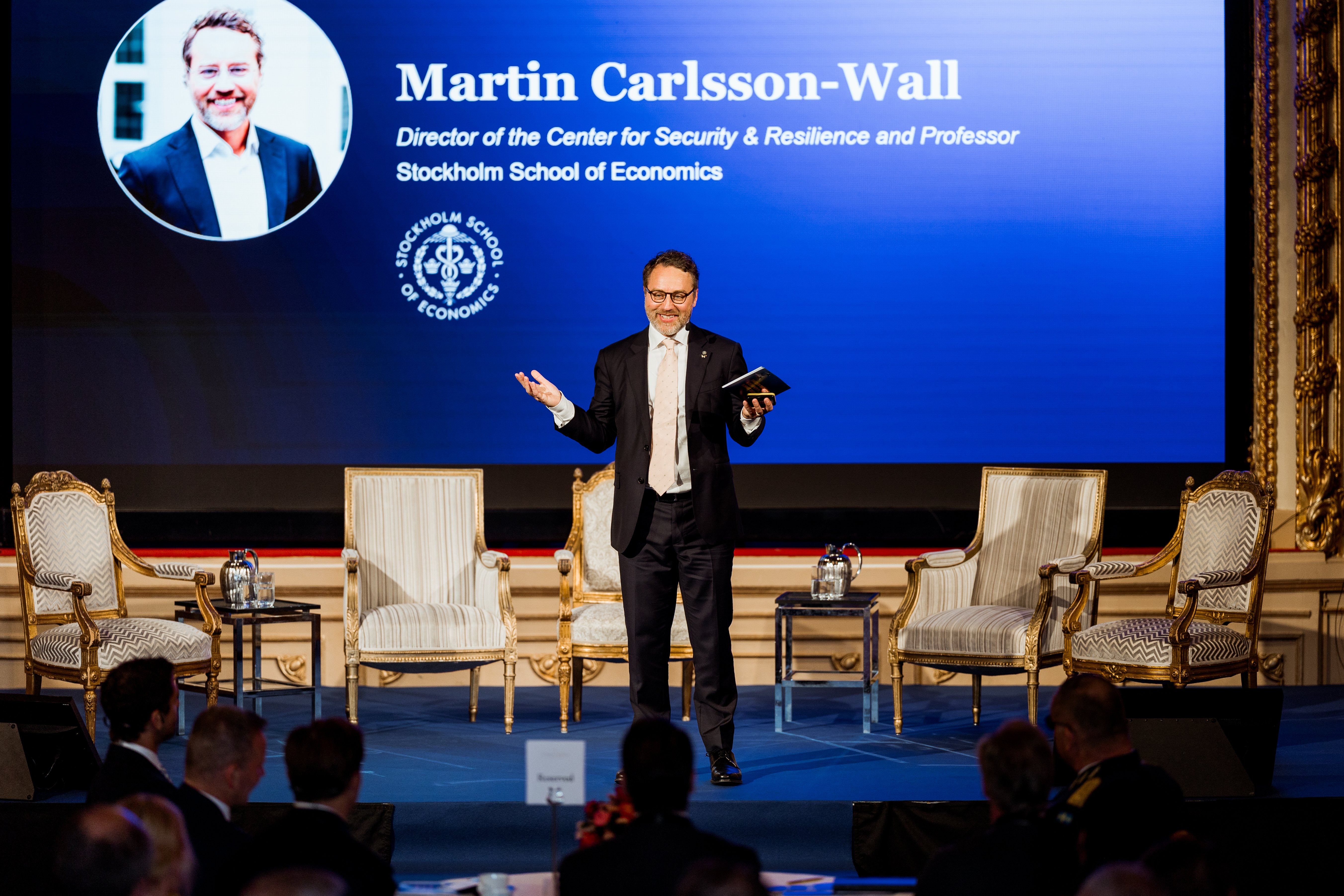
Martin Carlsson Wall presenting at the summit.
Today's knowledge will not build tomorrow's systems
A further conclusion from the day was that Sweden's ability to seize this moment will depend heavily on education and leadership development. Existing expertise remains essential, but the systems required for future deterrence, resilience, and competitiveness will demand new forms of collaboration between the public and private sectors.
The Stockholm School of Economics has, since its founding, played a role in bringing together leaders from business, government, and society. It is in that tradition that SSE, with the trust of the Swedish Armed Forces and Supreme Commander General Michael Claesson, is launching a Nordic Defense MBA program.
The aim is to create a platform where military, business, and public-sector leaders can develop the shared language, relationships, and strategic understanding needed to act at speed.
“Competitiveness, prosperity, and resilience are closely linked,” said Professor Carlsson Wall. “The war in Ukraine has shown that close relationships, constant dialogue, and a common understanding of the situation are essential if countries are to innovate at the speed required.”
He continued: “The security of Sweden and the Nordic region therefore requires platforms where this common understanding can be shaped and where critical relationships can be formed. That is why I believe our Nordic Defense MBA will play an important role in strengthening Swedish competitiveness.”
Turning geopolitical risk into competitive strength
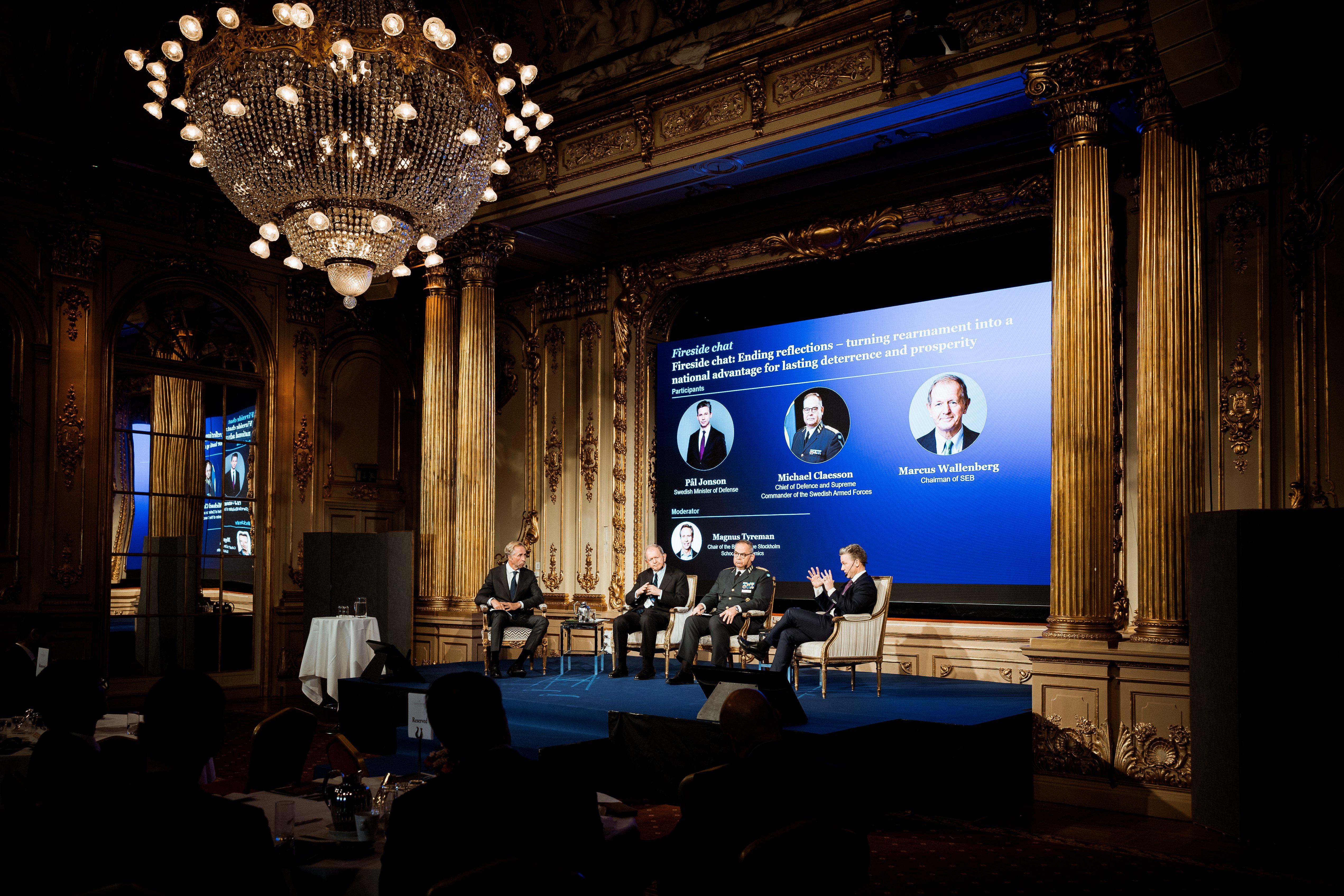
The fireside conversation. From left to right: Magnus Tyreman, Marcus Wallenberg, Supreme Commander General Michael Claesson and Pål Jonson.
The summit concluded with a fireside conversation between SEB Chairman Marcus Wallenberg, Supreme Commander General Michael Claesson, and Sweden's Minister for Defense, Pål Jonson, followed by closing remarks from SSE Chairman Magnus Tyreman.
The final message was cautiously optimistic. Sweden is well positioned to turn geopolitical disruption into a source of industrial and strategic strength. It has world-class companies, deep engineering expertise, strong institutions, and a tradition of public-private cooperation.
But the speakers were equally clear that success will not come from simply doing more of the same. Sweden will need to preserve what already works while building new platforms, new educational models, and new ways of working.
In the emerging security environment, deterrence will depend not only on what Sweden can procure, but on how quickly it can learn, decide, and act.
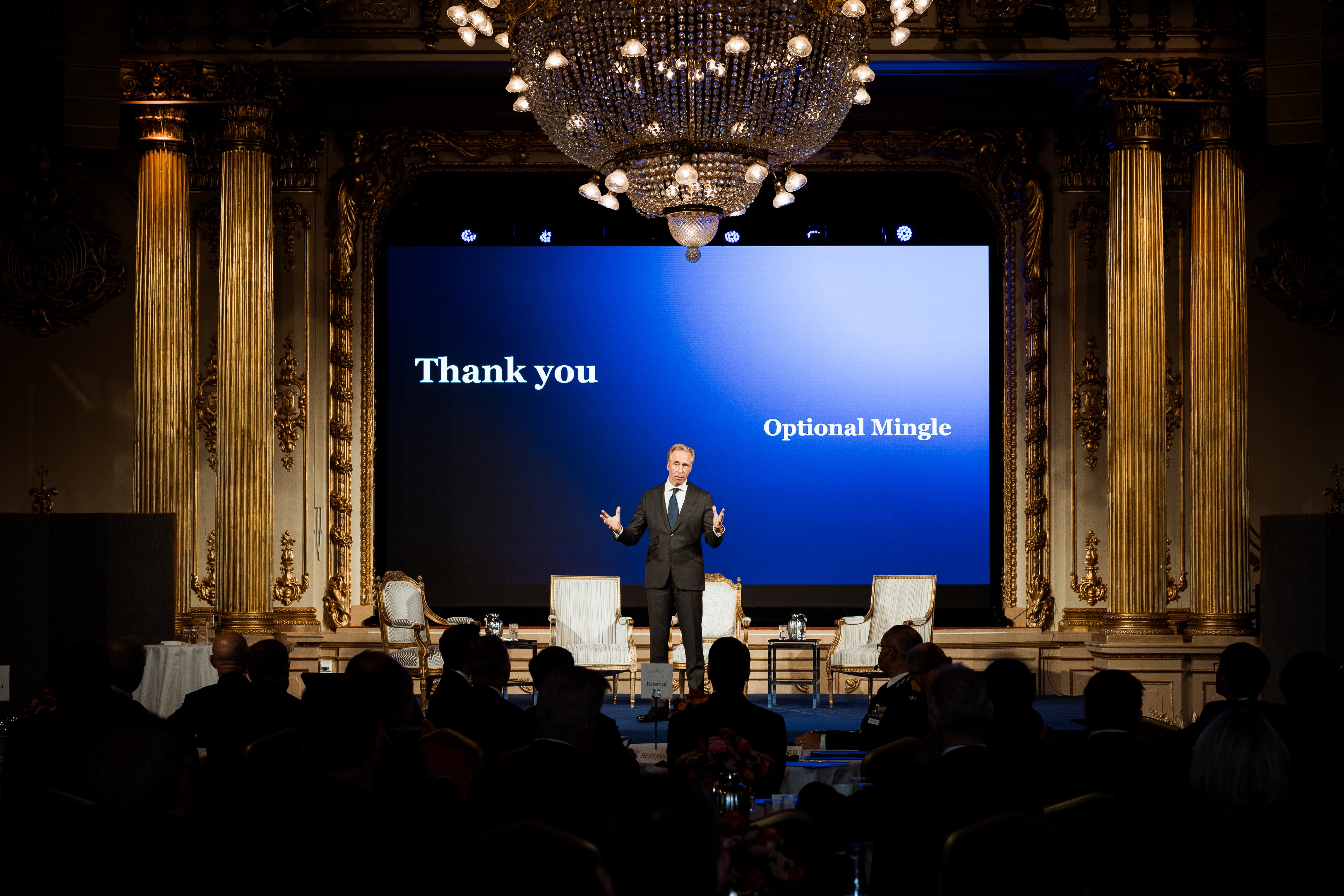
Closing reflections at the Sweden Security & Competitiveness Summit 2026.


