How collaboration strengthens crisis readiness

The event presented new research on Samverkan Stockholmsregionen (SSR), a regional collaboration network that brings together 37 public organizations in Stockholm County to coordinate crisis preparedness.
The study, conducted by Elsa Persson and Susanna Alexius at the Stockholm Centre for Organizational Research (SCORE) in collaboration with CfSR, examines how interorganizational collaboration can create the trust, structure, and shared ownership required for effective crisis response.
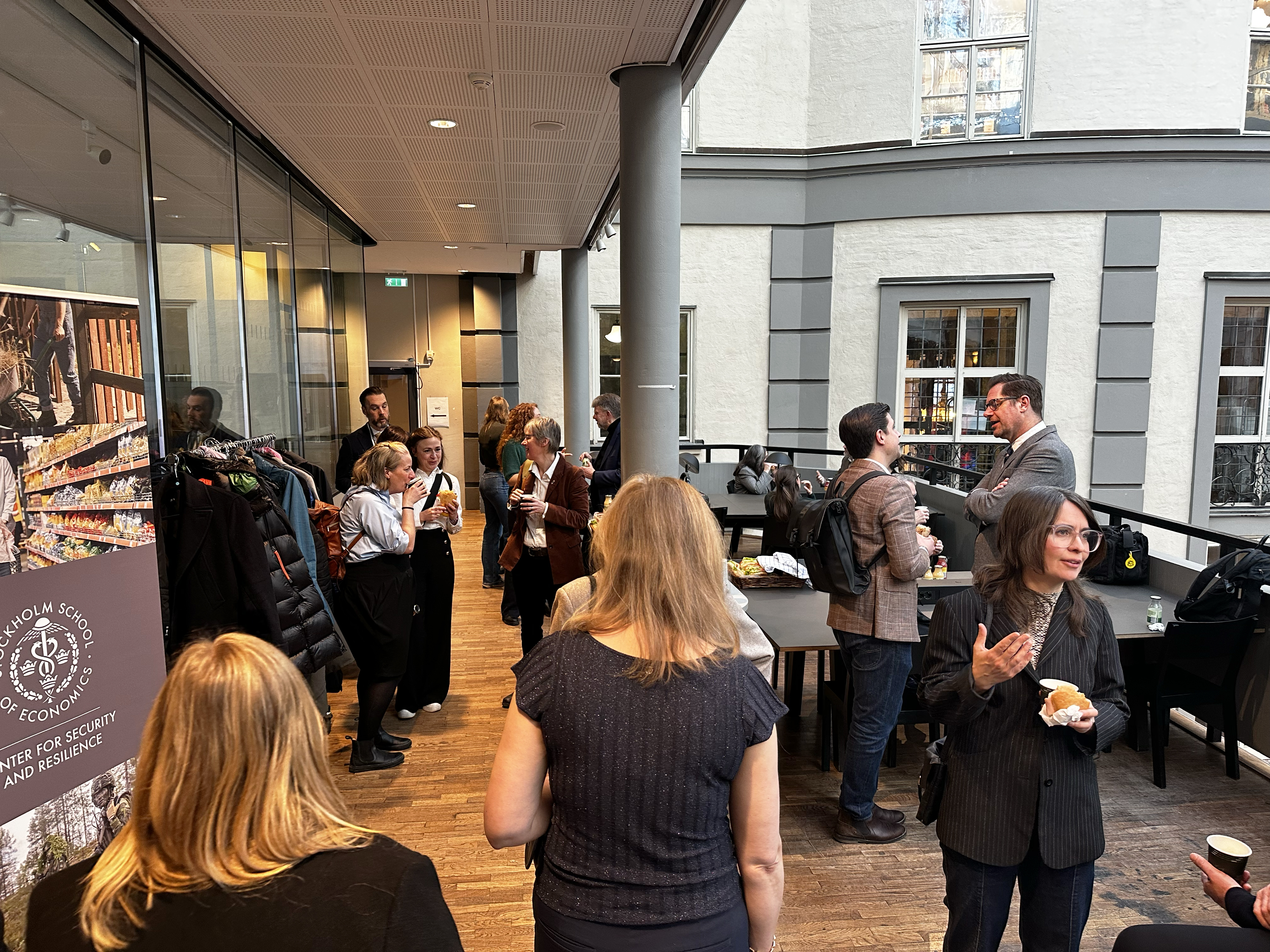
Full house at the CfSR Academic Insights Breakfast Seminar on organizing for action in crisis.
Trust and structure enable decisive action
During the presentation, the researchers highlighted several key mechanisms that help collaboration translate into operational capacity:
- Regular interaction builds readiness
- Stable organizational structures enable flexibility
- A coordinating secretariat strengthens coordination
- Shared ownership encourages initiative and responsibility
Together, these elements help organizations move from coordination in theory to collective action in practice.
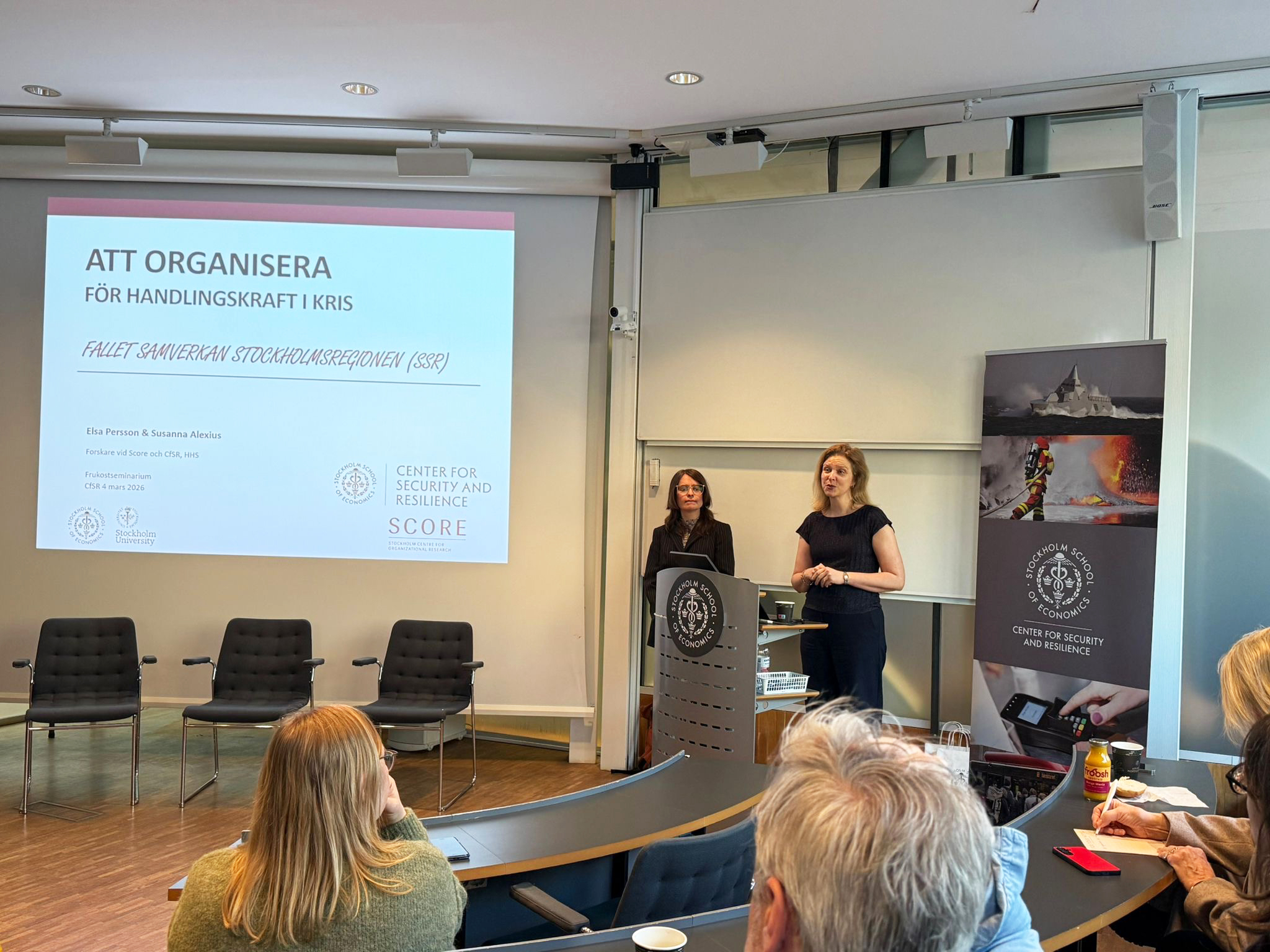
Researchers Elsa Persson and Susanna Alexius present findings from their study on Samverkan Stockholmsregionen (SSR).
Lessons from a decade of regional preparedness
The seminar also featured a panel discussion with practitioners working directly within the collaboration network: Mikael Dahl from Storstockholms brandförsvar, Kerstin Hägg from Samordningskansliet, and Sebastian Tabrizzi from the City of Stockholm.
Drawing on their experiences, from pandemic coordination to complex multi-actor incidents, the panel reflected on how SSR has developed over the past decade. A recurring theme was that trust is built in everyday collaboration and tested in moments of crisis.
Participants also discussed future challenges, including sustaining long-term engagement among member organizations, maintaining clear boundaries between routine coordination and activated crisis response, and adapting collaboration structures in a rapidly evolving preparedness landscape.
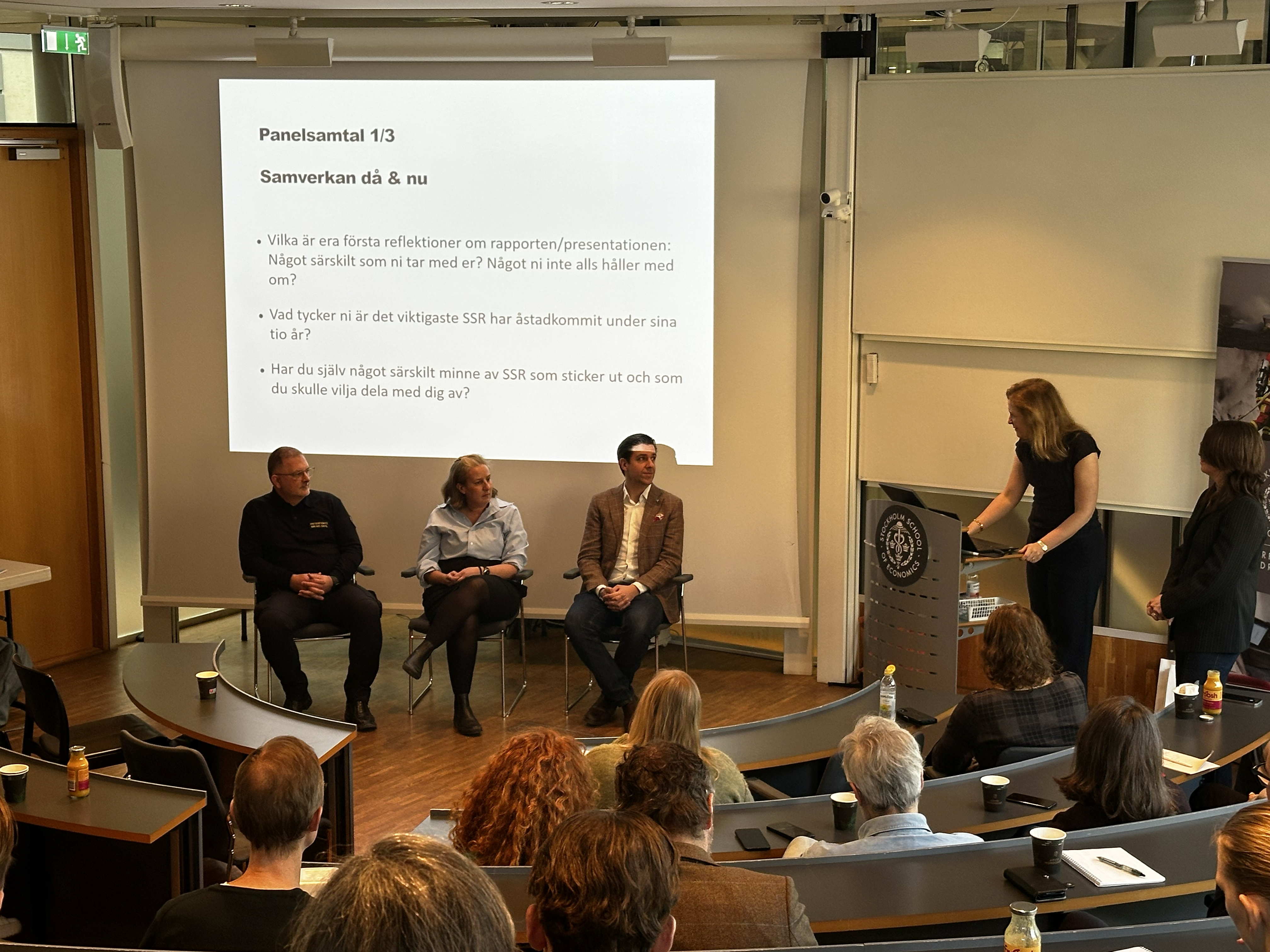
Panelists Mikael Dahl, Kerstin Hägg, and Sebastian Tabrizzi reflect on practical experiences of crisis collaboration.
Linking research and practice
Events like this seminar illustrate CfSR's mission to connect academic research with practical challenges in governance, crisis management, and societal resilience.
By bringing together researchers and practitioners, the discussion highlighted how structured collaboration can strengthen Sweden's crisis preparedness and contribute to broader efforts to build resilience and competitiveness in an increasingly uncertain world.
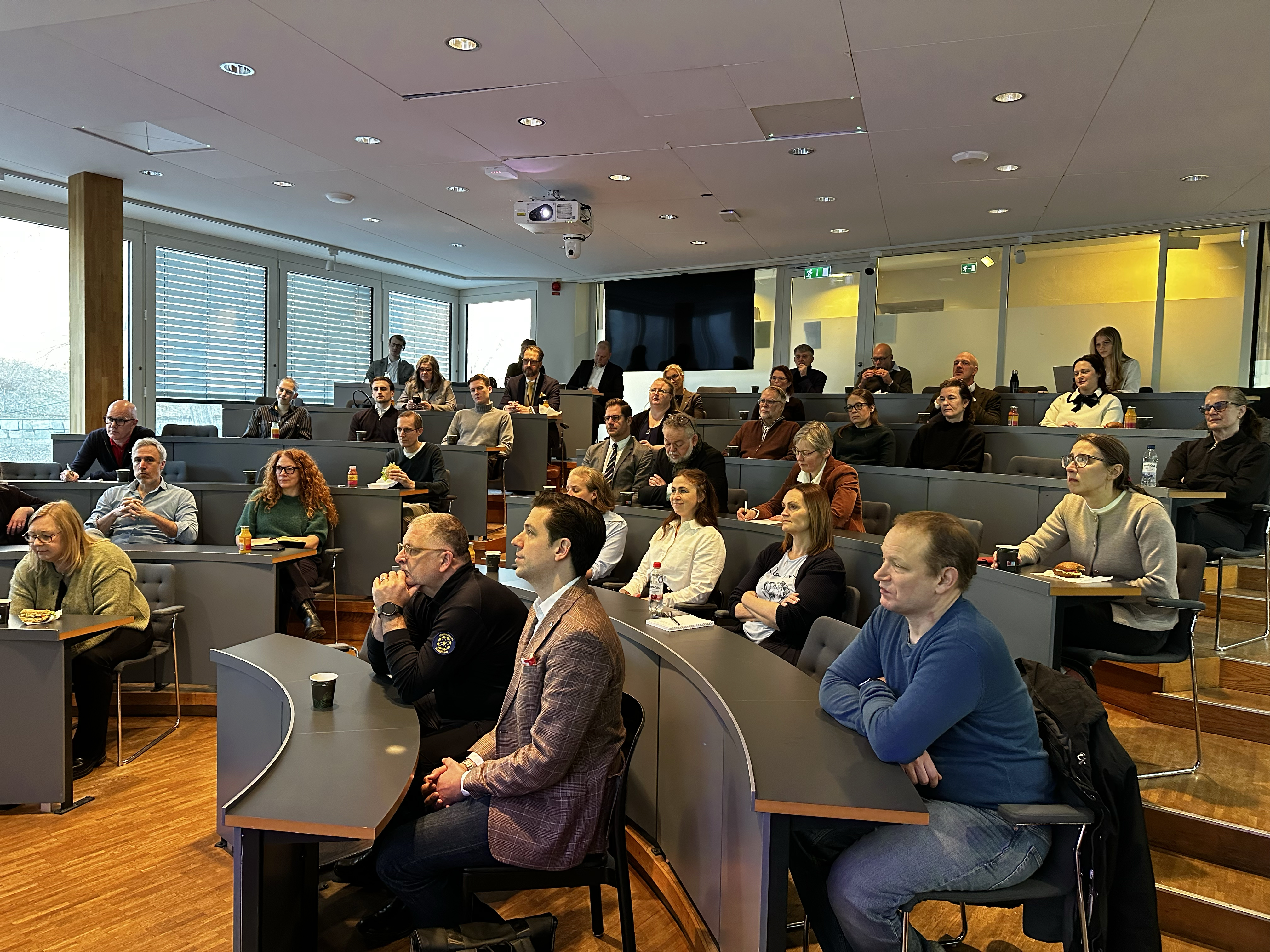
Participants discuss how collaboration structures influence crisis preparedness and response.