Mission-driven partnerships for Europe’s health transformation

The lunch seminar on mission-driven innovation in cancer and beyond was jointly hosted by the House of Innovation and the House of Governance and Public Policy.
Key insights include:
- Vision alone is not enough, even for mission-driven partnerships and organizations.
- Trust is essential, but it must be supported by a strong and sustainable structure.
- Traditional, siloed approaches are no longer sufficient. Instead, progress depends on new forms of cross-sector collaboration that align long-term missions with short-term action.
As demographic and technological shifts reshape global health systems, speakers emphasized the growing need for new forms of collaboration that cut across sectors and institutional boundaries.
Drawing on five years of research and practice through Vision Zero Cancer and Testbed Sweden, the seminar explored how mission-driven partnerships can align actors, move beyond silos, and deliver real impact.
What did we cover?
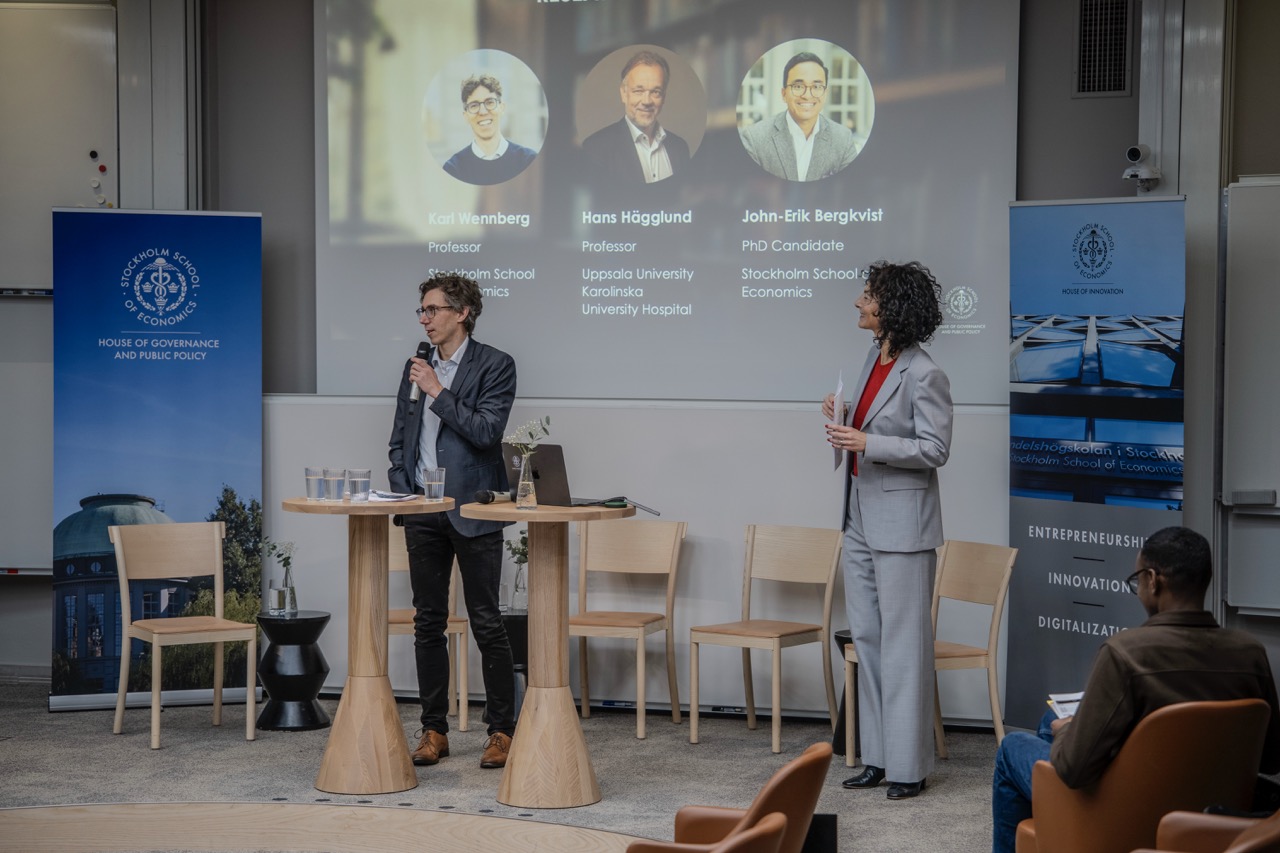
The seminar opened with welcoming remarks by Lars Strannegård, President of the Stockholm School of Economics, who highlighted why the school prioritizes research on partnerships that address grand societal challenges.
Karl Wennberg, Professor at the Stockholm School of Economics, spoke about the global rise of mission-driven policy. He noted that mission-driven and transformative innovation policies are gaining momentum, not least in international organizations like the OECD, yet evidence on what actually works remains limited.
This gap, Wennberg said, makes initiatives like Vision Zero Cancer and Testbed Sweden particularly interesting sources of systematic research-based learning.
Hans Hägglund, MD, PhD, Professor at Uppsala University and Karolinska University Hospital and former National Cancer Coordinator shared perspectives from Sweden’s cancer reform efforts.
He emphasized the need to embed innovation and research at the core of healthcare reform. Drawing on his experience, he underlined the importance of looking ahead, being willing to take risks, and investing in innovation before outcomes are guaranteed.
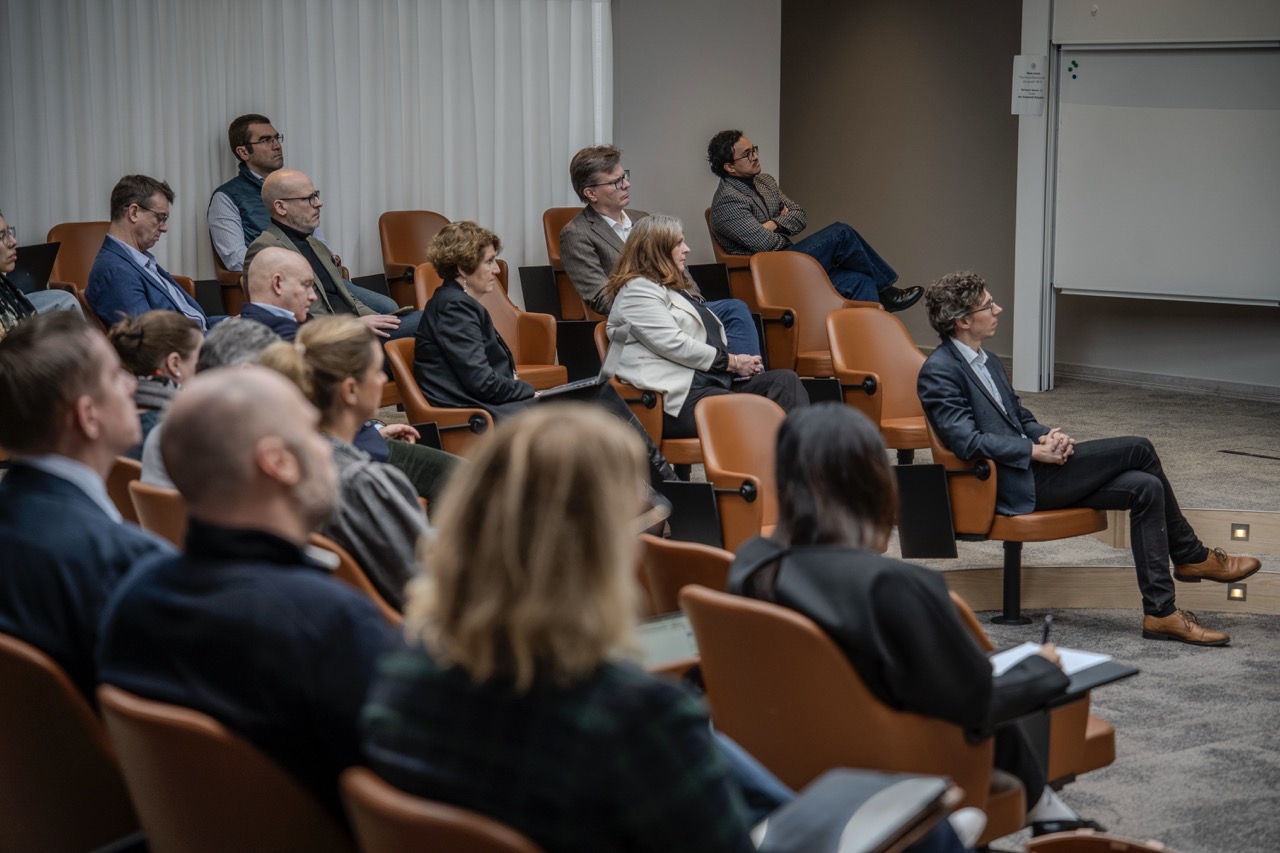
John-Erik Bergkvist, PhD candidate at the Stockholm School of Economics, shared insights from his research on mission-driven partnerships. His work examines how actors coordinate, stay focused, and maintain momentum in complex collaborations where formal authority is absent.
Using Vision Zero Cancer as a case study, Bergkvist showed how partnership members divide labor using both a collaborative democratic mode and a knowledge-driven self-selection mode, and how the resulting interdependencies are managed through information structuring and the creation of local homogeneity.
While these approaches provide actors with sufficient information to act, they also risk creating adverse effects on efficiency and inclusion, which must be actively balanced.
Ebba Hallersjö Hult, senior advisor at the Stockholm School of Economics and co-founder and head of Vision Zero Cancer and Testbed Sweden, highlighted the power of a shared mission.
Ebba and Mef Nilbert, MD, PhD, Professor at Lund University representing the National Board of Health and Welfare and the National Cancer Mission Hub, together demonstrated how policy ambition, research, and practical innovation can be brought together in a shared mission to provide a unified direction for actors across healthcare, industry, academia, policy, and civil society.
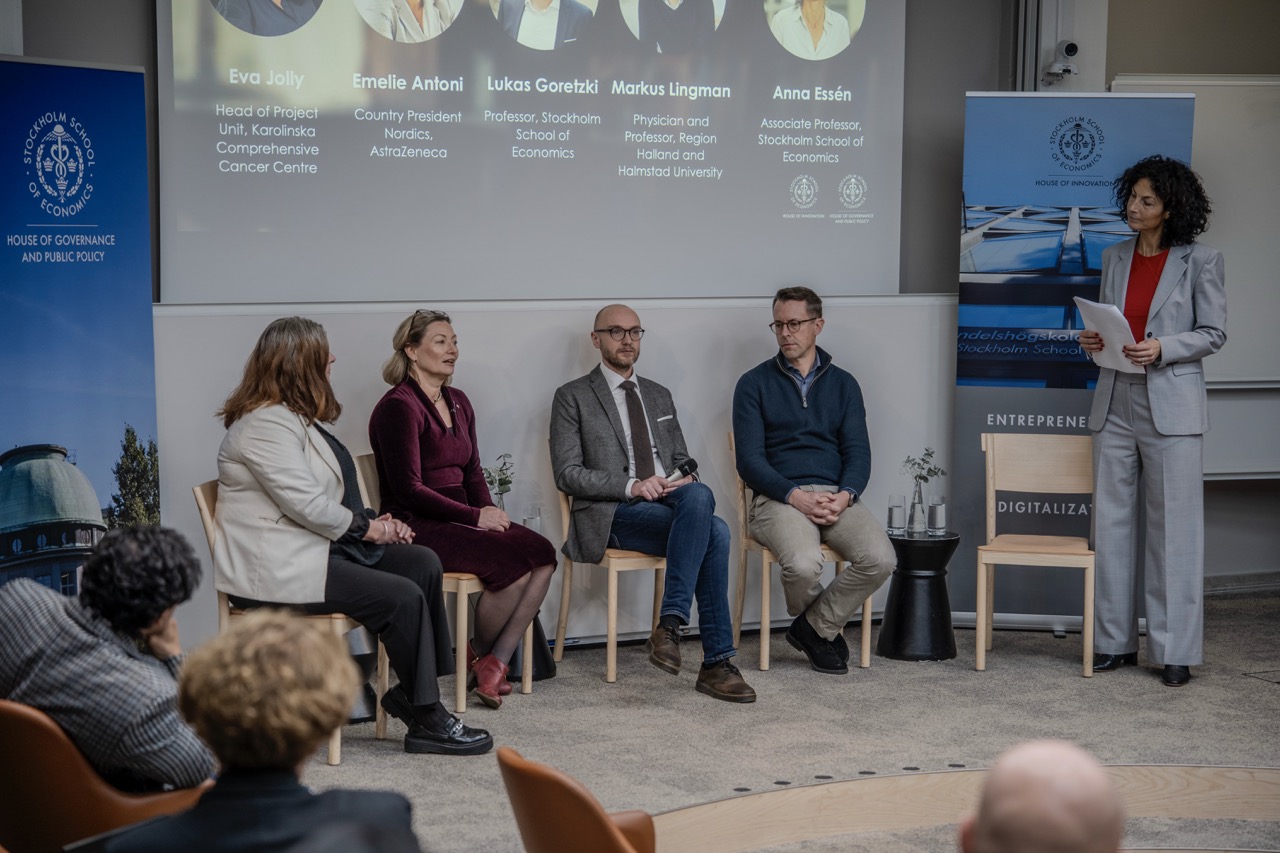
Panel discussion: National lessons, European competitiveness and challenges
Moderated by Anna Essén, PhD, Associate Professor at the Stockholm School of Economics, the panel discussion focused on how mission-oriented partnerships can strengthen Europe’s health transformation and enhance its long-term competitiveness.
Panelists included:
- Emelie Antoni, Country President Nordic, AstraZeneca
- Eva Jolly, Head of Karolinska Comprehensive Cancer Center Project Unit
- Lukas Goretzki, Professor of Management Accounting and Control and Head of Department at the Stockholm School of Economics
- Markus Lingman, MD, PhD, professor at Region Halland and Halmstad University and member of the National Scientific Council for Medicine and Health
The participants emphasized the role of clear goals such as KPI’s and measurable progress to sustain engagement across sectors, even as relationships and social accountability remain the foundation of long-term collaboration.
Together, the discussions underscored a central insight: mission-driven partnerships can drive system-level change in health, but only when trust, governance, and evidence evolve together.
Discussions addressed the practical challenges of mission partnerships, including how to incentivize participation across sectors, maintain focus when problem spaces are broad, and balance short-term progress with long-term transformation.
The seminar concluded with a networking lunch that allowed participants to explore how insights from mission-driven innovation can be applied in future initiatives.


