Family offices and entrepreneurial investments

Jesper Eliason (Bodil), Martin Wattin (InboxCapital), Carl Christensson (SEB), and Stina Norrhede (SEB).
The seminar was hosted by the Center for Family Enterprise at the House of Innovation, Stockholm School of Economics, co-organized with SEB, Division Wealth and Asset Management.
Professor Mattias Nordqvist, holder of the SEB Chair in Entrepreneurship and Family Business at the Stockholm School of Economics (SSE), and Stina Norrhede, Head of Professional Family Office at SEB Sweden, opened the session.
Nordqvist framed the event around the center's core mission: conducting research on family enterprises and family offices while maintaining a direct connection to practice.
"We really do have one foot in the research side and one foot very firmly in practice," he said. "That's very important for us."
He also introduced SEB's involvement, noting the value of combining academic insight with practitioners' day-to-day knowledge.
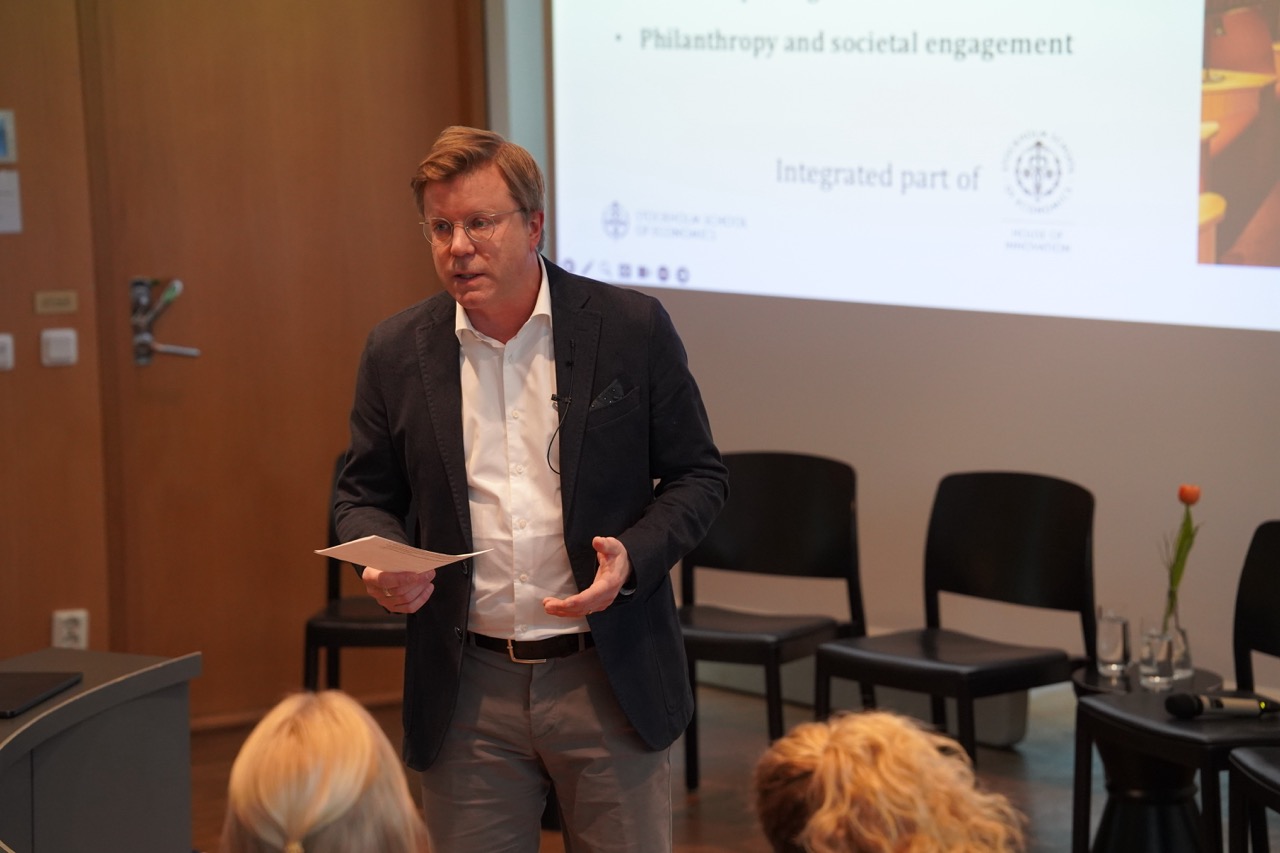 Mattias Nordqvist, SEB Chair in Entrepreneurship and Family Business, Professor, and director of the Center for Family Enterprise at the House of Innovation (SSE).
Research insights: How family offices invest in entrepreneurial ventures
Postdoctoral Researcher Lydia Song, Center for Family Enterprise, House of Innovation, Stockholm School of Economics, presented findings from three studies on single family offices and their direct investments in entrepreneurial ventures.
Using data from 265 single family offices in the United States, Song identified three consistent patterns.
First, family offices tend to invest in ventures from industries similar or related to their original family business. This reflects accumulated expertise and network advantages. As generations succeed each other, however, later-generation family offices increasingly diversify into industries outside their founding sector.
This is driven by the broader educational and professional backgrounds of later generations, who bring new perspectives and are motivated to move beyond their predecessors' legacy.
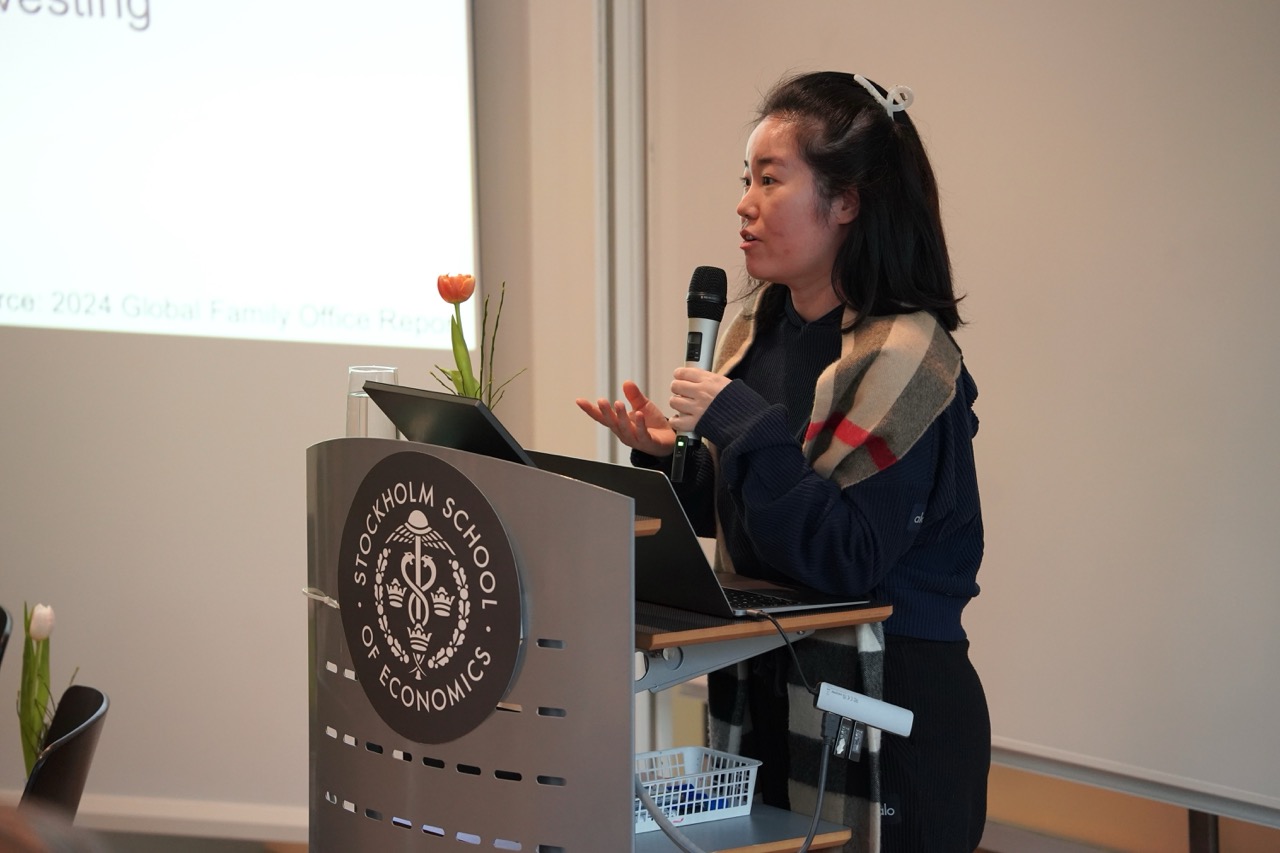 Lydia Song, Postdoctoral Researcher, Center for Family Enterprise, House of Innovation (SSE).
Second, single family offices invest in a narrower range of industries than venture capital firms. They often co-invest with a small, selected group of partners who share similar motivations.
This contrasts with the typical venture capital model, where the capital provider and investment decision-maker are separate, creating pressure for short time horizons. In other words, family offices, where the family provides and manages the capital itself, enjoy greater flexibility and tend to hold investments longer.
Third, Song found that single family offices engage more in socially responsible investing than non-family investors such as venture capitalists and accelerators. This reflects families' concern about public reputation and their freedom from strict governance structures.
One notable finding was that family offices whose founding businesses operate in socially contested industries invest less in socially responsible ventures, suggesting that family business context matters.
Interestingly, Song found no significant difference in socially responsible investing behavior between younger and older generations within family offices, despite younger generations expressing stronger interest in sustainability when surveyed.
"Although younger generations say that they are very interested in socially responsible investing, they don’t actually spend more money on it than their predecessors," she noted. In other words, there is a gap between stated interest and behavior among younger investors.
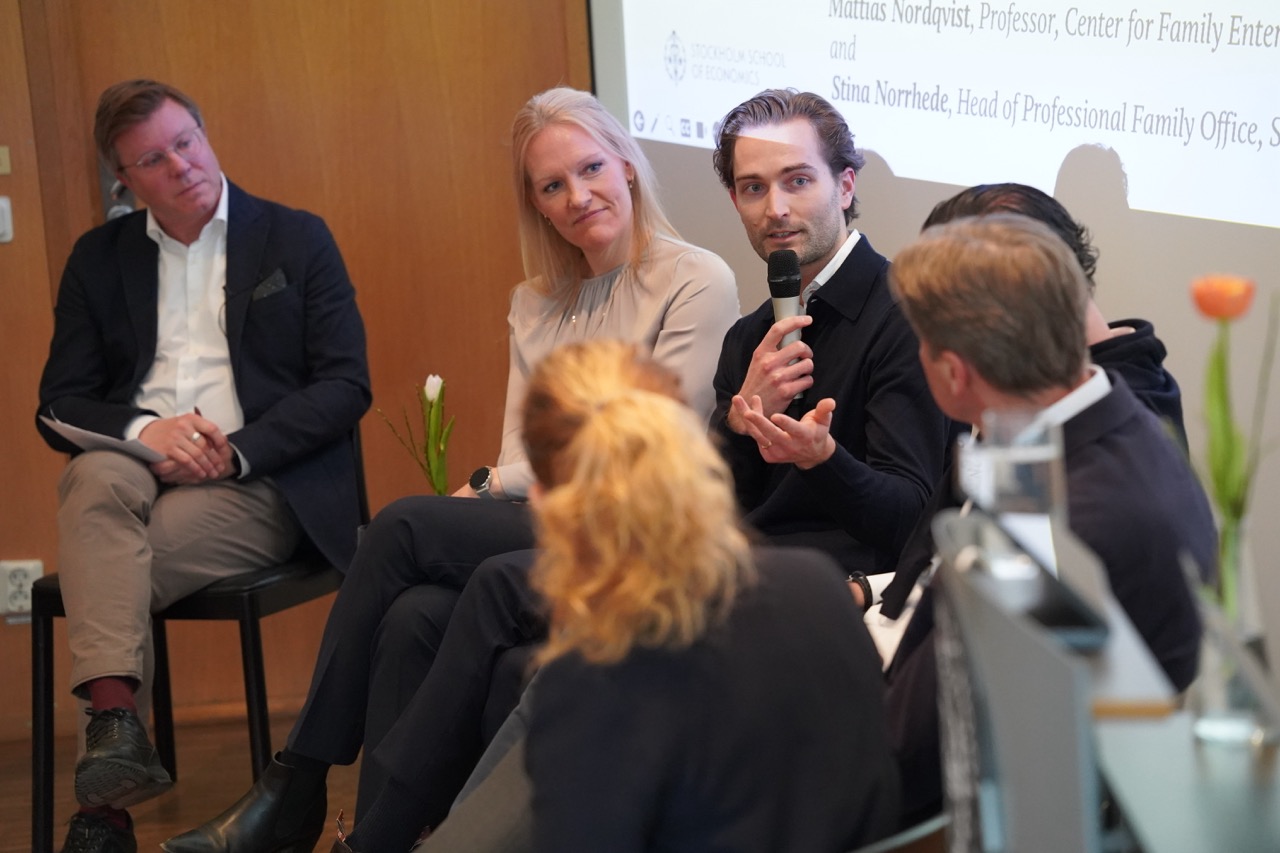
Mattias Nordqvist (SSE), Helene Mörtberg (Mirai, CoFounded Capital), Jesper Eliason (Bodil).
Panel discussion: What makes family office capital different?
The panel brought together four practitioners with direct experience of family office investing, each representing a different vantage point: a multifamily office CEO, an entrepreneur, a family investment company principal, and a bank advisor.
Helene Mörtberg, CEO and Founder of Mirai and CEO of CoFounded Capital, operates a multifamily office in Stockholm that pools capital from three families with technology entrepreneurial backgrounds.
She emphasized that family investors are often motivated by more than financial return. "They want to contribute with capital and help the entrepreneurs, but also very much with their networks, with their experiences, with lessons learned," she said.
She described the office's model as almost incubator-like, with portfolio companies working from shared office space. Mörtberg also described a practice of formalizing expectations at the start of each investment relationship through a "letter of understanding" with founders.
This document, while not legally binding, sets out what both sides can expect from each other on involvement, communication, and governance. 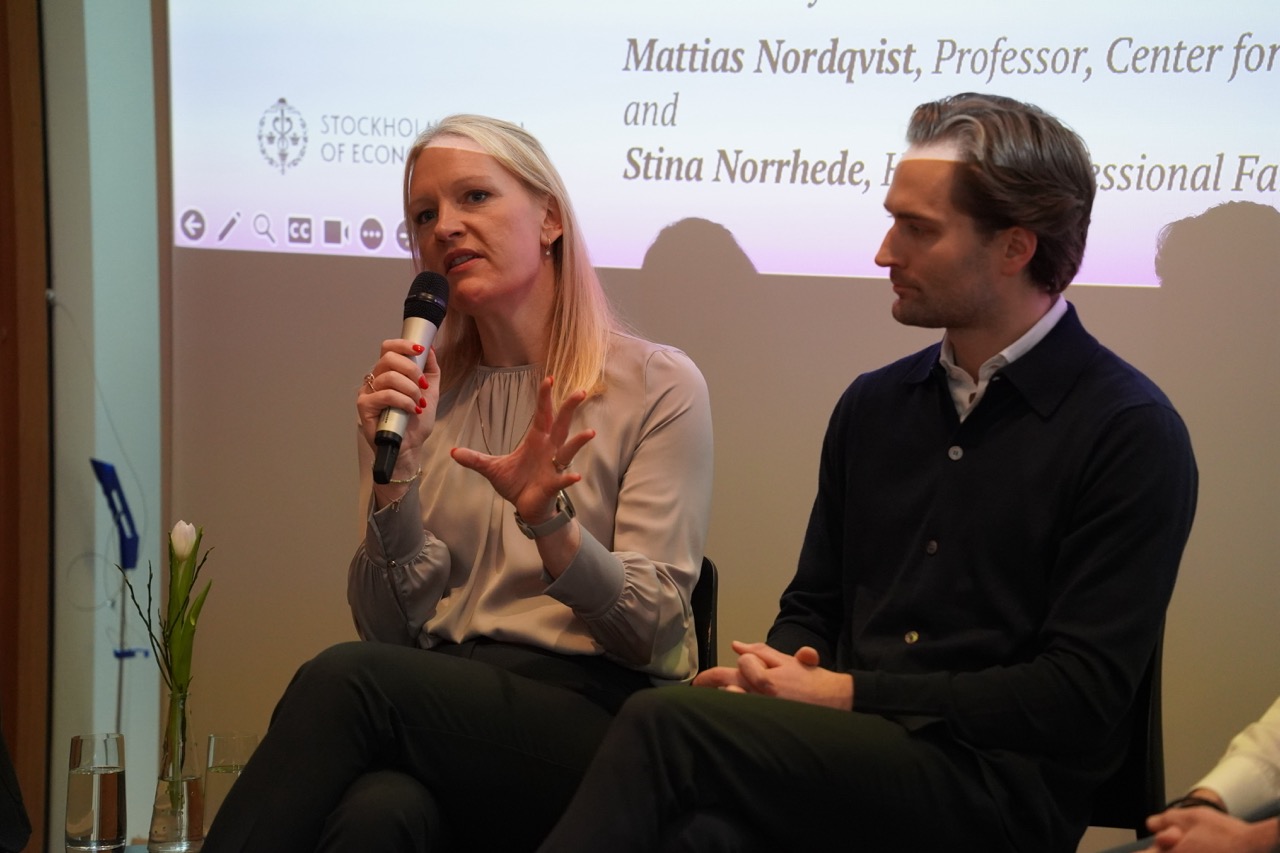 Helene Mörtberg (Mirai, CoFounded Capital), Jesper Eliason (Bodil).
Jesper Eliasson, CEO and Co-founder of Bodil, a company focused on making homeownership accessible to young families, raised capital primarily from Swedish family offices. He recognized Song's research findings in his own experience.
"The most common misconception is that you go out and raise venture capital and they're going to help you with great advice. What I found is that working with people who have experience from building actual businesses in the same sector is even more valuable."
He also highlighted continuity as a structural advantage: with a family office investor, the same person is typically on the other side of the table for the long term, unlike institutional funds where contacts change.
Martin Wattin, Executive Chairman of Inbox Capital, the family investment company he manages, spoke from the perspective of a family principal. He underlined the importance of long-term thinking, and talked about the experience of selling a company after 14 years of active involvement.
Wattin also reflected on the generational question raised in Song's research. He was direct about his approach with his own children: he wants them to build independent careers first, and to join the investment company only if they genuinely develop an interest and capability for it.
His focus, he said, was on building a professional investment structure rather than running a family-administration vehicle.
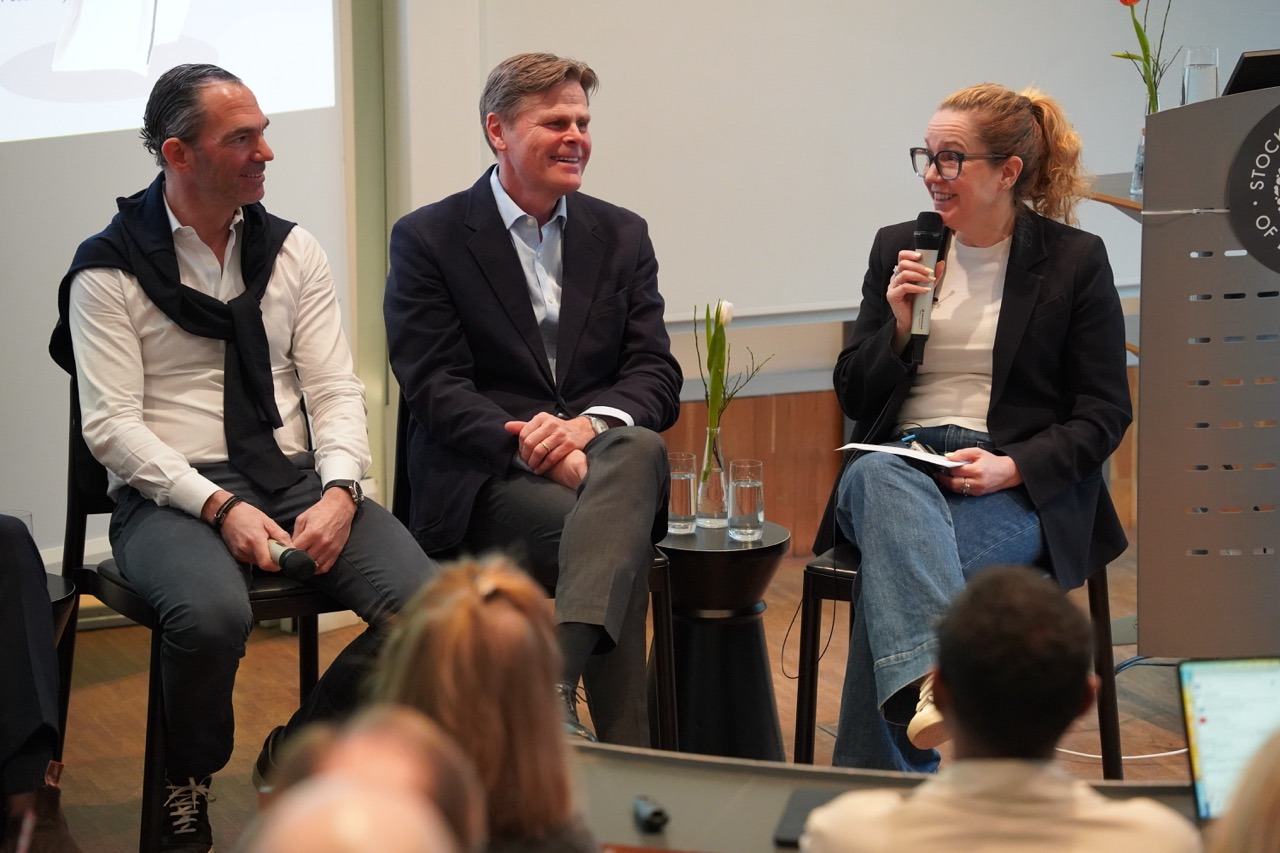
Martin Wattin (InboxCapital), Carl Christensson (SEB), and Stina Norrhede (SEB).
Carl Christensson, Head of Ownership Advisory at SEB, brought a broad perspective from three decades in banking across corporate finance, venture capital, and international markets.
He described a shift in the family office investment landscape toward more stable, cash-flow-generating assets, and noted that the current market environment is making exits harder.
He also pointed to family offices as increasingly valuable anchors in IPO processes: corporates going public actively seekthem out as cornerstone investors as their long-term orientation signals stability to the wider market.
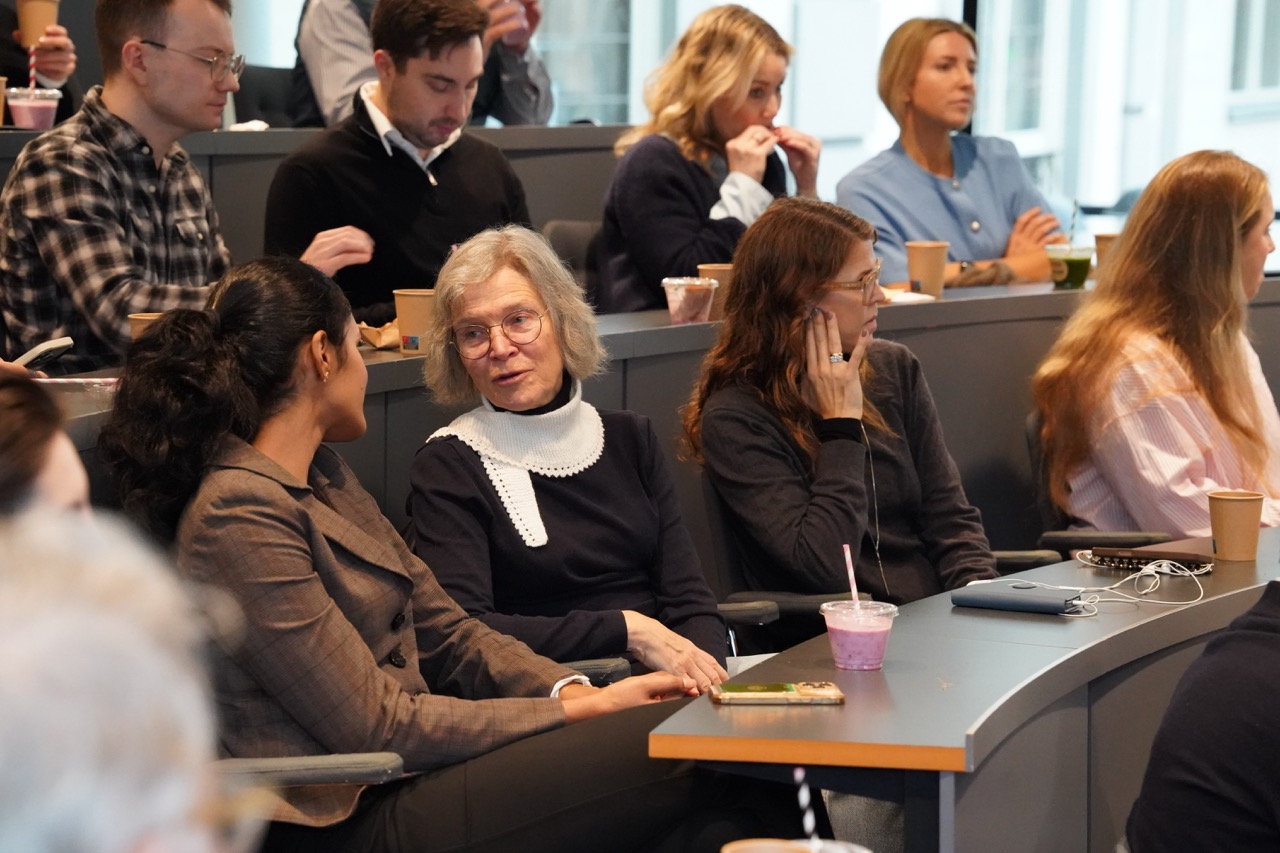
Key takeaways for practitioners
From the research and the panel discussion, here are the three key takeaways:
Long-term orientation is both a strength and constraint. Family office capital allows for longer holding periods and deeper involvement, but without a plan for exit and alignment between co-investors, time can become a source of tension rather than advantage.
Trust and relationships are the foundation. Deal flow, co-investment decisions, and investment relationships are built almost entirely on personal networks and direct trust. Family offices rarely market themselves publicly; reputation travels through founders and other investors.
Succession is an important strategic question. Both the research and the panel discussion returned repeatedly to how investment priorities and behaviors shift across generations. Planning early, professionalizing governance, and giving younger family members space to develop their own careers and interests were recurring recommendations.
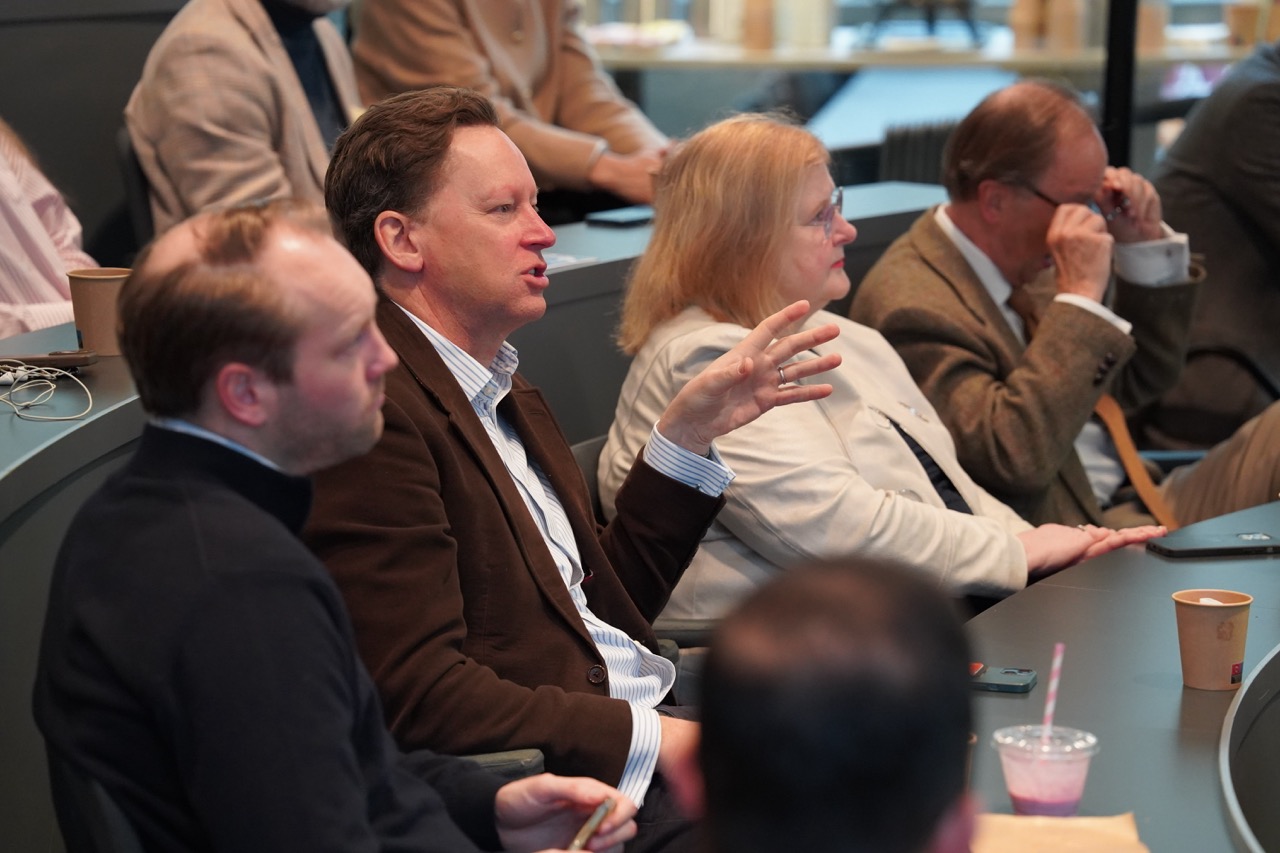
The session closed with audience questions covering topics including how family offices assess founding teams, where deal flow comes from, and how geography shapes investment decisions. Song stayed on hand to take questions directly, and the discussion continued informally over coffee.
Thank you to the researchers, panelists, moderators and audience, who made this such an engaging and thought-provoking morning.
The Center for Family Enterprise is generously supported by SEB, Salenia, Ferd, Virala, Topsoe, and HMP Foundation.
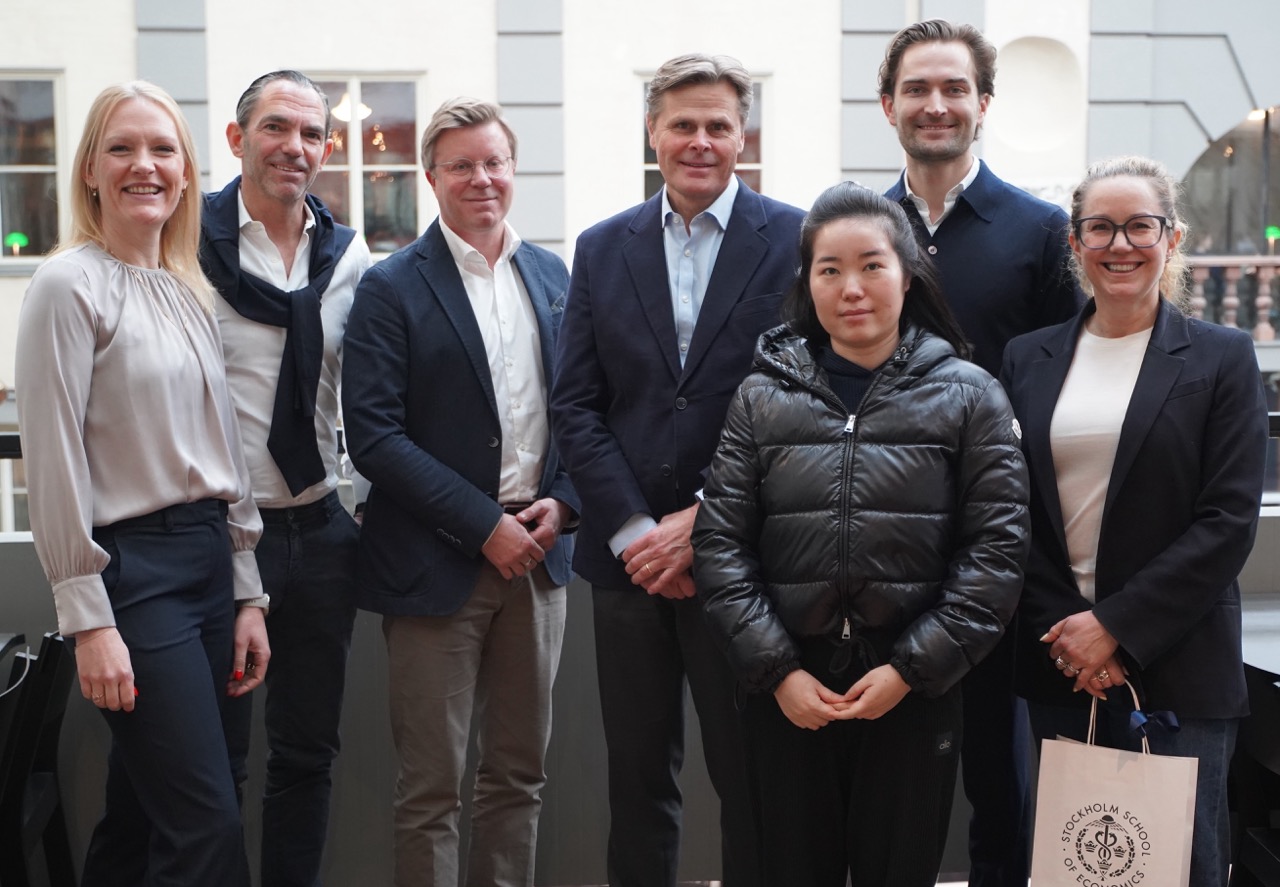
Helene Mörtberg (Mirai, CoFounded Capital), Martin Wattin (InboxCapital), Mattias Nordqvist (SSE), Carl Christensson (SEB), Lydia Song (SSE), Jesper Eliason (Bodil), and Stina Norrhede (SEB).