
Hans Dalborg Award 2026 Ceremony & Presentations
May. 08, 2026
Diogo Mendes and Roxana Turturea are this year’s recipient of the Hans Dalborg Award for Excellence in Research in Financial Economics.

The recipients of this year’s Hans Dalborg Award for Excellence in Research in Financial Economics are Diogo Mendes, Resident Researcher at the Swedish House of Finance (SHoF) and Assistant Professor at the Stockholm School of Economics (SSE), and Roxana Turturea, Associate Professor at SSE.
Presentations
CEOs Took a Finance Course—and Their Firms Got More Profitable
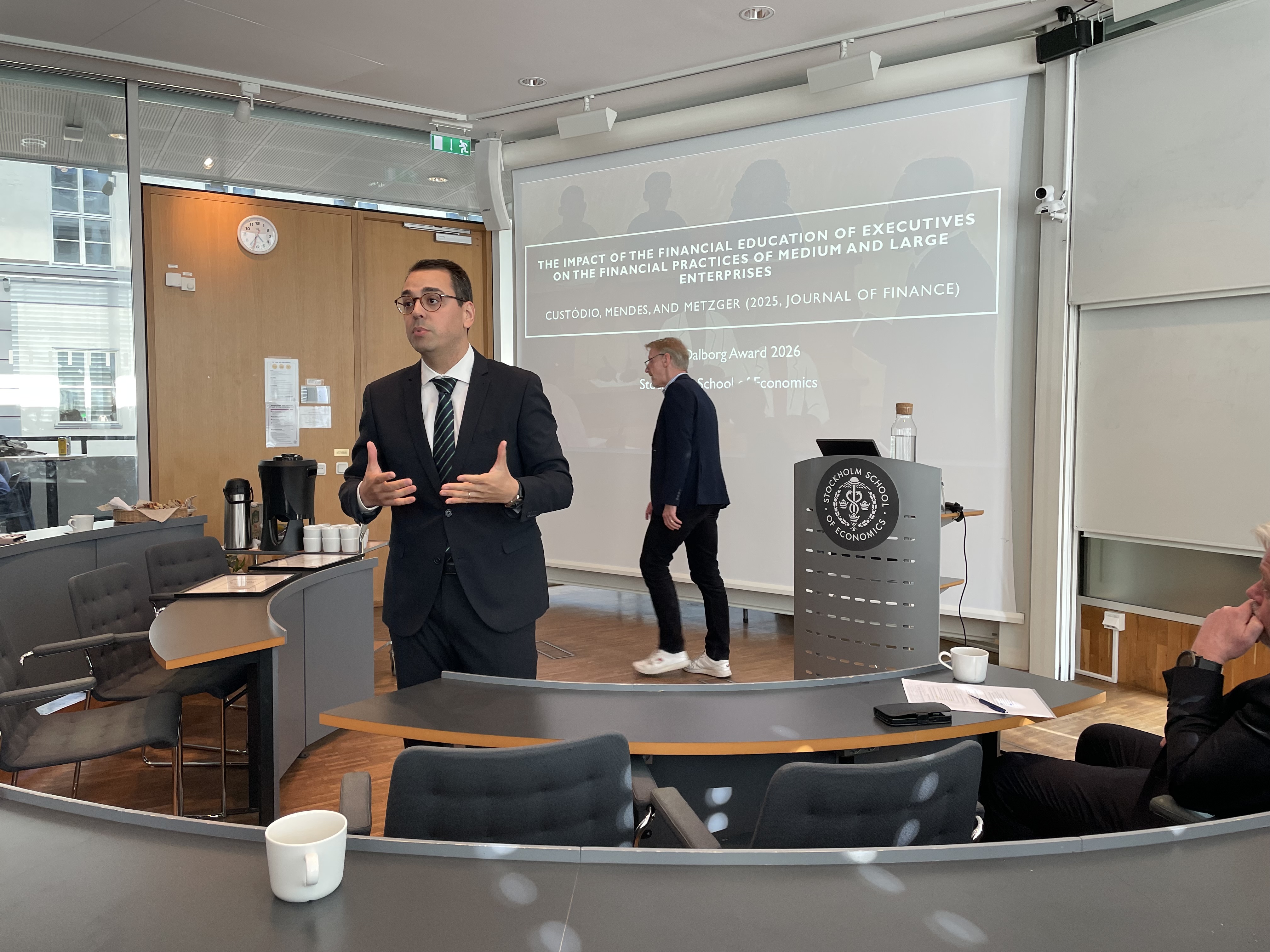
Diogo Mendes presented research examining whether financial education for top executives can shape firms’ financial policies and improve performance. The study focused on CEOs and CFOs of medium and large firms and used a randomized controlled trial in Mozambique to establish a causal link between managerial skills and firm outcomes.
The research showed that firms receiving an intensive corporate finance course adopted more effective financial practices, particularly in working capital management. Companies reduced receivables and inventory, freeing up liquidity in an environment with limited access to external financing. Rather than holding excess cash, firms redirected these resources toward increased investment in long-term assets.
Despite concerns that stricter financial management could harm client relationships, sales remained stable while profitability improved significantly. Return on assets increased markedly, especially among smaller and more financially constrained firms, and among executives without prior financial training.
“Financial education does make better managers—and better managers make better companies.”
State Ownership and Its Impact on Firm Strategy and Performance
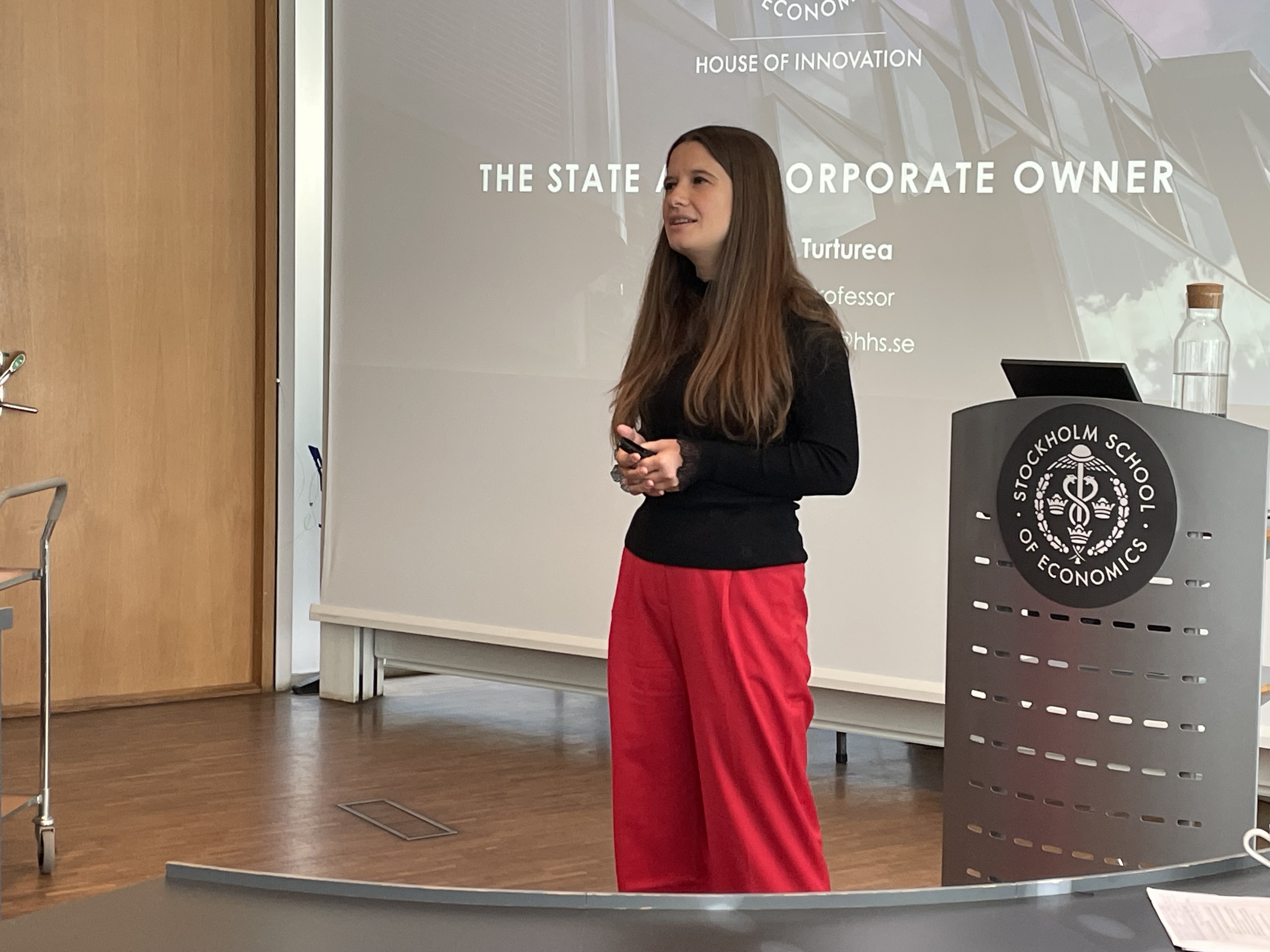
Roxana Turturea presented research on the role of the state as a corporate owner, drawing on a broad body of work examining how state ownership influences firm performance, strategy, and governance across countries. Her research shows that while state ownership is often associated with slightly lower financial performance on average, the effects vary significantly depending on ownership structure and institutional context, with minority state ownership in some cases linked to stronger outcomes.
The presentation highlighted how state-owned firms tend to adopt more risk-averse strategies, invest less in R&D, and internationalize less, while also contributing to increased gender diversity in corporate boards and reducing certain forms of private benefit extraction. It also explored how governments can use mechanisms such as CEO compensation to align firm behavior with policy objectives, including employment and sustainability goals.
More broadly, the research emphasized the growing and evolving role of states as active and strategic investors, particularly in areas such as energy, defense, and technological independence.
“State ownership can play an important role in achieving societal goals, but it also raises challenges in balancing political influence, firm performance, and effective governance.”