Conference highlights how evidence can strengthen aid

Martina Björkman Nyqvist, Director of the House of Sustainable Society (HOSS) and Professor of Economics at the Stockholm School of Economics (SSE), attended the conference as a panelist. She highlights several key takeaways:
"Evidence is not one single thing. We need descriptive evidence to understand the context, causal evidence to know what works, and implementation evidence to understand how to deliver programs effectively. Different decisions require different types of knowledge."
Different evidence for different decisions
Several speakers stressed that aid has contributed to major progress over recent decades. At the same time, today's challenges – from political instability to climate change – require more precise analysis and clearer priorities. Professor Rachel Glennerster, Director of the Centre for Global Development, argued that decision-makers must weigh costs, effects, and uncertainties more systematically, and use evidence at all stages of the aid process.
It is a message that resonates strongly with Björkman Nyqvist:
"A very important reminder from Professor Glennerster is to create incentives for evidence use within agencies – and avoid overcomplicating systems. Simplicity, clarity of objectives, and actionable learning are crucial if evidence is to shape real policy."
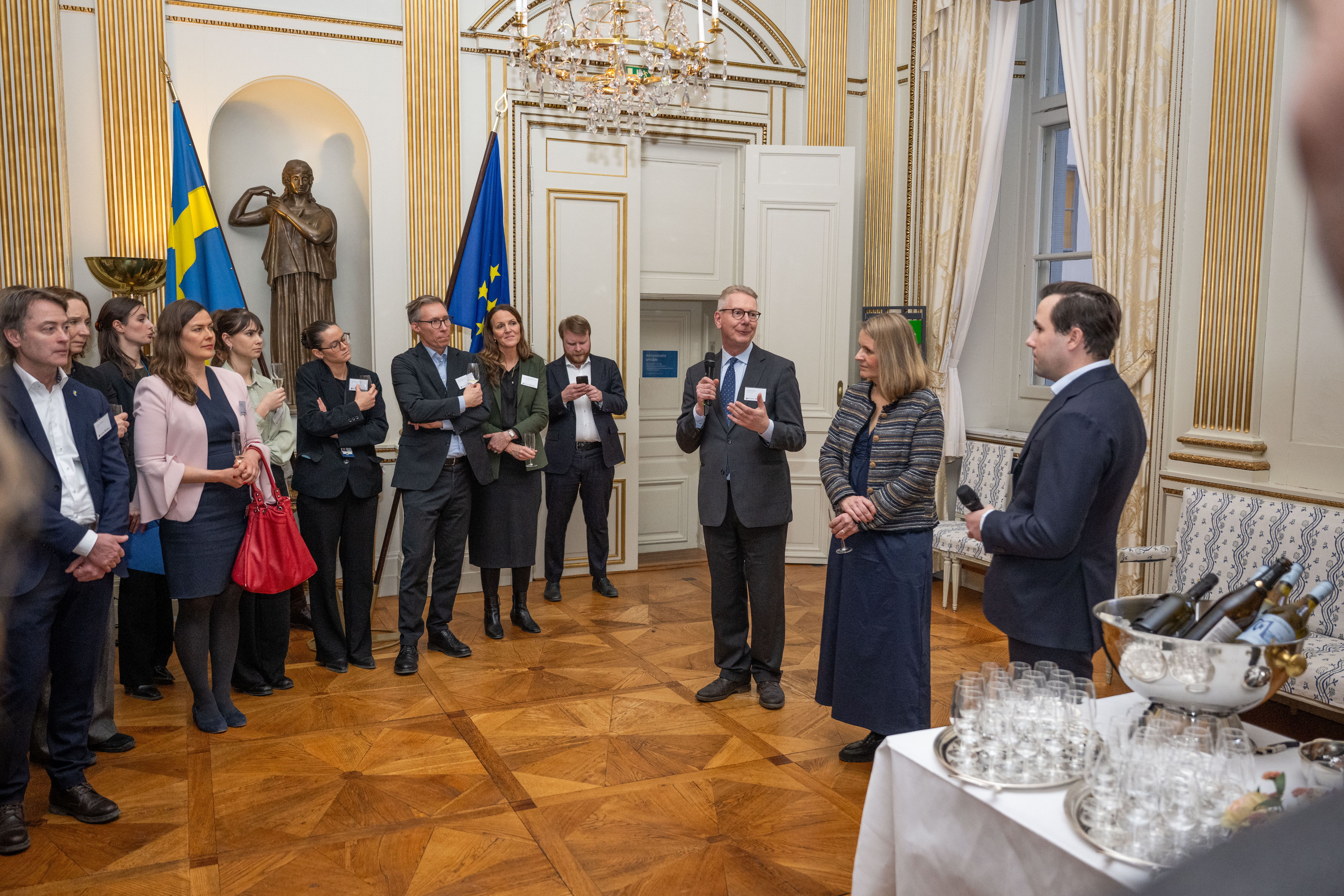 Photo: Caisa Rasmussen/UD
Institutions at the heart of development
The importance of inclusive and well-functioning institutions was another recurring theme. Nobel Prize winner and professor at MIT Simon H. Johnson and former Kenyan finance minister Njuguna Ndung'u both emphasized that poverty often persists where political and economic systems benefit narrow elites. Targeted aid, they argued, can help build institutional capacity that supports long-term development.
"Using evidence is ultimately an institutional question, not just a technical one," Björkman Nyqvist agrees. "Organizations need internal incentives, processes, and leadership commitment to systematically use research and evaluation in decision-making."
A similar point was raised by Torbjörn Becker, chair of the Expert Group for Aid Studies (EBA) and Director of the Stockholm Institute of Transition Economics. He stressed that strengthening learning in development cooperation requires governance structures that ensure knowledge is actually used. While new research is important, he emphasized that existing evidence must also reach decision-makers in a usable and actionable form.
From research to real-world impact
For Björkman Nyqvist and the House of Sustainable Society, the conference reinforced a clear ambition: to connect rigorous research with practical decision-making. By strengthening how evidence is generated, interpreted, and used, the House seeks to contribute to development policies that deliver lasting results for communities around the world.
The conference was organized by the Ministry for Foreign Affairs' Department for International Development Cooperation and the Expert Group for Aid Studies (EBA).
Read more in this article by the EBA (available in English and Swedish).