
• Login
  • Contact
  • About
    • Objectives
    • Organization
    • People
    • Partners
    • Job opportunities
    • Annual reports
    • Women in Finance
  • Research
    • Academic Seminars
    • Publications
    • Research in the spotlight
    • Disclosure policy
  • National PhD Program
    • Core courses
    • Mini Courses
    • PhD visitor program
    • National PhD Workshops
    • PhD Seminars
    • Job market candidates
    • PhD Placements
  • Outreach
    • Academic seminars
    • Conferences
    • Industry seminars
    • Videos
    • Podcasts
    • News & press
    • Data Visualizations
    • Finance Unpacked
  • Data Center
    • SHoF Data center – a national mission
    • Fama French Factors
    • FinBas
    • Historical Archives
    • NASDAQ HFT
    • Nordic Compass, SHoF's ESG Database
    • PAtLink
    • Serrano
    • SHoF Fund Data Morningstar
    • News
  • About
    • Objectives
      • Our guiding principles
    • Organization
      • Board
      • Management committee
      • SHoF advisory board
      • Scientific advisory board
      • Department of Finance SSE
    • People
      • Resident researchers
      • Academic partner visitors
      • Affiliated researchers
      • Postdoctoral fellows
      • Research assistants
      • Job market candidates
      • PhD students
      • Admininistration
      • Outreach
      • Data center
      • Advisors
    • Partners
      • Academic partners
      • Partners
    • Job opportunities
    • Annual reports
    • Women in Finance
      • Events
      • Videos & podcasts
      • Featured research
      • News & press
      • Women in Finance Data
  • Research
    • Academic Seminars
    • Publications
    • Research in the spotlight
    • Disclosure policy
  • National PhD Program
    • Core courses
    • Mini Courses
    • PhD visitor program
    • National PhD Workshops
    • PhD Seminars
    • Job market candidates
    • PhD Placements
  • Outreach
    • Academic seminars
    • Conferences
    • Industry seminars
    • Videos
      • Interviews by Swedish House of Finance
      • SNS/SHoF Finance panels videos
      • Seminar videos
      • Conference videos
      • Annual Conference videos
    • Podcasts
    • News & press
      • News
      • In the press
      • Newsletters
    • Data Visualizations
      • Why the Rich Get Rich: New Research Shows It’s About Risk Attitudes and Patience
      • The SUSY Monitor
      • How Financial Education Transformed Corporate Decision-Making in Mozambique
      • Does Carbon Pricing Work? Evidence from Swedish Firms
      • Designing a Carbon Tax Policy That Works
      • Women in Finance Data
      • WIF 2025
    • Finance Unpacked
  • Data Center
    • SHoF Data center – a national mission
      • Terms and conditions
    • Fama French Factors
    • FinBas
      • Stocks Timeseries
      • Indices Timeseries
    • Historical Archives
      • Stocks list archive
      • Annual reports archive
      • Affärsvärlden Archive
      • Owners and Power
    • NASDAQ HFT
      • Reconstructed Order Book
      • Nordic Market Quality
    • Nordic Compass, SHoF's ESG Database
    • PAtLink
    • Serrano
    • SHoF Fund Data Morningstar
      • Valuations: Daily TNA and net flow by fund and fund share class
      • Re-invested Prices: Dividends re-invested prices
      • Splits: Fund split date and split ratio
      • Dividends: Fund dividends
      • Prices: Fund daily prices
    • News
  • Login
  • Contact
  • Swedish House of Finance
  • Research
  • Research in the spotlight
  • Pollution Taxes Push High-Emitting Firms to Invest in R&D
Swedish House of Finance
  • About
  • Research
    • Academic Seminars
    • Publications
    • Research in the spotlight
    • Disclosure policy
  • National PhD Program
  • Outreach
  • Data Center

Pollution Taxes Push High-Emitting Firms to Invest in R&D

May. 19, 2026

With Europe tightening carbon-pricing rules while mobilizing hundreds of billions of Euro for sustainable infrastructure and industrial transition, SHoF research suggests emissions taxes can spur firms to invest in the technical know-how needed for cleaner production—even when they do not produce breakthrough green inventions.
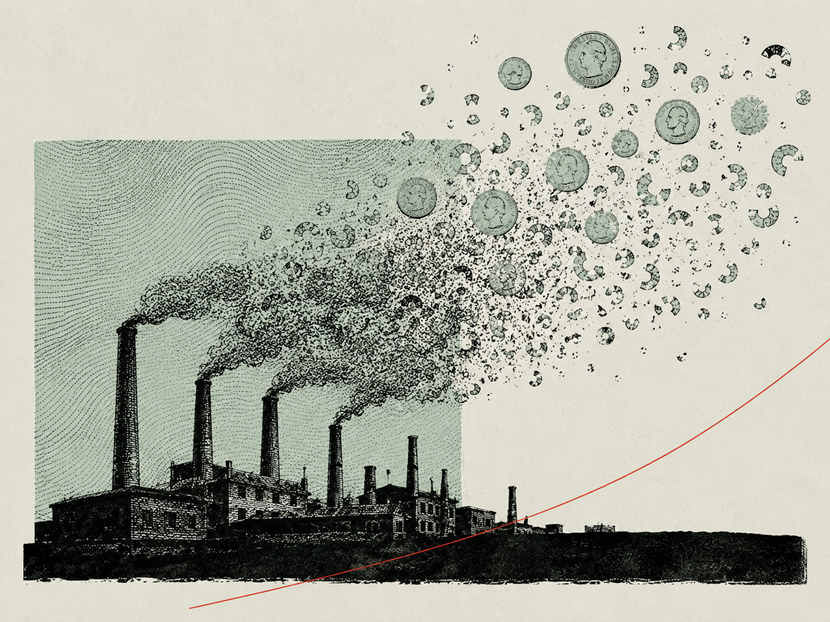
 

Environmental Taxes Can Change How Firms Innovate

A long-running debate in climate policy is whether environmental taxes simply raise costs for firms or whether they also encourage cleaner technological change. This paper argues the answer is both.

Using data from 18 OECD countries between 1990 and 2012, Gustav Martinsson (SHoF/Stockholm University), Christian Thomann (SHoF/KTH), and James Brown (Texas A&M) show that taxes on sulfur oxide (SOx) emissions pushed manufacturing firms to spend more on research and development.

The increase was concentrated among firms in the dirtiest industries, including cement, chemicals, metals, and petroleum products, where production processes generate the most pollution.

“Pollution taxes make it more expensive for polluting firms to continuing using their existing production technologies,” the authors write.

Much of the debate around green industrial policy focuses on new inventions. This paper highlights a less visible effect of environmental policy: pushing firms to invest in the technical capabilities needed to adopt cleaner production methods, even when they are not developing breakthrough technologies themselves.

R&D Rose, But Patents Did Not

The study combines OECD pollution tax data with firm-level R&D spending from Compustat and global patent records from the European Patent Office’s PATSTAT database.

The effects were economically meaningful. A one-standard-deviation increase in pollution taxes was associated with roughly an 11% increase in average R&D spending.

Looking specifically at the introduction of a new or higher pollution tax, the estimated effect was even larger: firms increased R&D spending by roughly 13%–14% on average following the policy change.

Crucially, the increase appeared only after pollution taxes rose, not in the years beforehand, supporting the authors’ argument that the policy changes themselves drove the response.

However, while pollution taxes increased R&D spending, they did not generally produce more patents among the high-pollution firms most affected by the taxes.

Instead, the authors argue that many firms were investing in what economists call “absorptive capacity”—the ability to understand, adopt, and implement external technologies and know-how.

“The R&D response to pollution taxes is concentrated in sectors where external knowledge is easier to acquire,” the authors say.

Instead of inventing new breakthrough clean technologies themselves, firms were building the internal expertise needed to modernize operations and adopt cleaner methods developed elsewhere, the study finds.

Lessons for Policy

For investors, the paper shows that markets viewed these R&D investments positively. The marginal value of R&D spending rose significantly when firms operated under higher pollution taxes, suggesting that investors believed the spending would improve firms’ long-term competitiveness or ability to adapt to tighter environmental standards.

For policymakers, the findings strengthen the case that market-based environmental policies such as pollution taxes can influence corporate behavior beyond simple compliance or pollution reduction.

“Our work shows tax policy can also encourage the technology investments that allow firms to broadly overhaul the way they produce, in order to reduce pollution at the source,” the authors write.

Importantly, the effects extended beyond traditionally innovative firms. Even companies with weak patent histories increased R&D spending when taxes rose.

The authors caution that the study does not directly measure whether the additional R&D reduced emissions, because comparable firm-level emissions data were unavailable across countries during the sample period. Still, in a related study on Sweden, Martinsson, Thomann and co-authors estimate that carbon pricing accounted for at least a third of emissions reductions between 1991 and 2015—and that emissions would otherwise have been roughly 30% higher.

Key Findings
  • Higher pollution taxes increased firm R&D spending by 13%–14%
  • R&D gains were concentrated in the dirtiest industries
  • Firms increased R&D only after taxes rose
  • Patent gains were limited to firms with prior green innovation
  • Markets assigned higher value to R&D under stricter emissions taxes
Christian Thomann

Researcher, SHoF

Associate Professor, Royal Institute of Technology

Read more

Gustav Martinsson

Researcher, SHoF

Professor, Stockholm University

Read more

James Brown

Professor, Texas A&M University

Read more

  • About
    • Objectives
    • Organization
    • People
    • Partners
    • Job opportunities
    • Annual reports
    • Women in Finance
  • Research
    • Academic Seminars
    • Publications
    • Research in the spotlight
    • Disclosure policy
  • National PhD Program
    • Core courses
    • Mini Courses
    • PhD visitor program
    • National PhD Workshops
    • PhD Seminars
    • Job market candidates
    • PhD Placements
  • Outreach
    • Academic seminars
    • Conferences
    • Industry seminars
    • Videos
    • Podcasts
    • News & press
    • Data Visualizations
    • Finance Unpacked
  • Data Center
    • SHoF Data center – a national mission
    • Fama French Factors
    • FinBas
    • Historical Archives
    • NASDAQ HFT
    • Nordic Compass, SHoF's ESG Database
    • PAtLink
    • Serrano
    • SHoF Fund Data Morningstar
    • News

Swedish House of Finance

Bertil Ohlins gata 4, 113 50 Stockholm

info@houseoffinance.se +46 8 736 91 00
Subscribe