Anna Fahlgård-Lahache successfully defends her doctoral dissertation

Through her research, Anna offered a rare inside view of how digital transformation reshapes public administration through technology and, importantly, the everyday institutional work actors perform as they try to create, maintain, or disrupt established ways of organizing.
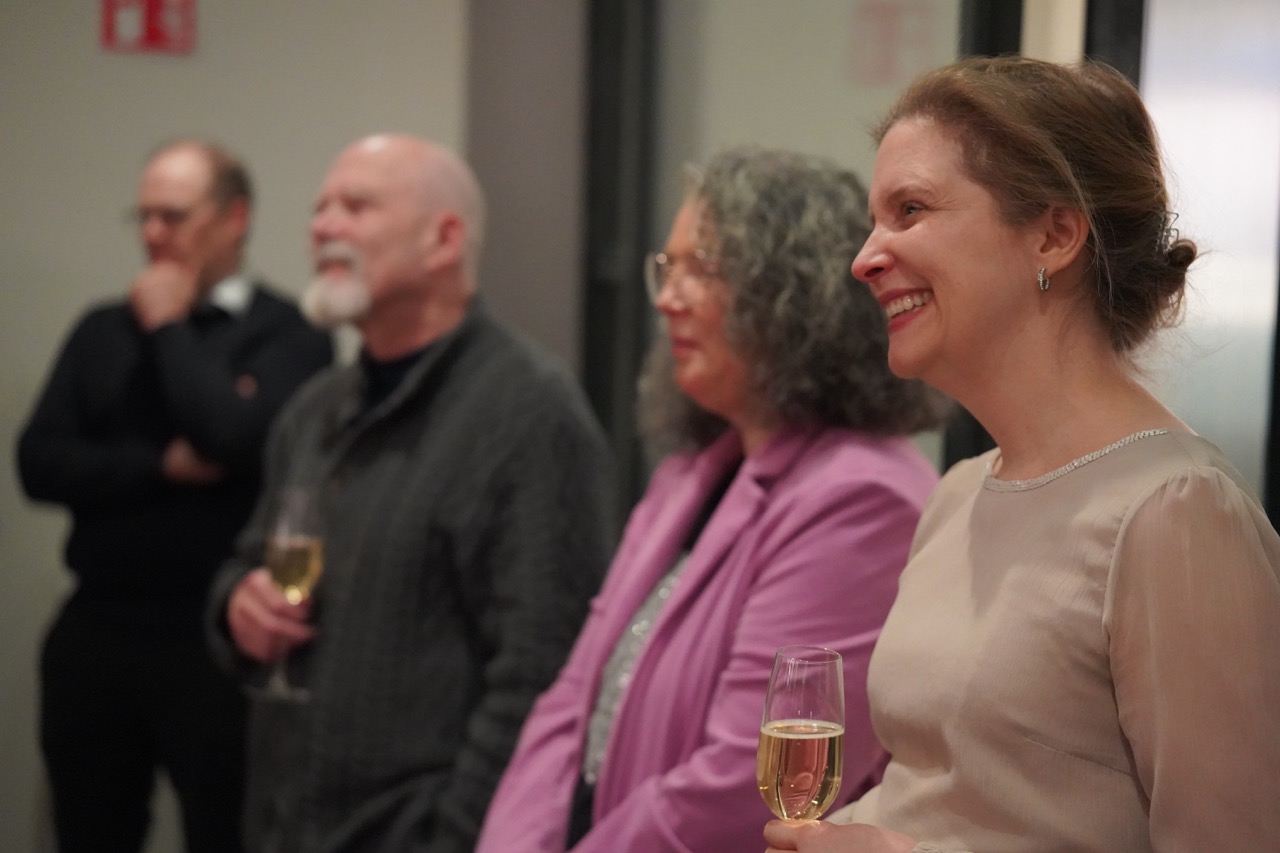
The opponent at the defense was Roy Suddaby, Francis G. Winspear Chair of Management at the Peter B. Gustavson School of Business, University of Victoria, Canada, who said the thesis “advances institutional work and contributes to the conversations on organizational identity and narrative.”
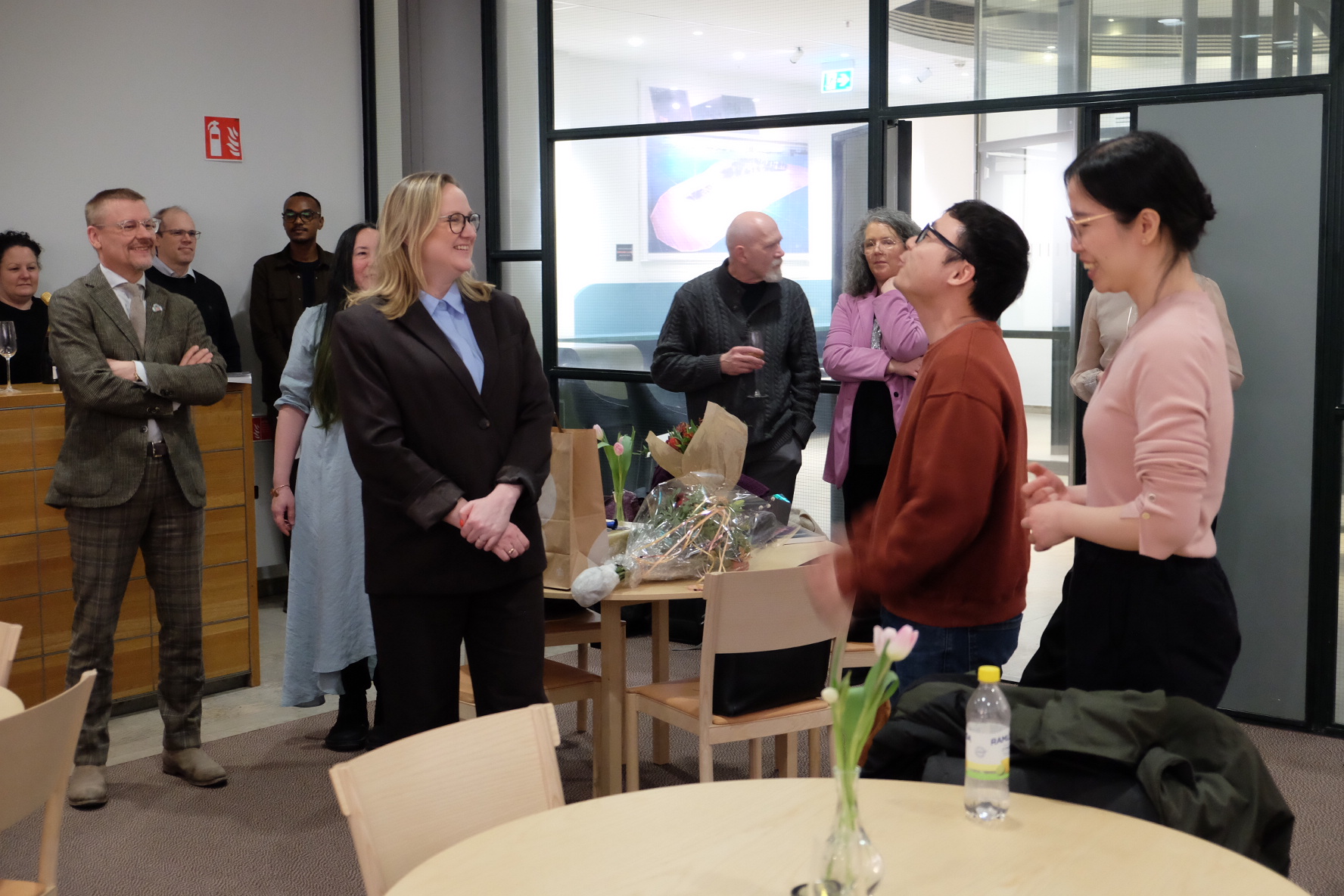
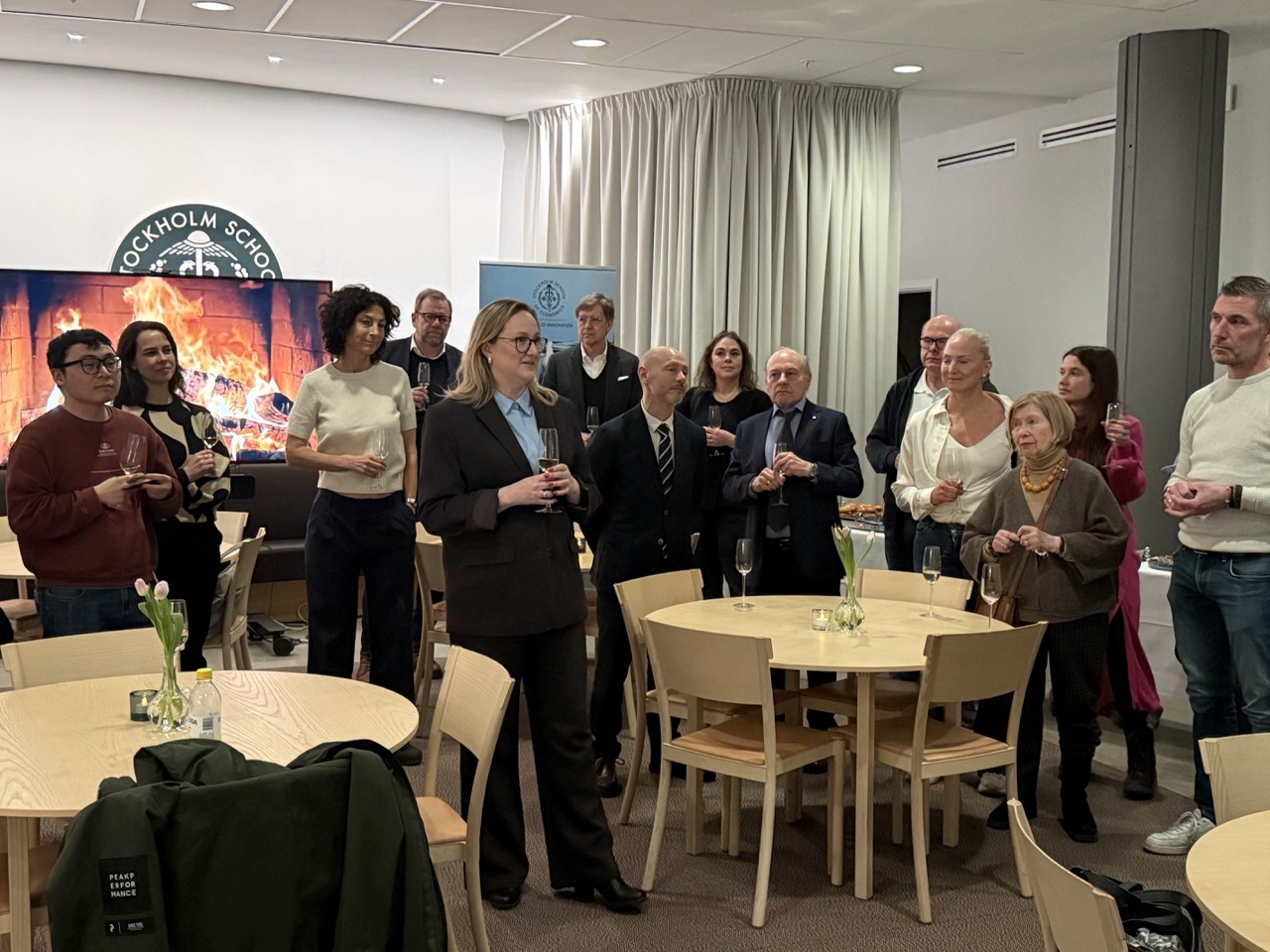
The defense was followed by a mingle with friends, colleagues, and attendees. After a discussion, the examination committee approved the dissertation.
What problem did this research address?
The dissertation asks how different forms of institutional work (creation, maintenance, and disruption) shape digital transformation in public administration, and why change so often stalls or takes unexpected directions in highly institutionalized public organizations.
It focuses on the micro-practices such as identity work, temporal orientations, and narrative work through which actors enable, slow down, or redirect digital agendas.
Data and research approach
The dissertation comprises three papers, combining a multi‑year field study of a newly established Swedish digital government agency with a longitudinal archival study of Taiwan’s digital minister, Audrey Tang. The opponent Professor Suddaby described the data collection as “unusually rich, impressive, and incredibly detailed.”
Key research findings
Across the three papers, Anna identified several key takeaways.
- Enduring identity-related tensions can arise from digital transformation missions in public organizations. Organizational identity work within the nascent agency produced polarized views about “what the organization is for,” which diverted attention from core digital missions and produced structural separation rather than easy reconciliation.
- Temporal orientations matter. Subgroups differed in spatio-temporal configurations (past-anchored, present-focused, future-oriented), and these temporal differences systematically underpin identity tensions and divergent priorities for digital work.
- Narrative work can re-position and legitimize fringe ideas in digital government settings. Institutional entrepreneurs use careful rhetorical strategies (framing, presentifying, substantiating) to move “fringe” digital imaginaries and roles into the mainstream, thus enabling creation-oriented institutional work.

Implications for managers and policymakers
The dissertation shows that digital transformation in public administration should be understood and led as an institutional, rather than merely technical, endeavor. Leaders and policy implementors need to recognize that digital transformation missions directed towards public administration require narrative work by leaders and change agents who craft sustained and credible accounts that legitimize new digital roles and reforms.
It also triggers complex and parallel forms of organizational identity work for public agencies. Managing such processes requires attention to identity-related organizational tensions, and the divergent temporal orientations that may underpin them and ultimately may shape outcomes in powerful ways.
Instead of attempting to eliminate tensions, managers should design governance structures, roles, and processes that allow maintenance, disruption, and creation to coexist productively.
Policymakers and institutional entrepreneurs must also engage in deliberate narrative work, especially when initiatives originate from marginal positions.
👉 Read the dissertation in full.
Opponent, Chair, and committee
- Opponent: Roy Suddaby, Francis G. Winspear Chair of Management at the Peter B. Gustavson School of Business, University of Victoria, Canada
- Chair of the Defense: Magnus Mähring, Erling Persson Chair in Entrepreneurship and Digital Innovation at the Department of Entrepreneurship, Innovation and Technology, and Head of the House of Innovation, Stockholm School of Economics
Assessment committee:
- Constantin Blome, Chair in Transformative Innovation at the Department of Entrepreneurship, Innovation and Technology, Professor and Director of the Center for Transformative Innovation at the House of Innovation, Stockholm School of Economics
- Ines Mergel, Professor, University of Konstanz, Germany
- Susanna Alexius, Associate Professor, Stockholm University, and research director at Stockholm Center for Organizational Research at Stockholm University and Stockholm School of Economics
Supervision committee
- Eleunthia Ellinger, Postdoctoral Fellow, Department of Entrepreneurship, Innovation and Technology, House of Innovation, Stockholm School of Economics
- Magnus Mähring, Erling Persson Chair in Entrepreneurship and Digital Innovation at the Department of Entrepreneurship, Innovation and Technology, and Head of the House of Innovation, Stockholm School of Economics
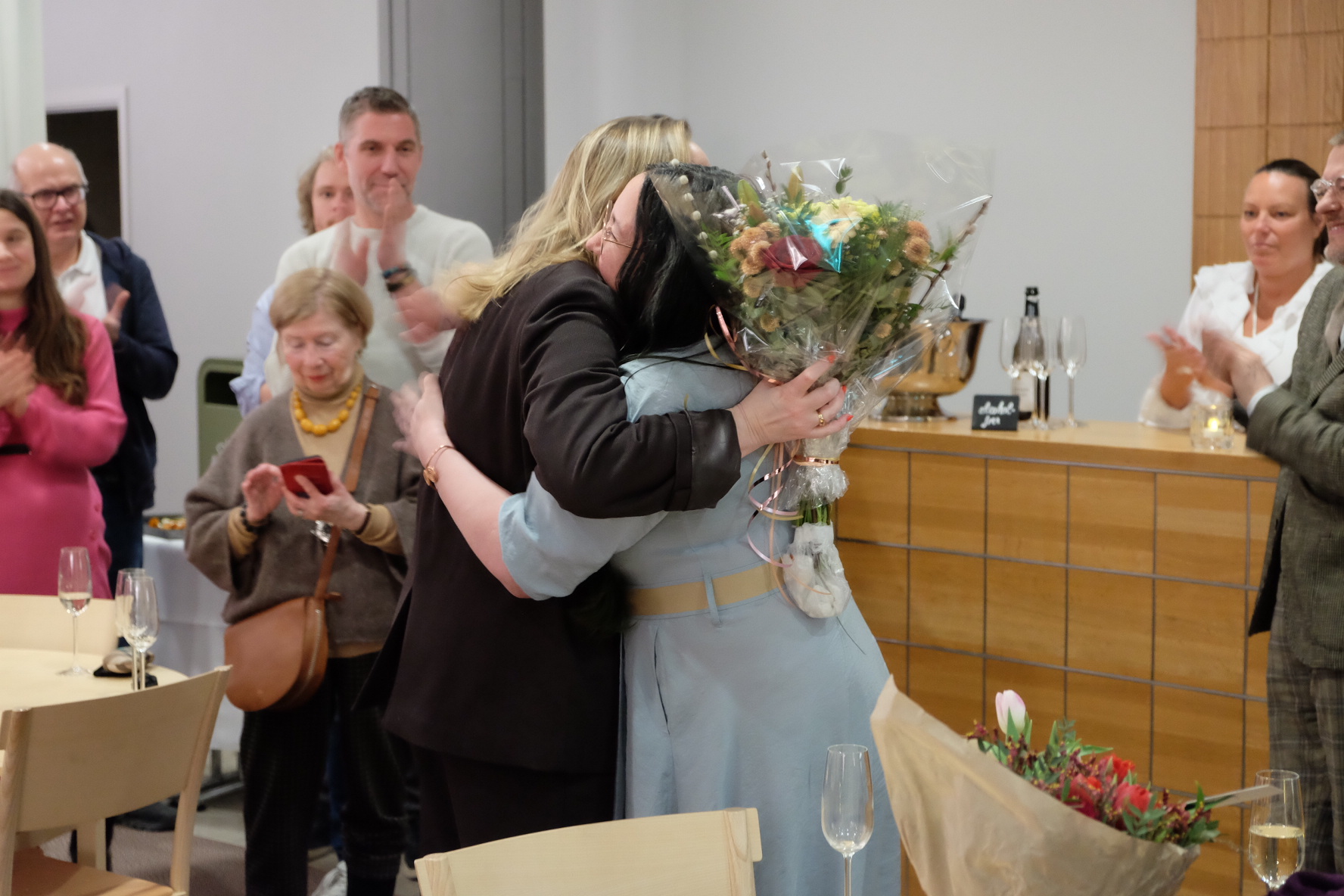
We congratulate Anna on her achievement and wish her the best of luck going forward!


